
Markets whipsaw as AI sell-off resumes
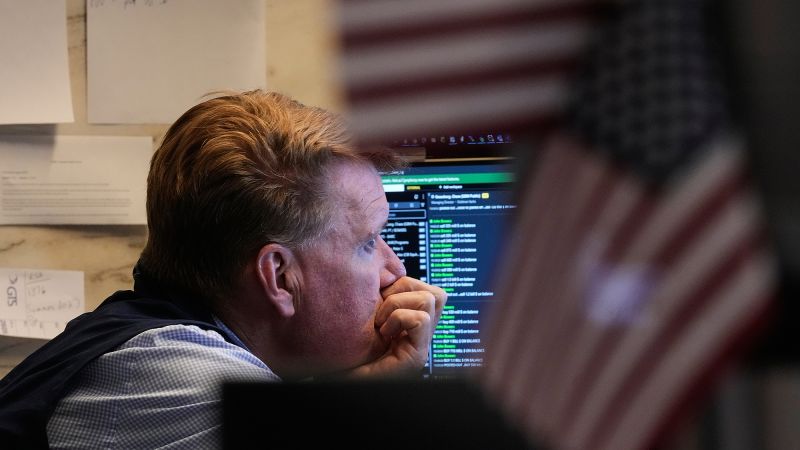
Markets Whipsaw as AI Sell-Off Resumes
Markets whipsaw as AI sell off resumes – On Tuesday, financial markets experienced sharp fluctuations as investors shifted focus from high-flying artificial intelligence (AI) stocks to other sectors, capitalizing on recent gains. The Nasdaq Composite, heavily weighted toward technology, initially opened with a positive surge but quickly reversed course, plummeting over 3.6% during midday trading. However, the dip triggered a buying spree, resulting in a narrower decline by the close of the day—just 0.97%. Similarly, the S&P 500 saw a more than 2.2% drop before stabilizing, ending the session with a modest loss of 0.26%. The Dow Jones Industrial Average, which has less exposure to tech stocks, closed higher by 0.17%, gaining 86 points after earlier losing nearly 575.
AI-Driven Volatility and Sector Rotation
Despite the Nasdaq and S&P’s resilience by day’s end, the sell-off in AI-related equities and semiconductor companies dominated early trading. The tech sector, which had surged earlier in the year, faced pressure as investors sought to rebalance portfolios. This shift was particularly evident in chipmakers, which had been the primary beneficiaries of the AI boom. Semiconductor stocks, which had enjoyed a robust rally, were now the main losers, with some firms witnessing steep declines.
“It’s not unusual to see a period of consolidation after exceptional performance,” said Bill Northey, a senior investment director at US Bank Asset Management. “The fundamentals underpinning the chipmaker rally this year are real, but when one sector outperforms, it’s natural for investors to rotate into other areas, creating temporary dips.”
The Nasdaq and S&P 500, which are heavily influenced by large-cap tech firms, experienced significant volatility as the selling continued. While the overall indexes recovered much of their earlier losses, individual stocks within the tech sector remained under pressure. The semiconductor industry, for example, saw a notable correction, with major players like Nvidia (NVDA) and Broadcom (AVGO) facing substantial declines. Nvidia, the largest S&P 500 company by market value, dropped over 4% during the day before rebounding to a 0.2% loss by close. Marvell Technology (MRVL) fell nearly 7.6%, while Broadcom’s shares tumbled more than 6.5%, though they stabilized slightly by the end of trading.
Broader market dynamics also played a role in the turbulence. The tech-heavy indexes had previously reached record highs, prompting investors to reassess their positions. This pullback came ahead of the highly anticipated initial public offering (IPO) of SpaceX, which has become a focal point for market participants. Investors are increasingly positioning themselves for the upcoming event, either by selling existing holdings to raise capital or by delaying purchases until the IPO’s launch.
“Investors are really trying to figure out how to position themselves for SpaceX,” said Michael Monaghan, a partner and portfolio manager at Founder ETFs. “Because all eyes are on the deal, people aren’t looking at what other stocks they’re going to be initiating new positions on or buying in their portfolio.”
The market’s rollercoaster behavior also extended to commodities, with oil prices fluctuating in response to geopolitical developments. Following a tweet from President Donald Trump announcing that Iran had downed a US Army Apache helicopter, crude oil futures initially dipped but later recovered. The two pilots involved were reported safe and uninjured, though the incident fueled uncertainty about global supply chains. Brent crude oil fell about 3% to $91.45 per barrel, while US crude oil declined 3.4% to $88.20, rebounding from a low of $86 earlier in the week.
Broader Implications of the Market Shift
While the Nasdaq and S&P 500 ended the day with minimal losses, the underlying volatility revealed a mixed picture. Over 350 stocks within the S&P 500 closed higher, despite the index’s overall decline. This divergence highlights the resilience of certain sectors even amid broader market uncertainty. The sharp drops in AI and tech stocks, however, underscored the challenges of maintaining momentum in a sector that had outperformed for months.
Analysts note that the current sell-off is part of a natural correction following an extraordinary rally. The tech sector, which had surged by 20% in April and another 20% in May, is now facing a pullback. An exchange-traded fund tracking tech stocks fell approximately 5% this month, reflecting investors’ caution. “A lot of the sell-off from our perspective is an opportunity to buy some really essential, critical AI infrastructure stocks at cheaper prices,” said Rob Thummel, a portfolio manager at Tortoise Capital.
The broader market context also includes concerns about inflation. The decline in oil prices, driven by Trump’s social media remarks, eased anxieties about rising costs, contributing to a drop in US Treasury yields. However, the 10-year Treasury yield remains above 4.5%, keeping investors cautious about long-term bond investments. This rate level could influence stock market behavior, as higher yields often signal a preference for safer assets.
Looking ahead, the S&P 500 and Nasdaq have seen notable corrections since hitting their June 2 highs. The S&P is down about 2.2% from its peak, while the Nasdaq has dropped 5% over the same period. Nonetheless, both indexes remain in positive territory for the year, with the S&P up roughly 8% and the Nasdaq surpassing 10%. These figures suggest that the recent volatility, while pronounced, has not erased the gains from the year’s earlier rally.
As the market continues to adjust, the interplay between AI optimism and broader economic factors will likely shape future movements. The sector rotation observed on Tuesday highlights the cyclical nature of investment trends, with AI stocks now underperforming as investors explore other opportunities. Meanwhile, the anticipation of SpaceX’s IPO adds another layer of complexity, as market participants prepare for potential shifts in focus. The coming days will be critical in determining whether this consolidation phase signals a broader trend or simply a temporary correction in a rapidly evolving market environment.
