
Johnson gets a bit of slack in his historically narrow House majority
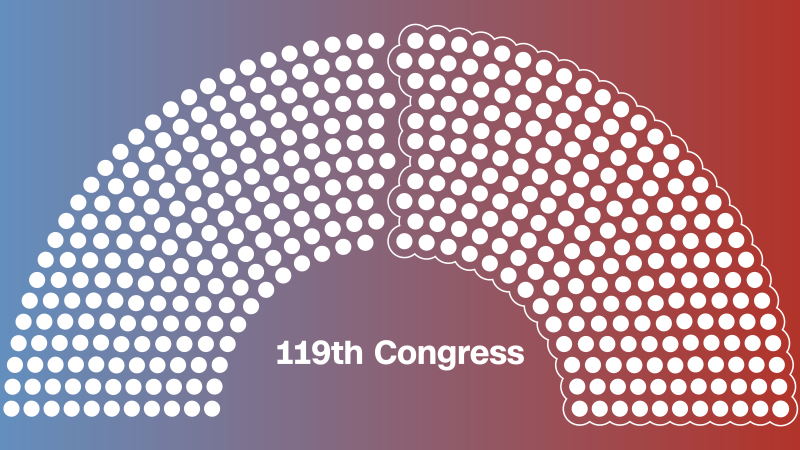
Johnson Gains Temporary Leverage in Tightly Divided House
Johnson gets a bit of slack – At the outset of the 119th Congress, Speaker Mike Johnson found himself navigating one of the most narrowly split House majorities in nearly a century. The chamber’s composition, however, has shifted slightly in recent weeks, offering him a marginal advantage in legislative maneuvering. With 218 Republican members, 212 Democrats, one independent, and four vacant seats, Johnson’s majority remains fragile but now allows for a more lenient threshold in passing bills. The speaker can afford to lose three Republican votes on party-line decisions without jeopardizing key legislation, a relief in an era marked by political polarization.
The Role of Vacancies and Partisan Shifts
The current balance in the House is shaped by a series of vacancies and unexpected departures. California’s Kevin Kiley, who officially left the Republican Party earlier this year, continues to align with the GOP in voting blocs, effectively functioning as a de facto member of the majority. This arrangement is a reflection of the broader trend where independent lawmakers often serve as pivotal swing votes. Meanwhile, the recent swearing-in of Republican Rep. James Gallagher from California has added a small buffer to Johnson’s majority, replacing the late Rep. Doug LaMalfa. Gallagher’s presence ensures the GOP retains control of the chamber, even as a special election to fill one remaining vacant seat approaches on June 16.
The Democratic Party is seen as a strong contender to claim that seat, which could further narrow the majority. If the outcome favors Democrats, Johnson’s current advantage may be offset, reverting the House to a 219-215 split. This dynamic underscores the precarious nature of the political landscape, where a single election result can reshape the balance of power. The original 220-215 GOP lead following the November elections has already been impacted by the absence of Florida’s Matt Gaetz, who opted not to return to Congress. His departure reduced the Republican majority by one, a shift that has kept the margin tightly contested.
Historical Precedents and Legislative Challenges
The House’s current division echoes historical moments of extreme partisanship. For instance, the 72nd Congress, which convened in 1931 during the early years of the Great Depression, was also marked by a narrow majority. At that time, Republicans held 217 seats, Democrats 216, and one seat was claimed by the Farmer-Labor Party. The margin was so slim that the chamber’s leadership required additional measures to ensure smooth operations. This included a series of special elections and the eventual takeover of the House by Democrats, though the split remained closely contested.
Similarly, the 65th Congress holds the distinction of having the closest party split in U.S. history. In that case, the election results left Republicans with 215 seats and Democrats with 214, creating a deadlock. The resolution required the support of third-party lawmakers, who played a critical role in the speaker election. Johnson’s own ascent to the speakership in 2023 followed a comparable scenario, where the margin stood at 219-215. This tight vote highlighted the difficulty of securing consensus in a chamber where every vote can tip the scales.
Despite these challenges, Johnson has managed to pass significant legislation. The most notable example was the Trump administration’s massive tax and spending cuts package, which cleared the House in July. However, the process was far from seamless. Two Republican lawmakers, Thomas Massie of Kentucky and Brian Fitzpatrick of Pennsylvania, cast votes against the measure, aligning with Democrats. This split underscored the tension within the GOP ranks, as lawmakers grappled with diverging priorities. While the bill ultimately passed, it required careful coalition-building to overcome internal disagreements.
The Fragility of Majority Control
The current House majority, though slightly adjusted, still reflects the broader trend of a divided Congress. The magic number for passing legislation—218 votes—has been made more manageable by the recent addition of Gallagher, but the presence of vacancies and the possibility of another special election keeps the situation fluid. For example, if the June 16 election in California results in a Democratic victory, the House could shift to a 219-215 Democratic majority, reversing the earlier gains for Republicans.
This uncertainty has forced congressional leaders to adopt more cautious strategies. The narrow margin leaves little room for error, as even a single defection can stall progress. Johnson’s ability to maintain control hinges on both the stability of the current voting bloc and the outcomes of upcoming elections. The 218-217 split that existed at the start of the 119th Congress was a reminder of the historical precedent set by the 72nd Congress, where the House’s ability to function depended on a careful balance of votes.
The recent changes in the House composition also highlight the impact of natural events on political dynamics. The death of Rep. LaMalfa and the subsequent election of Gallagher exemplify how vacancies can be filled by new members, altering the trajectory of legislative efforts. This process has been further complicated by the absence of Matt Gaetz, whose decision to step down created a ripple effect in the chamber’s leadership. The interplay of these factors has kept the House in a state of flux, with each new development potentially reshaping the majority’s strength.
A Delicate Balance for the GOP
As the 119th Congress progresses, Republicans face the daunting task of advancing Trump’s legislative agenda. The narrow majority means that any misstep—whether in voting patterns or coalition-building—could undermine their goals. The tax and spending cuts bill, for example, required bipartisan support to pass, even as some GOP members resisted the policy direction. This tension reflects the broader challenge of uniting the party’s diverse factions, particularly in an environment where every vote is scrutinized.
Historical comparisons offer a useful lens for understanding the current situation. The 1930 elections, which led to the 72nd Congress, saw a similar tight race, with Republicans barely holding their majority. The resulting Congress, however, was not without its complications. The Farmer-Labor Party’s single seat created an unusual dynamic, where the chamber’s leadership had to navigate both major parties’ ambitions. This pattern repeats today, as the GOP’s slim majority demands constant vigilance and strategic alliances.
Johnson’s position as speaker is thus both a testament to his political acumen and a product of the House’s current configuration. While he has managed to secure a working majority, the ever-present threat of defections or election outcomes remains. The upcoming special election in California, which could either solidify or erode the GOP’s edge, will be a key test of this fragile balance. As the Congress moves forward, the speaker’s ability to navigate these challenges will determine the success of the party’s legislative priorities.
This story and headline have been updated with additional developments. CNN’s Veronica Stracqualursi and Zach Wolf contributed to this report.
