
Who can call themselves a ‘New Yorker’?
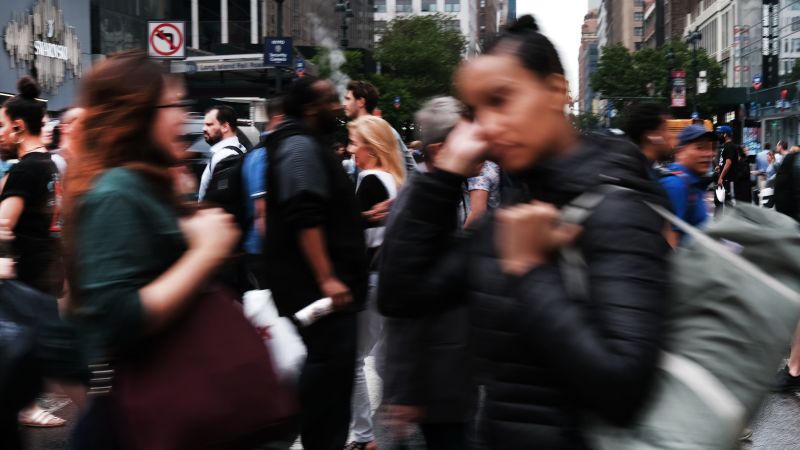
Who Can Claim the Title of ‘New Yorker’?
Who can call themselves a New Yorker – When Jennifer Lopez, the globally renowned entertainer, sat on a New York City subway train during an episode of the internet talk show “Subway Takes,” she sparked a broader conversation about what defines a person’s geographical identity. The discussion, which quickly became a topic of public interest, revolved around the question: What qualifies someone as a true New Yorker? Lopez, who has made Los Angeles her primary home, asserted that birthplace is the key factor. “You have to be born in New York to be a New Yorker,” she declared, drawing a clear line between residency and heritage.
The Debate Over Definition
Host Kareem Rahma, a native of Egypt with roots in Minnesota and a 14-year New York resident, challenged Lopez’s stance. “If someone lives in the city for 50 years, can they still claim the title?” he asked, highlighting the city’s cultural diversity. Lopez’s response was firm, emphasizing that while long-term residents may adopt New York’s traits, “you live in New York, but you take on characteristics of New Yorkers, probably, by that time. You have a New York sensibility.” Her argument underscores a growing tension between traditional notions of identity and the reality of a city shaped by immigration and migration.
Lopez’s criteria exclude several prominent figures who are widely regarded as emblematic of New York’s spirit. Mayor Zohran Mamdani, for instance, was born in Kampala, Uganda, yet his leadership in the city is often associated with New York’s political landscape. Similarly, Spike Lee, the acclaimed director and Knicks fan, hails from Atlanta, while Fran Lebowitz, the witty writer, grew up in Morristown, New Jersey. Even Chloë Sevigny, the fashion icon, was born in Springfield, Massachusetts, and Andy Warhol, the pop art pioneer, originated from Pittsburgh. These examples reveal how the term “New Yorker” is often applied loosely, despite varying origins.
Historical Roots of the Term
The debate isn’t new. The city’s identity has long been contested, especially given its status as a melting pot of cultures. Historically, the area now known as New York was inhabited by the Lenape people, who referred to it as Lenapehoking, a name translating to “the land of the common people.” Dutch traders, in the early 17th century, “purchased” the territory, though the terms of the transaction remain debated. At that time, the region was called New Amsterdam, later briefly renamed New Orange during a power struggle with the English.
When the English settlers took control in the late 17th century, they renamed the area New York in honor of King James II, who was then the Duke of York and had never lived in the region. The term “New Yorker” first appeared in 1738, according to the Oxford English Dictionary, when Benjamin Franklin used it in his “Poor Richard’s Almanack.” While “New Yorkian” gained traction in the 19th century, “New Yorker” eventually became the dominant label. This linguistic evolution mirrors the city’s own transformation from a Dutch settlement to a global hub.
The Role of Immigration and Gentrification
As the city continues to evolve, so too does its definition of identity. Consider the case of the Harlem Renaissance, a cultural movement that reshaped American art and literature. Figures like Zora Neale Hurston, Langston Hughes, and Louis Armstrong were born in the American South but moved to New York as part of the Great Migration. Their contributions to the city’s cultural fabric are undeniable, yet their birthplace outside the city raises questions about their inclusion in the New Yorker demographic.
Meanwhile, the concept of a “10-year rule” has emerged in some discussions, suggesting that anyone who resides in New York for a decade can claim the title. This idea has sparked controversy, with critics arguing it echoes nativist sentiments. “What about the immigrant kid who grew up riding the subways?” one native asked, highlighting the generational shift in identity. Similarly, Bangladeshi cab drivers and Yemeni bodega owners, who have built their lives in the city, are often excluded from the debate, despite their deep ties to its communities.
The conversation also extends to the city’s current population. Xochitl Gonzalez, a Brooklyn native and author of “Last Night in Brooklyn,” shared her perspective: “I would never tell anybody who’d been here for longer than 10 years that they’re not a New Yorker, but I wouldn’t include them when I think about people that are New Yorkers.” Her stance reflects a nuanced view, acknowledging the value of long-term residents while reserving the label for those with deeper, more rooted connections. This divide underscores the complexity of defining a city of nine million people, where identity is as fluid as the neighborhoods that change hands daily.
The Legacy of the Magazine’s Name
Adding to the intrigue, the city’s namesake has been a source of curiosity for decades. The magazine “The New Yorker,” founded in 1925 by journalists Harold Ross and Jane Grant, has become a cultural institution. Interestingly, the publication’s editors-in-chief, with the exception of one, were born outside of New York. This irony has led to questions about whether the city’s name is a reflection of its people or its institutions. “The city’s name is a legacy,” said one commentator, “but the definition of its inhabitants is constantly being rewritten.”
As the debate unfolds, it becomes clear that the term “New Yorker” is not just a label—it’s a symbol of belonging, history, and shifting demographics. From the Lenape to the Dutch, from the English to the immigrants of today, the city’s identity is a tapestry woven from countless threads. Whether someone is born there or becomes a part of its story through residence, contribution, or migration, the question remains: How do we reconcile the city’s past with its present?
A City in Constant Flux
For many, the lack of consensus on this definition is a reflection of New York’s dynamic nature. “In a city of nine million people, it’s no surprise that New Yorkers can’t agree on a single standard,” noted an observer in the latest episode of the “Word of the Week” series. The segment, which aims to explore the meaning behind words in the news, highlighted how language itself is a battleground for identity. Lopez’s assertion, while polarizing, has reignited discussions about what it means to belong to a place that is both a global metropolis and a deeply personal space for its residents.
As the city continues to welcome new residents and see its traditions evolve, the debate over who can call themselves a New Yorker will likely persist. Whether it’s a birthplace, a sense of belonging, or a shared cultural experience that defines the title, the answer may lie in the stories of those who call it home—no matter where they started. The term, like the city itself, remains a work in progress, shaped by the people who inhabit it and the histories they carry with them.
