
Gabbard rescinds Biden-era intel assessments that were skeptical about ‘Havana Syndrome’
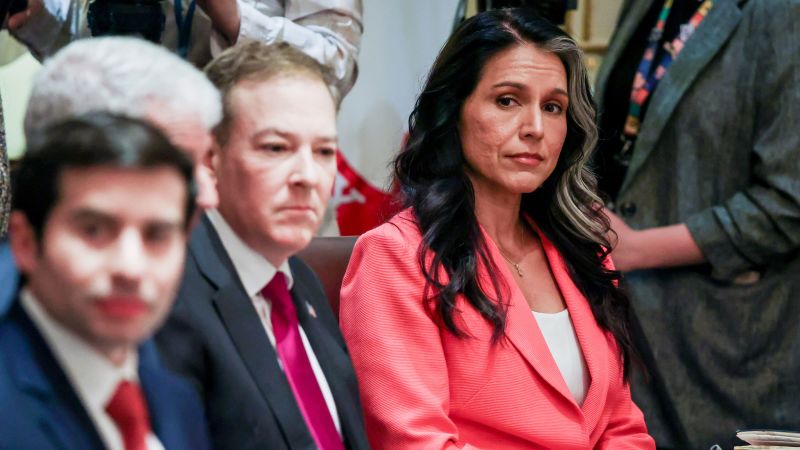
Gabbard Rescinds Biden Era Intel on Havana Syndrome
Gabbard rescinds Biden era intel assessments – Tulsi Gabbard, the former Director of National Intelligence, has withdrawn two intelligence assessments from the Biden administration that expressed doubt about the existence of Havana Syndrome. These reports, which were skeptical of the condition’s connection to foreign adversaries, have been officially revoked, reflecting a new direction in the intelligence community’s approach. The decision, outlined in a memo shared with all intelligence agencies, highlights concerns over earlier analyses that excluded key evidence, leaned on questionable medical research, and downplayed alternative explanations. Gabbard’s move underscores her commitment to revisiting the issue during her final months in office.
A Controversial Shift in Intelligence Analysis
The debate over Havana Syndrome has long been a source of tension within the intelligence community, splitting experts and officials on its validity. While previous assessments questioned the condition’s link to external actors, Gabbard’s withdrawal signals a renewed effort to align findings with the experiences of affected personnel. The revoked reports argued that the symptoms could not be definitively attributed to a foreign attack, but Gabbard and her allies insist that the analysis overlooked critical data. This shift is seen as a pivotal moment in reevaluating the claims surrounding the syndrome.
“These assessments were not only flawed but also failed to account for the suffering of those impacted,” said Rep. Rick Crawford, a Republican from Arkansas. “Gabbard’s decision to rescind Biden era intel is a significant step toward restoring trust in the intelligence process.”
The action may also have broader implications for how the intelligence community handles similar cases. With Gabbard’s departure imminent, the focus is shifting to whether her withdrawal will spark further investigation into the syndrome’s origins. Critics argue that the earlier reports constrained conclusions by emphasizing the lack of conclusive evidence, while supporters claim the revocation opens the door for more comprehensive analysis. This debate continues to shape the narrative around Havana Syndrome and its potential ties to foreign operations.
The Havana Syndrome: A Global Mystery
The phenomenon, known as Havana Syndrome, first emerged in late 2016 when U.S. diplomats in Havana, Cuba, reported unexplained symptoms like dizziness and cognitive issues. These incidents, initially attributed to a mysterious source, raised questions about possible directed energy attacks. The syndrome gained international attention as similar cases were documented in China, the UK, and other locations, complicating efforts to identify a single cause. The Biden era intel assessments sought to address these cases but were met with criticism for their limited scope.
Despite the initial reports, the intelligence community and the Department of Defense struggled to confirm a direct link to foreign adversaries. Senior analysts maintained that the evidence was insufficient, while victims and their advocates argued that key data was ignored. For example, some pointed to intercepted communications and classified reports suggesting Russian involvement. The tension between these perspectives has persisted, with each side presenting arguments that influence the ongoing discourse on the syndrome.
Revisiting the Evidence and Analytical Integrity
The two revoked assessments, issued in 2023 and early 2025, concluded that Havana Syndrome symptoms could not be definitively tied to a foreign attack. However, the intelligence community has since acknowledged that the analysis may have been too narrow, failing to consider all possible explanations. Gabbard’s decision to rescind these reports aims to correct that oversight, allowing for a more thorough examination of the cases. The move is viewed as a demonstration of her dedication to analytical integrity during her tenure.
With the focus keyword “Gabbard rescinds Biden era intel” now central to the article, the emphasis is on reevaluating the previous stance. The withdrawn assessments had previously suggested that the syndrome’s causes remained uncertain, but the new direction seeks to integrate a wider range of evidence. This shift could influence future research and policy decisions, ensuring that the intelligence community’s conclusions are more aligned with the experiences of those who have suffered from the syndrome. The outcome of this reevaluation remains to be seen.
