Judge orders Trump administration to restore signs changed at national parks

Federal Judge Mandates Restoration of National Park Signage Under Trump’s Policy Shifts
Judge orders Trump administration to restore – A federal judge in Massachusetts has directed the Trump administration to reverse changes made to national park signage nationwide, as part of a contentious effort by the previous administration to reshape historical narratives. The ruling, issued in a 63-page decision on Friday, marks a pivotal moment in the ongoing legal battle over the interpretation of history within the National Park Service. The judge, Angel Kelley, a Biden appointee, emphasized that the actions taken by the Trump administration were not merely about updating information but about selectively erasing diverse perspectives.
Curated History and Judicial Criticism
Kelley’s decision underscores the administration’s approach to historical representation, which she described as “a strategic effort to curate a limited version of American history.” In her ruling, she argued that the Trump administration’s directive to remove or alter signs and exhibits that did not fit its preferred narrative amounted to a form of historical manipulation. “By eliminating content that challenges its interpretation, the government has effectively sanitized the past,” she wrote, adding that this approach risks presenting a version of history that is incomplete and biased.
“Under the guise of promoting American dignity, this Administration seeks to share a limited history by ordering the removal of all signs, displays, and interpretive exhibits at National Parks that do not align with its preferred narrative, thereby telling half-truths.”
The ruling mandates the full restoration of all affected signage by July 3, a date coinciding with the nation’s 250th anniversary. This timeline aims to ensure that the historical context of the parks is reinstated before the significant milestone. Additionally, the decision blocks the Trump administration from making further modifications to the exhibits, effectively halting their ongoing campaign to adjust historical narratives.
Interior Department Responds with Defiant Tone
In response to the ruling, a spokesperson for the Interior Department labeled Judge Kelley as a “liberal activist judge,” signaling the administration’s intent to challenge the decision. The statement highlighted the department’s plans to appeal the ruling, framing it as a necessary step to defend its policy. “We are killing them all over again,” the spokesperson remarked, referencing the department’s commitment to maintaining its historical interpretation. The department also announced its intention to commemorate the nation’s 250th birthday by celebrating UFC Freedom 250 on the South Lawn of the White House, with Trump positioned as “the greatest president in the history of our country.”
Legal Challenge and Executive Directive
The case originated from a lawsuit filed in February by a coalition of conservationists and advocates, who accused the Interior Department and National Park Service of conducting a systematic campaign to erase historical and scientific truths. Central to this legal action was the March 2025 executive order signed by President Trump, titled “Restoring Truth and Sanity to American History.” The order tasked the Interior Department with identifying and revising public content that, according to the administration, “inappropriately disparage Americans past or living.”
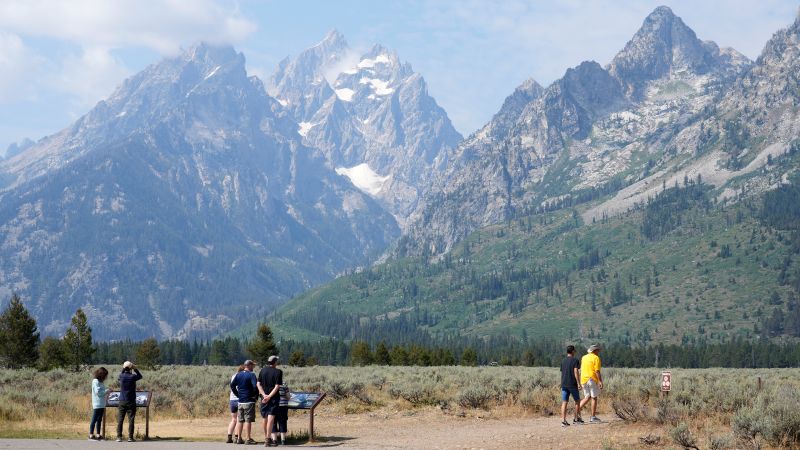
Under this directive, at least 45 signs across the country were altered or removed, according to Save Our Signs, an organization dedicated to tracking changes in national park exhibits. These signs covered a range of topics, from environmental issues like climate change to Native American history. One notable example involved a marker at Grand Teton National Park in Wyoming, which originally detailed the role of 19th-century explorer Gustavus Cheyney Doane in the massacre of 173 Piegan Blackfeet members. The sign was removed entirely, drawing criticism from historians and activists.
“We are killing them all over again”: Critics say history is being erased as Trump reshapes narratives at national parks.
Another affected site was Fort Sumter National Monument in South Carolina, where a sign outlining the potential consequences of rising seas—including the threat of flooding the fort’s walls and historic parade ground—was taken down. These changes sparked debates over whether the administration was prioritizing political messaging over educational accuracy.
Advocates Hail the Ruling as a Victory
Alan Spears, senior director for cultural resources at the National Parks Conservation Association, one of the groups involved in the lawsuit, praised the decision as a major step forward. “This is a good, favorable, just ruling that puts a stop, at least temporarily, to the sanitization, censorship, and softening of history as it’s told in our national parks,” Spears stated. He highlighted the importance of national parks in providing a comprehensive view of American history, noting that the park service has worked for decades to ensure stories are accurate and inclusive.
“When you start messing around with the kind of interpretation that the park service is able to provide, that’s a problem,” Spears added. “These sites have been a cornerstone of public learning, and their role in shaping historical understanding cannot be underestimated.” He emphasized that the changes to signage risked undermining the parks’ mission to educate visitors about the complexities of the nation’s past.
Education as a National Priority
Judge Kelley echoed Spears’ concerns, underscoring the educational significance of national parks. She described them as “a cornerstone of public learning,” with their primary purpose being to “tell the stories both of those who write history and those who go unheard.” In her ruling, she stressed that the government has a duty to present history in its entirety, rather than selectively highlight portions that align with a specific narrative.
“The beauty of history is the unvarnished storytelling of a time gone by and the delivery of undeniable truths,” Kelley wrote. “The Government’s stewardship of these park sites thus carries a responsibility to present history in full rather than in favored fragments.” Her decision reflects a broader commitment to preserving historical integrity, ensuring that future generations can engage with a balanced and diverse account of the nation’s legacy.
With the deadline approaching, the Trump administration faces the challenge of reversing its changes within a short timeframe. The ruling not only reinstates the signs but also reinforces the role of national parks as cultural and historical landmarks. As the parks prepare to welcome visitors with their restored narratives, the decision highlights the ongoing tension between political agendas and the preservation of historical truth.