Supreme Court to decide if migrants detained for months must receive bond hearings

Supreme Court to Decide if Migrants Detained for Months Must Receive Bond Hearings
Legal Dispute Over Prolonged Detention of Noncitizens
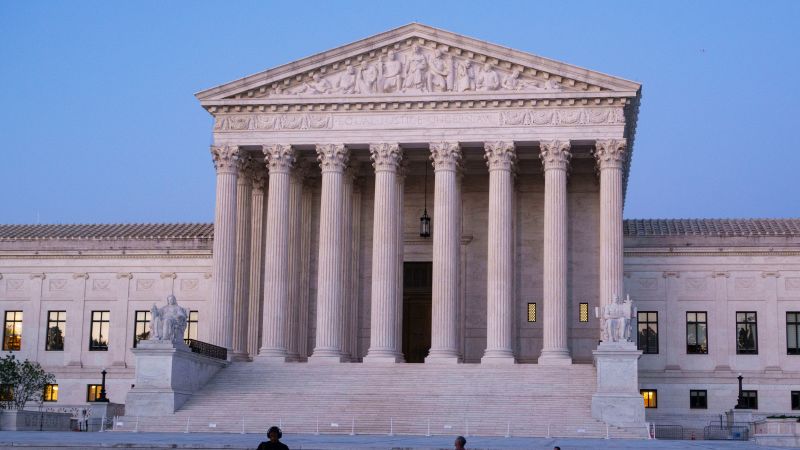
Supreme Court to decide if migrants – On Monday, the U.S. Supreme Court announced its intention to resolve a pivotal legal question: whether the government can detain noncitizens for extended periods without providing them the opportunity for bond hearings. This case could reshape the legal landscape for immigration enforcement, particularly under the Trump administration’s policies that prioritized swift removals of undocumented individuals. At the heart of the matter are two green card holders whose removal cases have spanned months, raising concerns about due process and the fairness of detention practices.
The individuals involved, both facing deportation, were convicted of aggravated felonies. One was detained for seven months, while the other spent nearly two years in custody before being released. Their cases were among several that highlight the administration’s approach to immigration enforcement, which has increasingly relied on mandatory detention to expedite the removal process. Neither of the men received a bond hearing to evaluate their risk of fleeing or the likelihood of reoffending, a step that critics argue is essential for safeguarding their legal rights.
Historical Precedent and Legal Arguments
Historically, the Supreme Court has grappled with the balance between immigration efficiency and individual freedoms. In 2016, the Court addressed a similar issue, ruling that federal law did not mandate bond hearings for noncitizens. However, that decision left unresolved whether the Constitution itself required such hearings after prolonged detention. This new case seeks to clarify that ambiguity, with the potential to redefine the limits of government authority in immigration matters.
The legal challenge stems from a 2024 ruling by a federal appeals court in New York, which held that the due process clause of the Constitution necessitates bond hearings for noncitizens held for extended periods. The Trump administration contested this decision, arguing it was “seriously misguided” and that the ruling could undermine the effectiveness of immigration enforcement. The administration’s appeal focuses on a specific law that mandates detention for noncitizens convicted of certain crimes, such as aggravated felonies.
Under this law, noncitizens are required to remain in detention until their removal cases are resolved, unless they qualify for release. The Trump administration has expanded this policy by reclassifying more types of immigrants into mandatory detention categories, effectively increasing the number of people subjected to prolonged custody. This move has faced legal challenges, with critics contending that it disproportionately affects individuals who pose no significant threat to public safety.
Constitutional Debate and the Role of the ACLU
The American Civil Liberties Union (ACLU), representing the two men at the center of the case, contends that the Supreme Court should decline to hear the appeal. The organization argues that the current circumstances of the case do not justify intervention, as one of the men has already left the country and the other was released without subsequent attempts to re-detain him. According to the ACLU, this situation demonstrates that the administration’s mandatory detention policies may already be working as intended, even without a Supreme Court review.
However, the legal battle is far from settled. In 2016, the Court’s decision left the question of constitutional requirements hanging. Justice Samuel Alito, writing for the majority, concluded that bond hearings were not required by law but stopped short of addressing whether the Constitution would demand them in prolonged detention. This omission has since been a point of contention, with Justice Stephen Breyer, who has since retired, delivering a dissenting opinion that challenged the majority’s interpretation.
“The court reads the statute as forbidding bail, hence forbidding a bail hearing, for these individuals,” Breyer wrote. “In my view, the majority’s interpretation of the statute would likely render the statute unconstitutional.”
Breyer’s dissent underscored the broader implications of the decision, suggesting that without a bond hearing, the government could detain noncitizens indefinitely, violating their fundamental rights. His argument aligns with the ACLU’s current stance, emphasizing that the law’s provisions may not account for the personal circumstances of those detained, such as ties to the community or a history of good behavior.
Impact on Immigration Policy and Judicial Review
The Trump administration’s appeal to the Supreme Court also hinges on its broader strategy to overhaul immigration procedures. By reclassifying certain offenses as grounds for mandatory detention, the administration has sought to accelerate the deportation process and reduce the number of individuals eligible for release. This approach has been criticized for creating a system where noncitizens are detained without the opportunity to present their case, even if they are not considered a flight risk or a threat to the community.
Legal experts note that the case has significant implications for the future of immigration law. The 2024 appeals court ruling set a precedent that could force the government to justify long-term detentions with stronger evidence. In contrast, the Trump administration’s appeal argues that the current standards are sufficient and that the law allows for efficient removals without infringing on due process rights.
As the Supreme Court prepares to weigh in, the decision will determine whether the government can continue detaining noncitizens without periodic hearings to assess their risk of flight or danger. The Court’s ruling may also influence how future administrations handle immigration enforcement, potentially setting a new standard for the treatment of detained individuals. With the stakes high, the case is expected to draw attention from both legal scholars and policymakers, as well as advocacy groups pushing for greater protections for migrants.
The two men’s cases are not isolated examples. They reflect a pattern of detention that has become central to the Trump administration’s immigration strategy. Critics argue that mandatory detention without bond hearings creates a system where noncitizens are held indefinitely, often without the chance to challenge their status. This practice has sparked debates about the fairness of immigration procedures and the extent to which the government can prioritize efficiency over individual rights.
Legal analysts predict that the Court’s decision will have far-reaching effects. If it sides with the appeals court, the government may be forced to provide bond hearings for noncitizens detained for extended periods, which could slow down the removal process and increase the number of people released. Conversely, a ruling in favor of the administration could allow for continued detention without such hearings, reinforcing its approach to immigration enforcement.
Broader Implications for Immigrants and the Judiciary
The case also highlights the role of the judiciary in overseeing immigration policies. While the 2024 ruling by the federal appeals court was a critical step toward protecting noncitizens’ rights, the Supreme Court’s review will determine whether that decision holds up under constitutional scrutiny. The Court’s ability to interpret the law’s intent will be central to the outcome, as it weighs the balance between national security and individual liberties.
For the two men in question, the outcome of the case may mean the difference between continued detention and eventual release. Their attorneys argue that the government’s failure to provide bond hearings has already been sufficient to justify their release, especially given the prolonged nature of their custody. If the Supreme Court rules in their favor, it could signal a shift toward more lenient detention policies, particularly for individuals who have been in custody for months.
Ultimately, the decision will test the limits of federal authority in immigration matters. It could either affirm the right of the government to detain noncitizens indefinitely or require it to provide periodic hearings to ensure due process. As the Court prepares to deliver its ruling, the case remains a focal point for debates about the rights of immigrants and the fairness of detention practices in the United States.