America partied hard this weekend. In Brooklyn, Puerto Rican joy was out in full force

America partied hard this weekend. In Brooklyn, Puerto Rican joy was out in full force
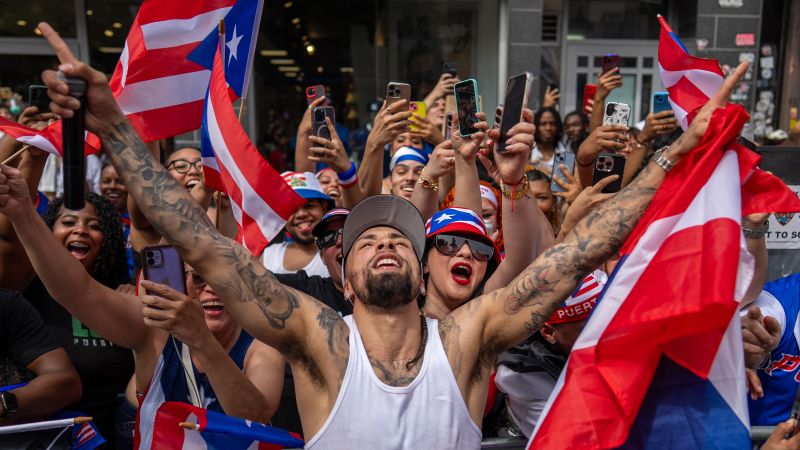
America partied hard this weekend In Brooklyn – On a sweltering Saturday in June, the streets of Bushwick, Brooklyn, became a living canvas of color and sound, alive with the vibrant energy of the Puerto Rican Day Parade. For a mile, the neighborhood transformed into a celebration of heritage and pride, where the air thrummed with the rhythms of reggaeton and salsa, and the scent of tropical flavors wafted through the crowd. Musicians like Tego Calderón and Plan B set up makeshift stages, their beats echoing off the pavement as locals gathered to honor their roots. Nearby, Héctor Lavoe and El Gran Combo’s timeless melodies blended with the chatter of families and the laughter of festivalgoers, creating a sensory tapestry that felt both nostalgic and contemporary.
The atmosphere was electric, with horns blaring and the unmistakable aroma of watermelon and coconut ice cream mingling in the humid air. Vendors offered piragua snow cones, their bright hues contrasting with the city’s usual grays. Elders, seated on personal lawn chairs, watched the festivities unfold, their smiles a testament to the enduring bond between the diaspora and their homeland. Surprise appearances by Mayor Zohran Mamdani and NBA star Jose Alvarado only heightened the sense of community, as the parade became a stage for both local pride and national recognition.
Meanwhile, across the country, the nation celebrated in a different way. In Washington, D.C., the White House lawn buzzed with the spectacle of UFC fighters competing in a display of athletic masculinity, marking the semiquincentennial of American independence. President Donald Trump’s 80th birthday festivities, complete with red, white, and blue banners, offered a striking contrast to the cultural fervor in Brooklyn. Yet, the global stage also saw a different kind of American triumph: the co-hosting of the World Cup, where the U.S. kicked off its campaign with a commanding 4-1 win over Paraguay on Friday. These events, though geographically and culturally distinct, underscored a shared sense of national identity.
Back in New York, the energy of the Knicks’ NBA championship victory on Saturday night carried over into Sunday’s parade, turning the multicultural gathering into a celebration of collective joy. The Bushwick parade, part of a tradition that began in 1958, has grown from its humble origins in Spanish Harlem to become a cornerstone of the city’s Puerto Rican culture. Now, millions of people—participants and spectators alike—participate in this annual ritual, which serves as a powerful reminder of the diaspora’s resilience and unity.
“There’re more Puerto Ricans in the US than there are on the island right now. Now that I’ve been here in the city for 13 years, there’s a lot of longing to be back home,” says Monica Santos Gil, founder of the handbag brand Santos by Monica. “For those who maybe feel less connected to the culture of the island, the parade is such an incredible opportunity for Puerto Ricans to come together, celebrate that connection, and feel close to home.”
Santos Gil’s words reflect a broader sentiment among the Puerto Rican community in New York. The parade is not just a parade—it’s a cultural lifeline, bridging the gap between the island’s traditions and the urban landscape of the city. For many, it’s a chance to reconnect with their heritage, to see it reflected in the streets, and to remember the roots that shaped their identity. The event’s evolution from its original route in Spanish Harlem to its current path down Fifth Avenue in Midtown highlights its adaptability and significance.
Yet, the celebrations are far from limited to the main parade. Across the city, the Puerto Rican Day Parade weekend spills into other neighborhoods, with dance parties, festivals, and community gatherings taking place on the Lower East Side, Sunset Park, and Bushwick. This year’s events in Bushwick, however, stood out for their youthful exuberance. The crowd was more energetic, with people cheering, singing, and dancing through the streets, their enthusiasm a reflection of the community’s dynamic spirit. The festival’s emphasis on street culture also made it a showcase for Puerto Rican fashion, a style that defies easy categorization.
“Growing up in New York, my form of the Puerto Rican diaspora is very different from others’,” says Edwin Reyes, a Bronx-based fashion designer. “Because I have the culture of being Puerto Rican, but also New York culture, going to the Puerto Rican parade is such an incredible moment of bringing those two landscapes together. It’s a yearly reminder that says, ‘OK these are my people.’”
Reyes’ perspective captures the essence of the parade’s cultural duality. While the main event in Midtown draws families and corporate sponsors, Bushwick’s version feels more grassroots, reflecting the diverse ways Puerto Ricans express their identity. The fashion at the festival was a standout feature, with attendees sporting vintage graphic tees, cornflower blue basketball shorts, and special-edition Nike sneakers. Puerto Rican flags were reimagined as accessories—earrings, crop tops, headbands—proving that the island’s symbols have found a unique place in the city’s style.
Santos Gil notes that the way Puerto Ricans in the U.S. wear their pride is often more visible than on the island itself. “Americans tend to showcase their Puerto Rican heritage through flags and symbols, from their clothes to their cars,” she explains. “It goes back to that longing and connection to being part of the island.” This contrast between the island’s laid-back aesthetic and the city’s bold, urban expression is a defining feature of the Nuyorican experience. On the island, colors and fabrics are chosen for their harmony with nature and climate, but in New York, the culture is shaped by the city’s pulse, resulting in a more vibrant and assertive style.
The parade’s role as a cultural touchstone is further amplified by its historical context. Since its inception in 1958, it has grown from a small neighborhood event into a massive celebration that unites generations. Today, the parade not only honors Puerto Rican heritage but also serves as a platform for contemporary artists and designers to blend tradition with modernity. Reyes’ label, for instance, creates looks that draw from island symbols, such as the 2025 collection’s red, white, and blue ruffled organza maxi, which paid homage to the nation’s colors while celebrating Puerto Rican pride.
As the sun set over Brooklyn, the parade’s energy lingered in the air, a testament to the community’s enduring spirit. The events of the weekend, from the NBA triumph to the World Cup debut, highlighted how Puerto Ricans contribute to America’s cultural and sporting narratives. Whether through the rhythm of salsa, the boldness of street fashion, or the shared joy of a citywide celebration, the Puerto Rican Day Parade remains a vital expression of identity, unity, and pride. It is a reminder that, despite the distance from their homeland, the spirit of Puerto Rico lives on in every corner of New York City.
The festival’s impact extends beyond the immediate celebration, fostering a sense of belonging among those who may feel disconnected from their roots. For the younger generation, it’s a chance to embrace their heritage without hesitation, to dance to the music of their ancestors, and to wear their culture with confidence. The parade’s evolution—from its original route to its current form—demonstrates how traditions adapt while remaining rooted in their origins