Jay Wright molded Jalen Brunson and the Nova Knicks. In their moment of glory, he was watching – on his phone, from his car

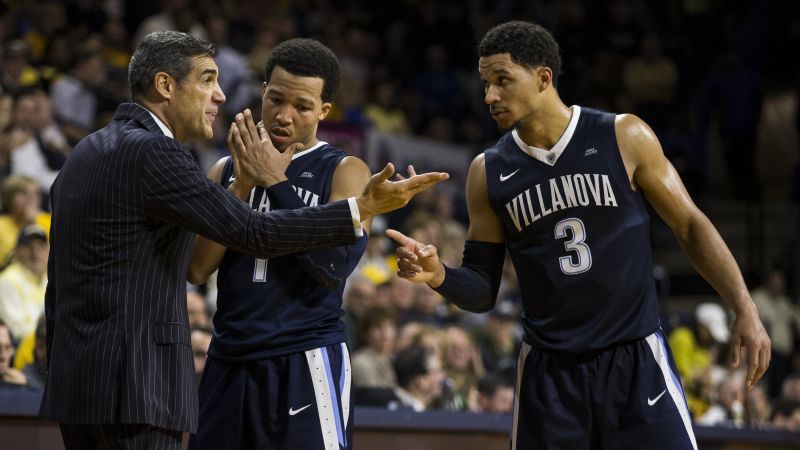
Jay Wright molded Jalen Brunson and the Nova Knicks. In their moment of glory, he was watching – on his phone, from his car
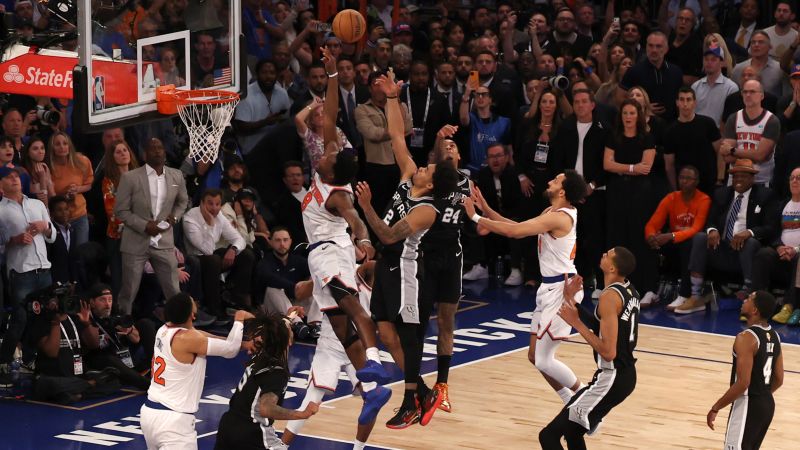
Jay Wright molded Jalen Brunson – On Saturday night, the former Villanova coach found himself in Red Bank, New Jersey, at a wedding celebrating the daughter of his wife’s college roommate. Amid the laughter and clinking glasses, he remained absorbed in the NBA Finals, watching the game on his phone from the back of a car. This quiet spectatorship marked a unique twist in the story of the Knicks’ championship triumph—a moment where the man who once shaped their roster sat on the sidelines, basking in the quiet pride of watching his former players claim history. The Tri-State Area buzzed with excitement, but for Wright, the roar of the crowd was secondary to the fulfillment of a long-anticipated dream.
A Coach’s Quiet Witness
Wright’s presence at the wedding was a reminder of his humility. While others celebrated the Knicks’ victory in front of cheering fans, he chose a solitary vantage point. His wife, Patty, was the only one beside him, and the car became a private theater for the final moments of the NBA Finals. This scene encapsulated his journey with the team, one that began years earlier when he first assembled Jalen Brunson, Josh Hart, and Mikal Bridges into a cohesive unit. Their success, now etched into history, felt like a culmination of his coaching philosophy—a philosophy that emphasized collective effort over individual accolades.
As the playoffs unfolded, the Knicks’ relentless focus on improvement and mental toughness became a hallmark of their run. Wright, who had been avoiding media attention throughout the postseason, found himself in an unusual position: the coach who once taught his players to prioritize the team’s goals over personal glory was now watching them do the same. He had even declined to attend Game 4, only agreeing to the Garden after his son, Jalen’s father, and Knicks assistant Rick Brunson insisted. Yet, his reluctance to be the center of attention remained evident. “I didn’t want to be out there, with my face all over the place, when the goal hadn’t been accomplished yet,” he told CNN Sports. “It would have been so inauthentic. This was theirs, not mine.”
The Legacy of Villanova’s Culture
The Knicks’ approach during the playoffs echoed the ethos Wright cultivated at Villanova. There, his players were taught to subsume their personal ambitions for the greater good, a mindset that transformed the Wildcats into a dynasty. The team’s attitude chart, a visual reminder of their collective commitment, was a testament to this philosophy. Updated regularly by the team’s leader in attitude points, it rewarded actions like diving for loose balls or taking charges—behaviors that prioritized the team’s success over individual recognition. This concept became so ingrained that it bordered on instinct, with players shouting “Attitude” after huddles and using it as both a cheer and a reprimand.
Wright’s coaching style was as demanding as it was effective. Known for his intensity, he was not a soft-spoken mentor but a disciplined leader who saw selfishness as a betrayal of the team’s purpose. His players, including Brunson and Hart, internalized this rigor, often sacrificing personal moments for the greater mission. During the playoffs, Brunson turned off his social media, while Hart momentarily stopped responding to texts from his coach, offering only occasional nods of approval. “They understood that we’re in this process and we have to learn,” Wright explained. “There’s no celebrating the previous game. It’s not going to do any good. It’s that mental toughness, that’s why they won.”
A Triumph Rooted in Teamwork
When Villanova won its national championships, the team’s success was credited to a blend of talent and discipline. The 2016 and 2018 NCAA Tournament runs, marked by a staggering 17.6-point average margin in their six games, were the result of this unity. Wright’s teams didn’t just win; they dominated, breaking opponents’ will through unyielding focus. This same mentality carried over to the Knicks, whose victory was a collective achievement, not the product of a single star. As New York woke up on Monday to a citywide celebration, the Knicks’ triumph was a mirror of the lessons Wright had instilled over the years.
Despite his hands-off approach during the final moments of the NBA Finals, Wright’s fingerprints were everywhere. The Knicks’ resilience, their ability to adapt and overcome, and their emphasis on shared responsibility all traced back to the coaching methods he honed at Villanova. Yet, he insisted that the credit belonged to the players themselves. “There are certain things we taught them,” he said, “but with their own intelligence, experiences, and the families around them, they took it to another level.” His humility, though genuine, was a calculated act—leaving the spotlight for the players while allowing the world to recognize his influence.
Wright’s story is a reminder of how coaching can shape not just careers but legacies. The Nova Knicks, a team that once seemed like a gamble, became champions through a blend of talent and tenacity. Their journey, from the quiet hours of a car in Red Bank to the bright lights of Madison Square Garden, was a testament to the values Wright had instilled. Even as the media celebrated their victory, he remained a spectator, content to let the players shine. “This was theirs,” he reiterated, “not mine.”
In a world that often glorifies individualism—selfies, influencers, and social media stardom—the Knicks’ victory was a refreshing counterpoint. Their success was a reminder that greatness, when shared, can feel more profound. Wright’s role as a mentor was not to take center stage but to ensure that the team’s victory was a product of its own making. The final game of the NBA Finals was a fitting conclusion to a story that began with him as the architect, but ended with the players as the heroes. As the dust settled, the city of New York marveled at their triumph, while Wright, ever the humble observer, quietly reflected on the journey that brought them here. The combination of his guidance and their determination had created something special, a victory that belonged to all of them, not just one.
Wright’s presence at the wedding also underscored the personal connections that fueled his coaching. The ceremony was a celebration of friendship, a backdrop for the Knicks’ championship win. It was a moment that bridged two different worlds: the intimate setting of a family event and the grand stage of professional sports. In that car, he was not just a witness to history but a symbol of the enduring impact of mentorship. The Knicks’ success, though celebrated as a team effort, was inextricably linked to the foundation he built years earlier. As the playoffs progressed, the team’s focus on growth and discipline became a blueprint for their championship run—a run that, in its final moments, brought Wright back to the spotlight, albeit in a way he would have preferred.