For Iran’s leaders, surviving the war may prove easier than winning the peace

Iran’s Leaders Survive War, But Peace Remains Uncertain
Strategic Resilience in the Face of Conflict
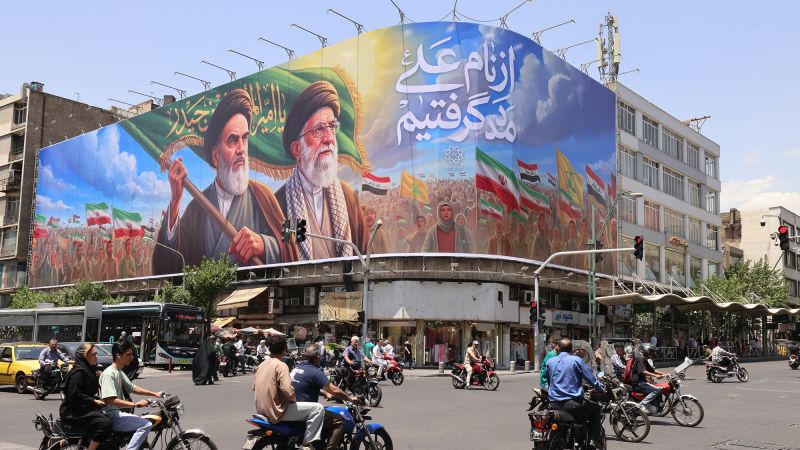
For Iran s leaders surviving the war – The 15-week war between Iran and its adversaries has tested the regime’s ability to endure, with leaders asserting that their survival was more straightforward than achieving peace. Despite the U.S. military’s initial dominance, Iran’s ability to withstand the pressure has been a defining feature of the conflict. The Islamic Republic’s leaders claim a strategic victory, emphasizing their resilience in maintaining core institutions and resisting external influence. While President Donald Trump declared American success early, Iran’s defiance led to a ceasefire that left the terms of peace unresolved, setting the stage for future challenges.
Iran’s strategy during the war centered on asymmetric warfare, leveraging its geographical position to impose economic strain on opponents. The closure of the Strait of Hormuz, a critical chokepoint for global oil trade, disrupted supply chains and highlighted Iran’s capacity to affect international markets. This maneuver not only showcased the country’s tactical ingenuity but also reinforced its position as a regional power. However, the ceasefire agreement, while ending hostilities, did not compel Iran to abandon its nuclear program or its support for allies, leaving many questions about the durability of the peace.
Reinforcing Domestic Power Structures
The war’s outcome has strengthened Iran’s hardline leadership, who now see the conflict as a testament to their resilience. Mojtaba Khamenei, the son of Supreme Leader Ayatollah Ali Khamenei, was appointed as his father’s successor, signaling a shift toward hereditary rule within the regime. This decision underscores the hardliners’ belief in their strategic superiority, even as President Masoud Pezeshkian, a reformist, faces marginalization. The consolidation of power among Iran’s leaders suggests a long-term vision where survival in the war is a stepping stone toward greater influence in the region.
While the regime’s resolve has been bolstered, internal divisions persist. Reformist factions, once vocal in their criticism of the war, have been sidelined, with many forced into administrative roles or facing repression. Analysts note that this consolidation of power may strengthen the leadership’s control but could also stifle dissent. The war’s legacy, however, is not solely political—it has also shaped public perception. With the ceasefire in place, Iran’s leaders are now tasked with proving that their survival in the war translates to lasting stability for the nation.
Economic and Social Repercussions
The economic strain of the war has left Iran’s leaders in a precarious position, balancing the need to sustain military efforts with the pressure to improve domestic conditions. Inflation and unemployment have risen, even as the ceasefire brings an end to immediate hostilities. The regime’s focus on survival has prioritized short-term resilience over long-term economic reforms, a strategy that has been both effective and costly. While the war allowed Iran to preserve its institutions, the economic aftermath may challenge its ability to maintain public support.
Sanam Vakil, director of the Middle East and North Africa Programme at Chatham House, highlights the regime’s current sense of legitimacy.
“They have more confidence and probably more support because they’ve survived the war and have a sufficiently loyal base,” she said.
Yet, she also warns that a significant portion of the population remains critical of the Islamic Republic, questioning whether the war was worth the cost. This internal division could complicate the regime’s path to stability, even as it celebrates its perceived triumph over external forces.
Future Prospects and Regional Dynamics
Iran’s leaders now face the challenge of converting wartime endurance into sustainable peace. The ceasefire, while a diplomatic achievement, has not fully resolved the underlying tensions that fueled the conflict. The country’s concessions, such as diluting its uranium stockpile, were seen as strategic moves to ease international pressure, but they also reveal a willingness to prioritize survival over complete victory. Analysts argue that the agreement reflects a compromise that aligns with Iran’s goals, ensuring its continued influence in the region while avoiding total collapse.
For Iran’s leaders, the path to lasting peace will require more than military success—it will demand economic recovery and political maneuvering. The war has demonstrated their ability to survive, but the test of winning the peace remains. As the country navigates this new phase, the legacy of its resilience will shape its future interactions with global powers and regional allies. The balance between maintaining hardline policies and addressing domestic discontent will determine whether the war was truly a turning point in Iran’s trajectory toward stability.