White House staff bids farewell to planes used as Air Force One for more than 35 years

White House Staff Bids Farewell to Decades-Old Air Force One Fleet
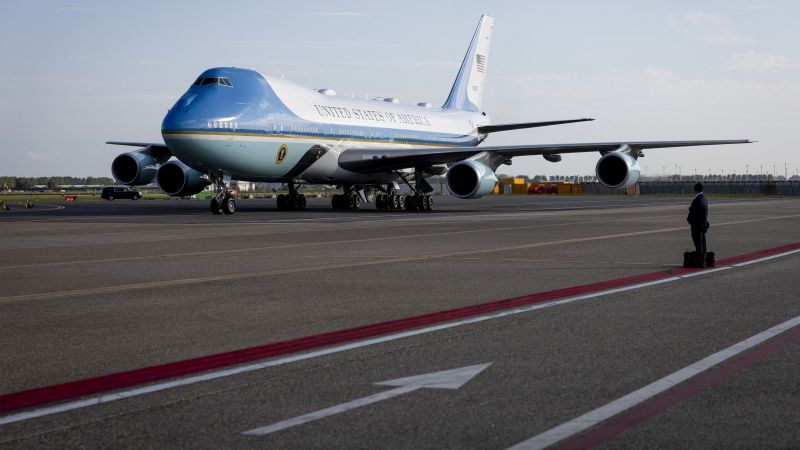
White House staff bids farewell to planes – On a Thursday morning, two White House officials commemorated the retirement of the Boeing 747-200 aircraft that has served as Air Force One for over three decades. The planes, which were last seen in action after a morning landing near Washington, are now being phased out as the administration prepares to deliver its first of three newly modified aircraft to replace them. The transition marks a significant shift in the nation’s presidential air fleet, with the new models expected to soon take over the role of the iconic executive transport.
The Emotional Sendoff of a Veteran Aircraft
White House communications director Steve Cheung shared a final photo of the aircraft on social media, captioning it with a heartfelt tribute:
“The last ride,” he wrote, adding, “Well done, good and faithful servant.”
Meanwhile, Deputy Chief of Staff Dan Scavino posted a video of the plane, reflecting on its years of service.
“I’ve had the privilege of flying globally on this legendary aircraft for nearly six years,” he noted, “of the 35 years it has been in operation… THANK YOU.”
These posts underscore the deep connection between the staff and the planes, which have been a constant companion during presidential travels since their debut in 1990.
The New Era of Air Force One: Three Aircraft in the Works
The Air Force is set to introduce three Boeing 747-800 models, designated as VC-25Bs, to modernize its fleet. These modifications are part of a broader effort to ensure the presidential aircraft meet current operational demands. Among the new additions, a luxury jet donated by the Qatari government stands out as a bridge between the aging VC-25As and the two additional planes Boeing is still working on, which are projected to be completed in the coming years. This donated aircraft, based at Majors Airport in Greenville, Texas, has been undergoing extensive upgrades since last summer.
The Qatari jet’s arrival is anticipated by summer 2026, as reported by CNN. Its inclusion was a strategic move to address the gap left by the older models while the full retrofitting of the two Boeing planes progresses. The Air Force has emphasized that the VC-25B will join the active executive airlift fleet alongside the existing VC-25A and the C-32, a Boeing 757 aircraft commonly used for vice presidents, first ladies, and cabinet officials. This integration ensures continuity in presidential mobility, even as the older planes are retired.
The Legacy of the VC-25A
The retiring VC-25As have a rich history, having transported U.S. presidents to countries across the globe, from Iraq and Cuba to China and Australia. George H.W. Bush was the first to ride one of these aircraft in 1990 during a trip to Kansas. The planes became even more notable during the September 11, 2001, attacks, when former President George W. Bush was swiftly evacuated from a Florida elementary school after the destruction of the World Trade Center’s South Tower. One of the VC-25As ferried him to a nearby Air Force base in Louisiana before proceeding to a secure bunker in Nebraska.
Despite their long service, the VC-25As have faced criticism, particularly from former President Donald Trump, who has often highlighted their age during public addresses. The current administration, however, has acknowledged their reliability and stated that they will remain part of the fleet for now. This decision was made to allow the newer models to gradually take over operations, ensuring a smooth transition without disrupting presidential travel schedules.
Modifications and Security Upgrades
The transformation of the Qatari jet into a functional Air Force One required meticulous work by the Air Force. According to CNN, the aircraft had to be thoroughly dismantled and rebuilt to include advanced security and communication systems. This process, which began last summer, involved retrofitting the plane with cutting-edge technology to meet modern standards. The final modifications were completed by mid-2026, with the Air Force confirming it is on track to deliver the aircraft in its new red, white, and gold livery this summer.
During this retrofit, the plane’s original paint scheme—chosen by Trump during his first term—was replaced by the Biden administration’s preference for a more traditional light blue and white design. However, the decision to revert to Trump’s color palette was reinstated after his re-election, reflecting the ongoing influence of his preferences on the fleet’s appearance. The new planes’ color scheme, a mix of red, white, gold, and dark blue, is expected to become a recognizable symbol of the executive branch in the years to come.
Aircraft Tracking and Final Flights
Open-source flight tracking data from ADS-B Exchange reveals the last few movements of the retiring VC-25As. One of the planes, with tail number 29000, landed at Joint Base Andrews on Thursday morning after carrying Trump on his European trip. Another VC-25A had not been in active service since June 2, when it touched down at Majors Airport in Texas. This location, where the Qatari jet is being converted, has become a hub for the presidential fleet’s evolution.
The Qatari jet’s recent flight on June 10 was a symbolic test, with the aircraft completing a short loop and returning to the same airport. This maneuver was likely a final check before its official delivery. Air Force Secretary Troy Meink previously estimated the retrofitting cost at less than $400 million, a figure that has been debated by lawmakers and security officials. While some questioned the expense of accepting the donation, others praised the decision as a necessary step to maintain presidential mobility without delays.
Future of the Fleet and Historical Significance
As the new VC-25Bs prepare for service, the fate of the old aircraft remains uncertain. The Air Force has not provided details on when the two retired planes will be officially decommissioned or how they will be repurposed. Nevertheless, their legacy is undeniable. These planes have been integral to U.S. foreign policy, serving as mobile command centers during crises and as diplomatic tools during state visits. From their early days in the 1990s to the 9/11 response, they have borne witness to pivotal moments in American history.
The transition to the new fleet also highlights the broader debate over presidential travel. While the Qatari donation eased the immediate need, the long-term reliance on Boeing’s modifications has drawn scrutiny. Critics argued that the cost and security risks of accepting the gift were significant, but the administration has defended the move as a pragmatic solution. As the VC-25Bs take to the skies, they carry the hopes of a nation eager to see its executive transport evolve into a symbol of modern leadership and technological advancement.
Legacy and Modernization: A Dual Path
Even as the new aircraft are prepared for service, the older models will continue to play a role in the fleet. The Air Force’s statement notes that the VC-25As will remain part of the active fleet, ensuring they are not entirely discarded. This strategy allows for redundancy and flexibility, particularly during the transition period. The dual approach—retiring the older planes while maintaining their presence—reflects a balance between honoring past service and embracing future capabilities.
For many, the VC-25A represents more than just a vehicle; it is a testament to decades of presidential travel and international engagement. Its retirement marks the end of an era but also the beginning of a new chapter for the U.S. Air Force’s executive aircraft program. As the first of the new planes is set to arrive, the nation’s leaders will take to the skies in a fleet that combines historical significance with cutting-edge technology. The journey from the old to the new underscores the enduring importance of Air Force One in both domestic and global affairs.