The Great Hydration Break Debate takes over the World Cup

The Great Hydration Break Debate takes over the World Cup
The Great Hydration Break Debate takes – As the World Cup progresses into its second week, the tournament has already delivered a flurry of action, with seven days of matches producing 24 group games and 75 goals. North America, hosting the event, has seen extreme weather conditions this summer, including high temperatures and humidity that have tested players’ endurance. Yet, amid the excitement, a contentious issue has emerged: the introduction of hydration breaks during matches. These brief interruptions, now a focal point of discussion, have sparked debates among fans, players, and analysts alike.
Hydration Breaks: A Controversial Innovation
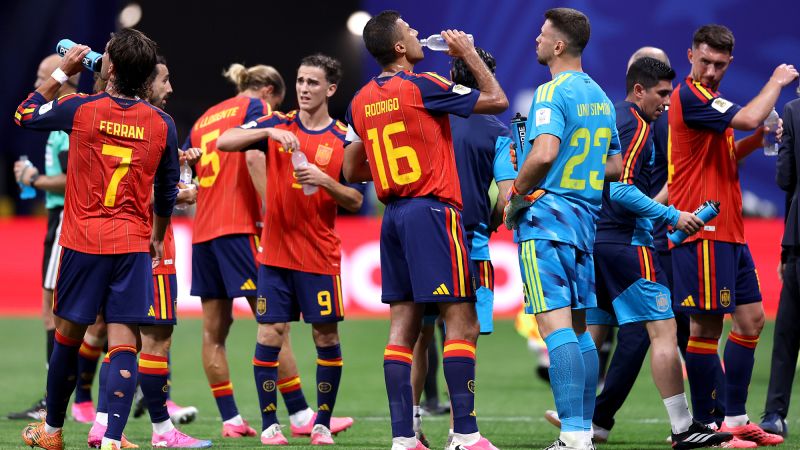
The hydration breaks, implemented by FIFA, are designed to provide players with essential rest and hydration mid-game. Each half is paused for three minutes, allowing teams to replenish fluids and electrolytes. This initiative, framed as a commitment to player welfare, aims to counteract the physical strain of playing under harsh conditions. However, its mandatory nature—regardless of the actual weather—has led to accusations that it’s more about commercial interests than genuine concern for athletes.
“Hydration breaks are a bit interesting,” said Netherlands captain Virgil van Dijk. “Because I was obviously watching almost all the games up until today, and every time going to commercial is a bit, not really how I like it. I think for the neutral watchers on TV, it’s also not great.”
Van Dijk’s critique highlights a growing sentiment among players that the breaks disrupt the natural rhythm of the game. While FIFA claims these pauses are necessary to protect players from heat-related risks, critics argue they’ve been applied inconsistently. For instance, in Toronto’s Ghana vs Panama match, the temperature was only 19 degrees Celsius (66.2 degrees Fahrenheit), yet the break was enforced. Similarly, even in climate-controlled stadiums, the three-minute interruptions remain unchanged.
This decision has effectively divided matches into four quarters, a structure familiar to fans of US sports but alien to traditional soccer fans. The change has also created opportunities for broadcasters to insert advertisements, with FOX, for example, cutting to ads during these stoppages. Some viewers noted that the network even missed critical moments during the Mexico-South Africa opener, raising questions about the balance between commercial value and game integrity.
Criticism and Counterarguments
Opponents of the hydration breaks argue that they’ve had a noticeable impact on momentum, particularly in matches where teams rely on continuous play to build pressure. Several games this week have seen dramatic shifts after the brief intermission, with managers using the time to adjust tactics. This has led to speculation that the breaks are more about coaching strategy than player health. “For me, it’s a coaching break more than a cooling break,” remarked Belgium coach Rudi Garcia. “So to me, it’s very important.”
While some see the breaks as beneficial, others view them as an encroachment on the purity of the sport. Fans have expressed frustration, with England supporters reportedly booing during hydration breaks in their 4-2 victory over Croatia. The controversy has intensified as the tournament continues, with many questioning whether FIFA’s focus on commercialism is overshadowing the game’s traditional values.
Despite the backlash, FIFA remains steadfast in its support for the policy, citing expert endorsements and the need to adapt to modern conditions. The organization has emphasized that hydration breaks are a proactive measure to ensure player safety, especially in regions where summer heat can be relentless. However, the policy’s universality—applying even in milder climates—has drawn skepticism, with some suggesting it’s a calculated move to maximize revenue from advertising deals.
Canada’s Comeback in the Opening Match
While the hydration breaks dominate headlines, the tournament has also showcased moments of inspiration. Canada’s performance in their opening match against Bosnia was a mixed bag, as they struggled to match the intensity of their opponents in the first half. The team appeared vulnerable, particularly when defending set-pieces, but manager Jesse Marsch made tactical adjustments in the second half. These changes revitalized Canada, transforming them into a more cohesive unit.
The additions of winger Ali Ahmed and striker Cyle Larin were pivotal to this turnaround. Their inclusion brought fresh energy and attacking flair, helping the team adapt to the demands of the competition. Canada’s ability to rebound from a difficult start demonstrated the resilience of the squad, even as the debate over hydration breaks continues to simmer. This victory, though not without its challenges, offered a glimpse of the team’s potential in the tournament.
The ongoing discussion around hydration breaks reflects a broader cultural divide. On one side are those who view them as a necessary evolution, ensuring players can perform at their best despite environmental stressors. On the other side are purists who argue the breaks disrupt the flow of the game and prioritize profit over passion. As the World Cup unfolds, this debate will likely shape the narrative around how the sport is perceived and experienced.
With more than half of the tournament already completed, the hydration breaks have become a symbol of the changing landscape in international soccer. Whether fans embrace or reject them, the policy is here to stay, and its long-term impact will be closely watched. For now, the debate continues, with players, coaches, and supporters divided over its merits and drawbacks.
As the competition moves forward, the World Cup will serve as a testing ground for this controversial rule. The question remains: will these breaks enhance the game, or will they become a point of contention that defines the tournament’s legacy? One thing is certain—players and fans alike will have their say in the weeks to come.
Looking Ahead
The introduction of hydration breaks has not only affected match dynamics but also influenced how the World Cup is broadcast and consumed. With more time for commercials, the viewing experience for some audiences has shifted, creating a hybrid of soccer and advertising. This has sparked conversations about the future of the sport and its ability to balance innovation with tradition.
Ultimately, the debate over hydration breaks underscores the tension between modernization and heritage in soccer. While the rule may have its supporters, its critics argue that it represents yet another step toward commercializing the game. As the World Cup progresses, the effectiveness of these breaks—and their role in shaping the tournament—will be scrutinized by fans, analysts, and players around the globe.