Claudia Sheinbaum Fast Facts

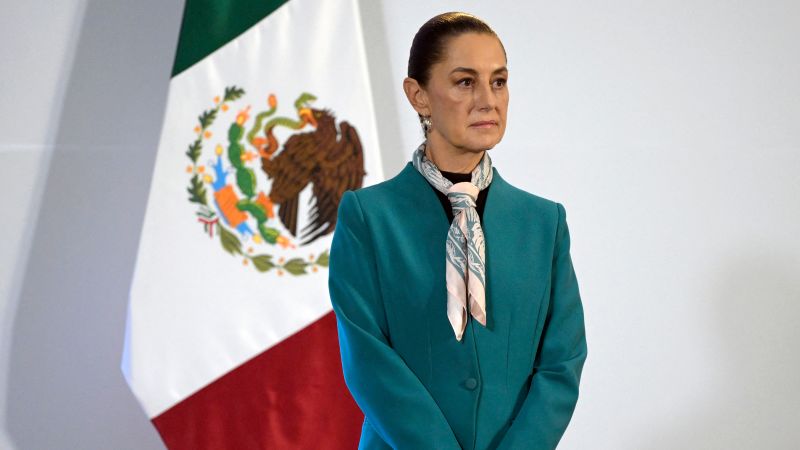
Claudia Sheinbaum Fast Facts
Political Milestones and Historical Significance
Claudia Sheinbaum Fast Facts – Claudia Sheinbaum made history as the first woman and the first individual of Jewish descent to assume the role of Mexico’s president. Her election in 2024 marked a pivotal moment in the nation’s political landscape, breaking barriers that had long defined its leadership. Sheinbaum’s presidency, which began on October 1, 2024, follows a career marked by a blend of scientific expertise and progressive political engagement. Born on June 24, 1962, in Mexico City, she has since emerged as a symbol of representation and change, navigating both academic and public spheres with equal determination.
Early Life and Family Influences
Sheinbaum’s journey began in the heart of Mexico’s capital, where her parents instilled in her a sense of civic duty and activism. Her father, Carlos Sheinbaum, was a chemical engineer, while her mother, Annie Pardo, was a biologist and professor. These early influences shaped her worldview, particularly through their participation in Mexico’s 1968 protest movement. Her grandfather’s family, who fled Europe to escape the Holocaust, further underscored her connection to Jewish heritage, a legacy she carries with pride though she rarely discusses it publicly.
Education and Professional Path
Sheinbaum’s academic foundation was laid at the National Autonomous University of Mexico (UNAM), where she earned a bachelor’s degree in physics in 1989. Her pursuit of knowledge continued with advanced studies in energy engineering, culminating in a master’s and doctoral degree from the same institution. Her research at the Lawrence Berkeley National Laboratory in California highlighted her global perspective on environmental challenges. Known professionally as “la Doctora,” she has often emphasized the importance of scientific rigor in policymaking, blending her expertise in climate science with a commitment to sustainable development.
Her early career included a stint as a faculty member at UNAM’s Engineering Institute from 1995 onward, where she cultivated a reputation for intellectual leadership. By 2000, she was appointed environment secretary of Mexico City under the leadership of Andrés Manuel López Obrador, then the city’s head. This role positioned her at the intersection of science and governance, laying the groundwork for her later political endeavors.
Activism and Public Service
Sheinbaum’s advocacy for social justice began during her undergraduate years, when she actively protested the privatization of public education. This period of student activism reflected her deep-rooted belief in equity and accessibility, values that have since defined her public service. Her work with the International Panel on Climate Change (IPCC) further cemented her status as a global authority on environmental issues. In 2007, she was part of the team that jointly received the Nobel Peace Prize with Al Gore for their contributions to understanding man-made climate change.
Her political evolution continued in 2014 when she left the Party of the Democratic Revolution (PRD) to join López Obrador’s newly formed National Regeneration Movement (MORENA). This decision aligned her with a party that emphasized social reform and anti-corruption, and it propelled her into a leadership role within the Tlalpan district of Mexico City from 2015 to 2017. By 2018, she became the first woman to hold the office of mayor of Mexico City, a milestone that solidified her standing as a trailblazer in Mexican politics.
Election and Leadership
Sheinbaum’s path to the presidency was defined by a series of strategic moves and public endorsements. In September 2023, she secured the coalition’s nomination over Marcelo Ebrard, uniting MORENA, the Labor Party, and the Ecologist Green Party. Her victory in the June 2, 2024, election—where she garnered around 60% of the vote—was a testament to her appeal across diverse demographics. As the 66th president of Mexico, she succeeded her longtime ally López Obrador, continuing his legacy of leftist governance while introducing her own vision for the country’s future.
Her leadership style is characterized by a focus on secular policies and climate action, reflecting her personal identity as a leftist yet non-religious figure. The election itself was the largest in Mexico’s history, underscoring the significance of her role in shaping the nation’s direction. Sheinbaum’s ability to bridge her scientific background with political pragmatism has been a defining feature of her career, earning her both admiration and scrutiny.
Controversies and Recent Developments
Sheinbaum’s tenure has not been without challenges. In November 2025, she announced that she was filing charges against a man who allegedly harassed her the day prior. Describing the incident as “an assault on all women,” she used the opportunity to highlight broader issues of gender-based violence in Mexico. This public statement added a new dimension to her leadership, emphasizing her role as a voice for women’s rights.
Additionally, in May 2026, CNN reported that CIA operatives in Mexico had been involved in targeting cartel members, a claim she later denied. The report, which focused on mid-level cartel figures, sparked debates about foreign influence in domestic security. Sheinbaum’s denial underscored her efforts to maintain the integrity of Mexico’s institutions while addressing external pressures.
Legacy and Impact
Claudia Sheinbaum’s ascent to the presidency represents more than just a personal achievement—it signals a shift in Mexico’s political narrative. As the country’s first female leader in over 200 years of independence, she has become a focal point for discussions about gender equality and the role of Jewish heritage in shaping national identity. Her career, from student protests to international climate advocacy, demonstrates a lifelong commitment to public service and social progress.
Her ability to transition from a scientific discipline to the political arena highlights the intersection of expertise and leadership. While her early activism was rooted in local issues, her work with the IPCC and her academic accolades positioned her as a global figure. This duality has allowed her to address both national and international challenges with a unique blend of knowledge and passion. Sheinbaum’s story is one of perseverance, as she overcame traditional barriers to become a symbol of hope for future generations.
In recent years, her leadership has been tested by complex socio-political dynamics, including the accusations of foreign interference in Mexico’s security operations. Despite these challenges, she has maintained her focus on key priorities such as environmental sustainability and social equity. Her response to the harassment incident, as well as her defense against the CIA report, illustrates her willingness to confront both personal and public controversies head-on.
As she begins her six-year term, Sheinbaum’s legacy is being shaped by her ability to balance scientific insight with political strategy. Her journey from a young activist in Mexico City to the nation’s leader serves as a powerful narrative of determination and transformation. Whether addressing climate change, advancing women’s rights, or navigating the complexities of governance, she continues to define a new era for Mexico.
Her pronunciation, “SHANE-baum,” is a subtle reminder of her name’s origin, blending German and Spanish roots. This linguistic nuance adds to her identity, which is as much about her personal history as it is about her political achievements. Through her career, Sheinbaum has consistently demonstrated that leadership can emerge from the most unexpected places, and her story is a testament to that truth.
With a background in energy engineering and a deep understanding of environmental science, Sheinbaum’s policies are expected to prioritize sustainability and climate resilience. Her tenure will likely be remembered for its focus on innovation, inclusivity, and the pursuit of a more equitable society. As she steps into the presidency, the nation watches closely, eager to see how her unique perspective will shape its future.
In summary, Claudia Sheinbaum’s life and career reflect a blend of academic excellence, political ambition, and social activism. Her election as Mexico’s first female president not only redefines the country’s leadership but also highlights the growing influence of progressive and scientific voices in global politics. As she continues to lead, her story will remain a pivotal chapter in the ongoing narrative of Mexico’s modernization and diversification.
“An assault on all women.” — Claudia Sheinbaum, November 5, 2025