How Ukraine broke through Russia’s air defenses

How Ukraine Broke Through Russia’s Air Defenses
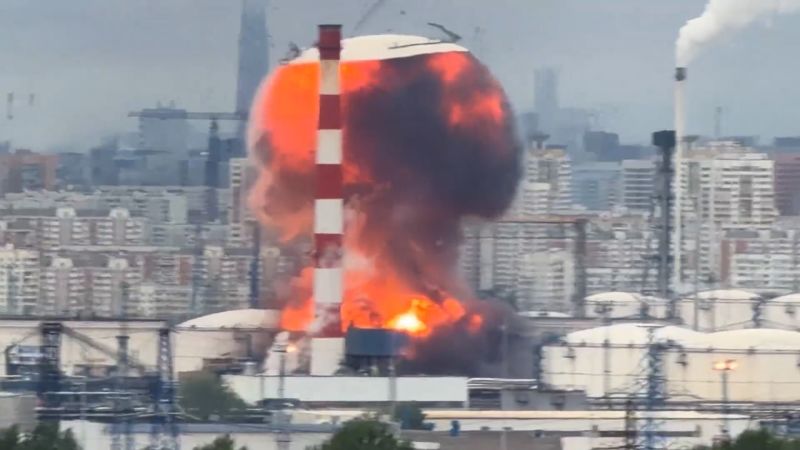
How Ukraine broke through Russia s air – On Thursday, as the skies over Moscow were pierced by a swarm of Ukrainian drones, Russia’s defensive response seemed less coordinated and more reactive. The event marked a pivotal moment in the ongoing conflict, showcasing how Kyiv’s tactical approach has disrupted Moscow’s traditional air defense strategies. Footage captured by CNN and corroborated by military analysts revealed a chaotic scene on the capital’s main thoroughfares, with soldiers frantically deploying portable air-defense systems amid the flow of civilian traffic. The footage highlighted the disarray, as one drone, likely intercepted by Russian defenses, crashed into a bustling market area, sending debris flying and raising alarm among residents.
The Shift in Strategic Focus
Ukraine’s campaign has increasingly targeted Russia’s air defenses, forcing the Kremlin to reposition its systems from the frontlines to more vulnerable urban zones. This shift has been a deliberate effort by Kyiv to escalate pressure on Russian forces, particularly in the occupied territories of eastern Ukraine and within the heart of Moscow. According to Ukrainian military sources, this strategy has evolved over years, with a focus on eroding Russia’s capacity to repel aerial threats. The recent attacks on Moscow, the largest since the full-scale war began, underscore this progression. The city, once a symbol of Russian military dominance, now bears the brunt of Ukraine’s precision strikes.
“The video capturing the firing of man-portable air defense systems (MANPADS) on a busy highway is indicative of a hasty, ad-hoc, and frankly unprofessional response to the attack. The complete lack of traffic control and the utilization of military hardware incredibly proximate to civilian vehicles and individuals reinforces this assessment.”
— Stu Ray, Senior Analyst at McKenzie Intelligence Services
Experts have pointed to the inefficiency of Russia’s current air defense setup as a key factor in the recent setbacks. Markus Schiller, a senior researcher at the Stockholm International Peace Research Institute, remarked that Russia’s reliance on outdated systems has led to a “scrambled” reaction. “Russia has a track record of old systems not being 100% reliable,” Schiller said, emphasizing the challenges Moscow faces in maintaining an effective defense. This vulnerability has been exacerbated by Ukraine’s ability to adapt its tactics, leveraging drones to exploit weaknesses in the Russian network.
Targeting the Infrastructure
Ukraine’s strategy has not only focused on overwhelming Russian air defenses but also on dismantling their operational infrastructure. For years, the Ukrainian military has systematically attacked radar systems, command centers, and missile launchers, aiming to weaken Russia’s ability to detect and neutralize threats. This approach has paid dividends, with Kyiv reporting the destruction of 166 “anti-air elements” this year alone. Since the full-scale invasion began in 2022, the total number of such systems dismantled exceeds 1,432, significantly degrading Moscow’s defensive posture.
One of the most striking examples of this strategy’s success came earlier this month when Ukraine successfully breached Russian defenses in St. Petersburg, a major city in the west of Russia. The attack demonstrated the effectiveness of long-range drone operations in targeting key infrastructure. The same tactic has since been applied to Moscow, where repeated strikes have brought the war closer to Russian civilians. This dual-pronged assault on military and civilian areas has forced the Kremlin to divert resources from the frontlines to protect its urban centers.
“Russia’s air defenses are simply not fit for purpose, that’s very clear,” Thomas Withington, a military sciences fellow at the Royal United Services Institute, told CNN. “They are not equipped to detect, track, and engage this kind of attack, and barring some massive redesign of the Russian air defense system, that will remain the case.”
Withington’s analysis highlights a fundamental flaw in Russia’s air defense design. Originally built to counter conventional aircraft, ballistic missiles, and cruise missiles, these systems struggle with the agility and swarming tactics of modern drones. The lack of specialization has left Moscow’s defenses ill-prepared for Ukraine’s evolving threat. International sanctions, which have restricted access to advanced technology, further complicate Russia’s ability to upgrade its equipment. “Even if you could ramp up production, you will just ramp up production on missile systems that aren’t even doing the job,” Withington added, underscoring the urgency for Moscow to modernize its defenses.
The Human Cost and Political Impact
The escalating drone threat has not only strained Russia’s military capabilities but also intensified domestic unrest. In May, the Kremlin canceled its Victory Day parade in Red Square, a rare move that signaled the growing vulnerability of Russian forces. The absence of military hardware from the display was attributed to the “current operational situation,” as the Russian Defense Ministry sought to avoid drawing attention to the effectiveness of Ukrainian strikes. The decision to push for a temporary ceasefire during the event further illustrated the pressure on Moscow to manage the conflict’s fallout.
Despite these challenges, Russia’s air defenses continue to play a critical role in mitigating Ukrainian attacks. On Friday, the Russian military claimed to have downed 216 drones across the country, a testament to the system’s resilience. However, the question remains: how many of these intercepts are successful, and how many are merely fortunate escapes? Ukraine’s commander of Unmanned Systems Forces, Robert Brovdi, noted that even as Moscow scrambles to defend its skies, the capital still retains over 100 air defense launchers and more than 50 “Pantsir” systems, a type of mobile anti-aircraft platform. Yet, the frequency and precision of Ukrainian strikes suggest that Russia is on the defensive, with its systems struggling to keep pace with the evolving threat.
The recent attacks have also had a psychological impact on Russian civilians, who now face the reality of war in their own cities. The chaos in Moscow, with its chaotic traffic and sudden explosions, has created a sense of vulnerability that is difficult to ignore. As the conflict drags on, Ukraine’s ability to bypass Russian defenses with drones continues to challenge the perception of Moscow as an unassailable military power. Analysts believe this trend will only intensify, as Kyiv refines its techniques and Russia scrambles to adapt. The result is a war that is no longer confined to the eastern front but is now unfolding in the heart of Russia’s political and economic core.
For years, Ukraine has been preparing for such an outcome, investing in technology and training to make its drone forces a formidable asset. The success of these operations is a clear indication of the nation’s strategic foresight and adaptability. As the situation in Moscow evolves, the battle for air superiority will likely remain a focal point of the war. Whether Russia can overhaul its defenses in time or if Ukraine’s relentless strikes will continue to reshape the conflict remains to be seen. What is certain, however, is that the war is no longer just a military contest—it is a test of resilience, innovation, and the limits of traditional defense systems in the face of modern warfare.