Vance’s threat is the latest sign US could be breaking with Israel

Vance’s Threat Signals Growing Tensions in US-Israeli Relations
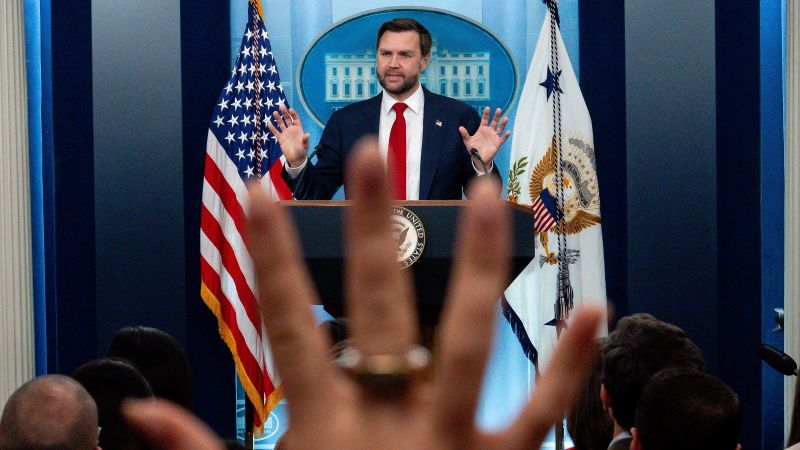
Vance s threat is the latest – For years, the United States and Israel have maintained a close partnership, often viewed as a cornerstone of American foreign policy. Yet recent developments suggest a potential rift, with Vice President JD Vance delivering a pointed critique of Israel’s actions that has raised eyebrows across the political spectrum. His remarks, delivered during a press briefing on Thursday, mark a pivotal moment in the evolving dynamic between Washington and Tel Aviv, signaling a shift in the administration’s approach to the Middle East conflict.
A Shifting Dynamic
While the US-Israel alliance has endured numerous challenges, the current situation appears particularly volatile. Vance’s blunt language, which some analysts interpret as a veiled warning, underscores the administration’s frustration with Israel’s military strategies. This comes amid ongoing negotiations with Iran, a deal that has drawn criticism for its perceived leniency toward Tehran. The Trump administration, now under pressure to maintain its stance, has grown increasingly wary of Israel’s role in complicating these talks. Sources close to the situation told CNN that the renewed ceasefire between Israel and Hezbollah, announced on Friday, was a direct response to the military’s recent clashes with the Iran-backed group.
Israel’s decision to halt hostilities with Hezbollah has been described as a pragmatic move, aimed at preserving the fragile peace process. However, this gesture may also reflect an understanding that the US is prioritizing stability over aggressive tactics. The ceasefire, which has been in place for several months, was jeopardized again by Israeli airstrikes targeting Hezbollah positions in southern Lebanon. These actions, while effective in curbing Iranian influence, have drawn ire from the Trump administration, which sees them as a threat to the broader US-Iran agreement.
Threats and Warnings
Vance’s comments have become a focal point of the escalating tensions. In his remarks, he emphasized Israel’s global unpopularity, arguing that the country’s actions in Lebanon are overreaching. “Donald J. Trump is the only head of state in the entire world who is sympathetic to the nation of Israel at this moment in time,” he stated, highlighting the administration’s unique position as a powerful ally. “And he happens to be the head of state of the world’s superpower. If I was in the cabinet of the Israeli government, I might not be attacking the only powerful ally that I have anywhere left in the entire world.”
“You’re a country of nine million people. You can’t just kill your way out of solving every single national security problem that you have.”
This quote, which Vance delivered during the briefing, echoes a sentiment previously expressed by President Trump. The vice president’s remarks align with the president’s broader criticism of Israel’s military campaigns, particularly its operations in Lebanon. Earlier in June, Trump had told Axios that he had warned Israeli Prime Minister Benjamin Netanyahu to “be careful, or you will be on your own very soon.” The warning came after a significant Israeli attack on Beirut, which Trump labeled as “should not have happened” despite its justification as a response to Hezbollah’s actions.
Trump’s frustration with Israel’s tactics has been consistent. At the G7 summit in France, he joined forces with Qatari Emir Tamim bin Hamad Al Thani to critique Israel’s recent strikes. “You don’t have to knock down an apartment house every time you’re looking for somebody, because there are a lot of people in those apartment houses and they’re not all Hezbollah,” Trump remarked. This statement reflects a growing concern that Israel’s military operations are disproportionate, undermining the delicate negotiations with Iran.
The administration’s rhetoric has intensified as the US-Iran agreement faces scrutiny. Vance’s warning to Israel, combined with Trump’s direct interventions, suggests a coordinated effort to pressure the country into adopting a more measured approach. However, the question remains: Will this strategy succeed, or is it merely a prelude to a more significant realignment?
The Ceasefire Renewal
Despite the tensions, Israel and Hezbollah have reaffirmed their commitment to a ceasefire. This agreement, reached on Friday, follows a period of heightened conflict that threatened to derail the ongoing negotiations between the US and Iran. Sources indicate that the renewed pause in hostilities was a strategic move to prevent further escalation and keep the peace process on track. Yet, the decision also highlights the complex balance Israel must strike between its regional ambitions and the need to maintain American support.
Israel’s leaders, including Netanyahu, are acutely aware of their dependence on US military aid. The country’s advanced defense systems, many of which are sourced from the United States, have been critical in its ongoing efforts to counter threats from Iran and its allies. Vance’s critique of this reliance underscores the administration’s concern that Israel might prioritize its own interests over the broader strategic goals of the US. “He cited how reliant Israel is on American weapons, as well as the need for some Israeli leaders to wake up and smell the reality of the situation that country is in,” according to the original report.
Strategic Posturing
While the administration’s warnings may seem aggressive, they are likely part of a broader effort to reassert control over Israel’s actions. Trump’s recent statements, including his criticism of the Israeli attack on Beirut, suggest a pattern of pressure aimed at keeping the alliance in check. However, the effectiveness of this strategy depends on Israel’s willingness to comply. Sources suggest that the Trump administration is using a combination of diplomatic and public pressure to nudge Israel toward a more cooperative stance.
Yet, Israel’s position remains distinct. The country has a vested interest in leveraging the current conflict to secure favorable terms in its dealings with Iran. With other nations hesitant to engage in the same level of confrontation, Israel sees this as a rare opportunity to solidify its leverage. This divergence in priorities has created a rift, even within the Republican Party, where some members are growing disillusioned with the administration’s approach to the Middle East.
“The US president earlier this month acknowledged telling Israeli Prime Minister Benjamin Netanyahu that he was ‘crazy’ over Israel’s conduct in Lebanon,” sources noted. Trump’s direct engagement with Netanyahu has been a hallmark of his leadership style, but it has also highlighted the growing discord between the two nations. The vice president’s remarks, though more measured, reinforce the same underlying message: Israel must adjust its tactics to align with US interests.
At the same time, the administration’s focus on resolving the Iran issue has shifted the geopolitical landscape. The US is seeking to secure a deal that would ease tensions with Iran, a goal that requires Israel’s cooperation. However, Israel’s aggressive posture in Lebanon and its reluctance to scale back operations have complicated these efforts. The administration’s warnings, therefore, serve as both a critique and a call to action, urging Israel to reconsider its current path.
As the situation unfolds, the challenge for the Trump administration is to balance its demands with the need to maintain Israel’s commitment. The renewed ceasefire is a positive sign, but it may not be enough to prevent deeper disagreements. Analysts suggest that the tensions are not necessarily a precursor to a full break but rather a test of the alliance’s resilience. Whether the US and Israel can navigate these challenges without fracturing their partnership remains uncertain, but the recent rhetoric has made the possibility of a shift more tangible than ever.
With both Trump and Vance expressing their concerns, the stage is set for a potential realignment. The administration’s approach has been marked by a combination of public criticism and behind-the-scenes diplomacy, aiming to keep Israel in line while advancing its diplomatic goals. The ceasefire, however, has not resolved all underlying issues, and the future of the US-Israeli alliance will depend on how these tensions are managed in the coming weeks.