
Trump foe John Bolton enters guilty plea. Here’s why his classified information case didn’t fall apart
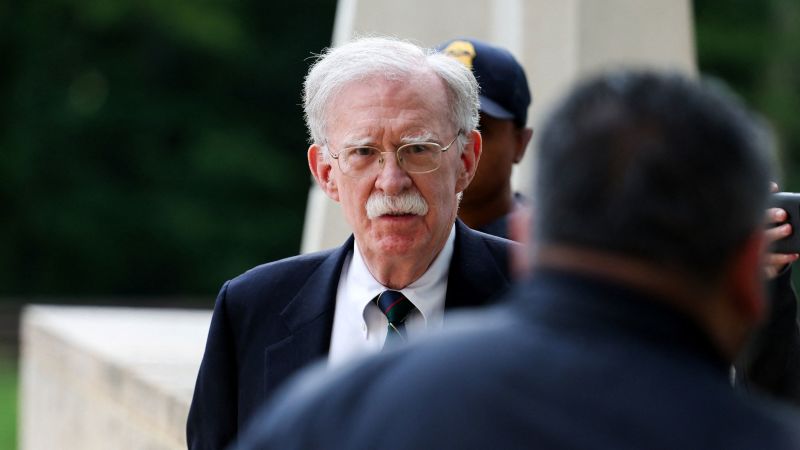
Trump’s Critic John Bolton Admits Guilt in Classified Information Case
Trump foe John Bolton enters guilty – John Bolton, the former national security adviser to President Donald Trump, has entered a guilty plea in a case involving the unlawful retention of classified information. This development marks a pivotal moment in the Justice Department’s efforts to hold Trump’s political opponents accountable. Despite the ongoing scrutiny of Trump’s allies and adversaries, Bolton’s conviction stands out as a rare triumph for prosecutors in the administration’s extended legal battles.
The plea, announced on Friday, stems from a charge of mishandling sensitive national defense data. According to the agreement, Bolton could face up to six years in prison and a $2.25 million fine. The initial portion of the fine, however, will be settled within five days of sentencing. Additionally, he is required to relinquish his pension, a condition outlined by prosecutors during the court proceedings.
“I am your honor and I’m sorry for it,” Bolton stated when asked by Judge Theodore Chuang if he was guilty. The judge emphasized during the hearing that the sentencing guidelines, while agreed upon, may not be strictly adhered to. “I am required to calculate the guidelines myself,” Chuang said, highlighting the flexibility in the process. Bolton’s sentencing is set for October 28, with the exact penalties yet to be determined.
Following the plea, Maryland US Attorney Kelly Hayes addressed the significance of the case. “As national security adviser to the president of the United States, Mr. Bolton had access to and was responsible for safeguarding the most sensitive national defense information, including classified material,” Hayes explained. She noted that Bolton was aware of the proper storage protocols and the risks associated with mishandling such data. “He also knew the damage to national security that could be caused by mishandling that sensitive information. Nevertheless, as Mr. Bolton just admitted, he put our nation’s security at grave risk in violation of the law,” she added.
Bolton, who did not speak to reporters after the hearing, has been represented by his legal counsel, Abbe Lowell. In a statement, Lowell highlighted the contrast between Bolton’s actions and those of President Trump. “Today, Ambassador Bolton did what real leaders do. He took responsibility for a mistake he made, thereby saving the government resources to pursue a case that could expose additional sensitive information,” Lowell said. The lawyer further pointed out that Bolton’s offense was limited to retaining classified information in a personal diary, while Trump had taken classified documents to his Florida residence and interfered with related investigations.
“Ambassador Bolton, whose offense was only keeping a diary which contained classified information, kept a record to preserve history, but Donald Trump kept secrets to serve himself,” Lowell remarked. This statement underscores the differing motivations behind the two men’s actions, framing Bolton as a proactive archivist and Trump as a self-serving leader.
The case against Bolton differs from other high-profile prosecutions targeting Trump’s allies. Unlike the investigations into figures like former FBI Director James Comey, which faced scrutiny for their political implications, Bolton’s plea deal has received consistent backing from career prosecutors. This support reflects the case’s perceived independence from partisan influence, a rare quality in the current legal landscape.
Inside the quiet, yearslong investigation into John Bolton, the Justice Department’s approach has been methodical. While several US attorneys have attempted to build cases against prominent political figures disliked by Trump, Bolton’s plea was secured by Kelly Hayes, a Maryland US Attorney known for her steady, low-profile tenure since Trump’s inauguration. “Everybody’s pleasantly surprised she’s still in the job,” a source familiar with the office noted. “In some ways, she’s been trying to keep her head down—while many US attorney’s offices tried to attract attention from the White House,” the same individual added.
Hayes’ strategy of maintaining distance from political drama has allowed her to focus on the facts. This approach has earned her credibility within the Justice Department, as sources indicate her case is viewed more seriously than others tied to Trump’s initiatives. “Maryland US Attorney Hayes’ approach, and the Bolton case itself, are seen as more rigorous than the indictments and investigations of others who have faced federal charges at Trump’s urging,” one insider told CNN. Her ability to stay out of the spotlight has also shielded her from external pressures, such as the call to investigate California Senator Adam Schiff, who remains uncharged despite scrutiny over his mortgage applications.
Bolton’s guilty plea has broader implications for the Trump administration’s legal challenges. While the case is not the first to target a Trump critic, it has maintained a balance between accountability and fairness. The plea agreement’s focus on Bolton’s personal actions—specifically his retention of classified information—avoids the broader political accusations that often accompany other prosecutions. This distinction may have contributed to the case’s stability, even as the administration’s legal battles continue to evolve.
Notably, Bolton’s admission of guilt includes sharing sensitive information with his family, a detail that could impact his financial standing. The fine could reclaim much of the proceeds from his memoir, published in 2020 and critical of Trump. This financial element adds a layer of personal accountability, as the penalties directly affect his earnings. It also raises questions about the intersection of personal conduct and political influence, a theme that has been central to several cases involving Trump’s allies.
Amid the backdrop of a polarized political environment, Bolton’s case serves as a case study in how career prosecutors can navigate the complexities of holding powerful figures accountable. While the president has faced multiple investigations, his direct involvement in some cases has drawn criticism for creating a perception of political bias. Bolton’s plea, however, has been framed as a demonstration of integrity, even as his legal team emphasized the distinction between his actions and Trump’s.
The decision to charge Bolton, rather than pursue a more aggressive course, may reflect a strategic choice to prioritize legal precedent over political theater. This approach aligns with the Justice Department’s goal of ensuring that all cases—regardless of the defendant’s status—are judged on their merits. As the sentencing date approaches, the case will likely serve as a benchmark for future prosecutions, illustrating how the legal system can function even in the shadow of political conflict.
In summary, Bolton’s guilty plea is a testament to the resilience of the Justice Department’s efforts to hold Trump’s critics accountable. While the case may not have been the most dramatic, its structure and outcomes highlight the importance of career prosecutors in maintaining the integrity of the legal process. As the administration continues to face challenges, Bolton’s admission stands as a reminder that accountability can be achieved through consistent, fact-based approaches, even in a high-stakes political environment.
