
Ships took advantage of an opening in the Strait of Hormuz. But it may be closing
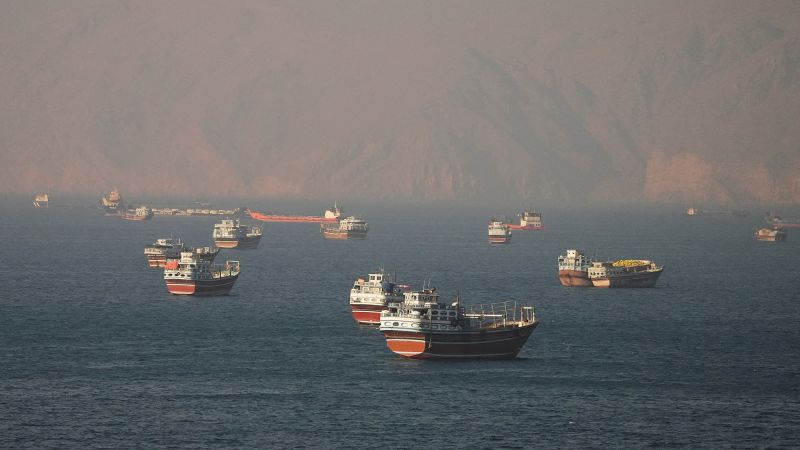
Strait of Hormuz Sees Surge in Ship Traffic Amid Ceasefire, but Evacuation Halted
Ships took advantage of an opening – Recent data shows a notable increase in maritime activity through the Strait of Hormuz over the past week, with more vessels transiting the critical waterway than in the previous three months. However, this momentum appears to be slowing as the United Nations and International Maritime Organization (IMO) pause their planned evacuation efforts. According to tracking data from MarineTraffic, 73 ships passed through the strait on Wednesday, the highest figure since the conflict with Iran began in late February. This marks a significant jump from the 35 vessels recorded on Tuesday, signaling a temporary reprieve for maritime traffic.
Evacuation Plan on Hold
The latest spike in vessel movement coincides with the U.S. decision to lift sanctions on Iranian oil, a move tied to the ceasefire agreement between Washington and Tehran. This development has encouraged some ships to transit the strait, particularly those focused on humanitarian aid. The IMO, alongside Iran and Oman, had introduced two new shipping lanes to facilitate safer passage for vessels stranded in the region. These routes, one near Iran’s northern coast and the other closer to Oman’s southern side, were designed to mitigate risks from mines and other threats.
“What we’re witnessing is a gradual movement of ships that had been idling in the Gulf, prioritizing humanitarian operations to retrieve seafarers and a few selected tankers following the sanctions removal,” explained Gene Seroka, executive director of the Port of Los Angeles. “It’s not yet a full return to normal operations—just a cautious shift.”
Seroka, who has spent five years working for a major Middle Eastern shipping company, emphasized that the current activity is a response to immediate needs rather than a long-term solution. The pause in the evacuation plan comes after a vessel was struck in the Gulf of Oman, raising concerns about the safety of the newly established routes.
Historical Context and Current Challenges
Before the conflict, the strait was a bustling corridor, with estimates suggesting 110 to 160 ships passing through daily. The war disrupted this flow, reducing the average daily transit to fewer than ten vessels. The reduced traffic was due to fears of missile strikes and mine threats, which forced many ships to remain anchored in the Gulf. Now, with the ceasefire, the situation has improved, but lingering risks have kept shipping companies cautious.
The IMO’s temporary halt to the evacuation program follows the attack on a ship in the Gulf of Oman. A U.S. official confirmed that the vessel was targeted by an Iranian drone, though details remain scarce. Iran has not yet taken responsibility for the incident. This development has led to a sharp decline in ship traffic on Friday, as the agency warned that only ships following routes approved by Tehran would be allowed to pass through the strait.
Strategic Shift and Evacuation Framework
The IMO’s evacuation initiative aimed to gradually move 11,000 stranded crew members and 500 vessels out of the strait, ensuring controlled and safe transit. However, the recent incident has prompted a reassessment of the plan. IMO Secretary-General Arsenio Dominguez stated that the pause was a precautionary measure, even though the attacked ship “did not transit under the IMO’s evacuation framework.” The decision reflects the ongoing uncertainty in the region, where even minor disruptions can have major consequences.
Maritime operators have remained in a “wait and see” mode, carefully weighing the risks of navigating the strait. The IMO reports at least 46 strikes on vessels and 14 deaths since the conflict began, underscoring the dangers faced by ships in the area. Insurers have also withdrawn coverage for some vessels, citing wartime clauses that increase liability. This has forced companies to seek alternative routes and protections, such as U.S. naval escorts, which have been inconsistent.
Shifting Dynamics in the Strait
Despite the recent uptick in traffic, the majority of ships transiting the strait this week remain Iranian-flagged. Some vessels from Taiwanese shipping lines, like Evergreen, have also participated, but major global carriers have yet to return to full operations. This partial recovery suggests the situation is still far from normal, with the strait’s traffic levels closer to the pre-war status quo than a complete transformation.
“The ships actually transiting Hormuz this week are still mostly Iranian-flagged and some (Taiwanese) Evergreen vessels. The major global carriers haven’t returned yet, so it’s closer to status quo than a real shift,” noted Sanne Manders, president of Flexport, a global logistics firm.
Manders highlighted the cautious approach of the shipping industry, which continues to monitor developments closely. The IMO plans to “reconfirm that the necessary safety guarantees continue to be in place” for ships in its evacuation list and those operating in the region. This process may take days, further delaying the normalization of traffic.
Implications for Global Trade and Maritime Safety
The Strait of Hormuz remains a vital chokepoint for global oil supplies, with over 20% of the world’s seaborne crude oil passing through the narrow waterway. The temporary slowdown in traffic underscores the fragility of the situation, as tensions between Iran and the U.S. could resurface at any moment. Analysts warn that the pause in evacuation efforts may lead to prolonged uncertainty, affecting supply chains and increasing costs for shippers.
While the new shipping lanes offer a safer alternative, their effectiveness depends on Iran’s cooperation and the absence of further attacks. The U.S. military and its allies have been monitoring the strait closely, but the unpredictable nature of the conflict has made long-term planning difficult. Flexport’s Manders and Los Angeles’ Seroka agree that the current traffic levels are a temporary reprieve, with the possibility of a decline as the IMO reevaluates the risks.
As the situation unfolds, the international community watches closely for any signs of renewed hostilities. The strait’s strategic importance means that even a brief disruption can have ripple effects across global markets. Until safety guarantees are fully restored, maritime activity is expected to remain subdued, with ships relying on carefully curated routes and limited assurances from local authorities. The coming days will be critical in determining whether the recent increase in traffic signals a lasting improvement or merely a fleeting moment of calm in a volatile region.
