DHS scraps plans to turn Georgia warehouse into detention mega center, city says

DHS Abandons Georgia Warehouse Conversion Plan, City Rejoices
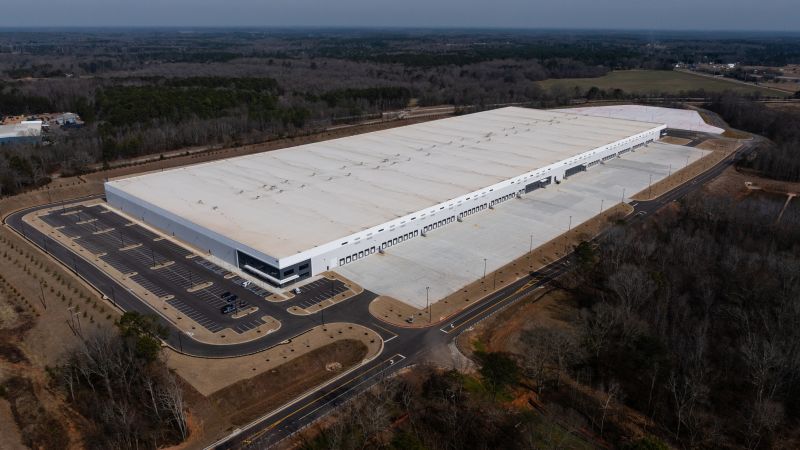
DHS scraps plans to turn Georgia – In a recent development, the Trump administration has abandoned its proposal to transform a warehouse in Social Circle, Georgia, into a large-scale immigration detention facility. The city, which had initially resisted the plan, announced the change on Thursday, citing new information from Congressman Mike Collins. “The City of Social Circle has received notification from Congressman Mike Collins that the Department of Homeland Security (DHS) is no longer pursuing an ICE detention facility within the city limits,” the local government said in a statement. This decision marks a reversal of the federal government’s earlier commitment to repurpose the site for mass detention, just four months after confirming its purchase.
A City’s Struggle Against a Megaproject
The warehouse, which the federal government acquired for $128.5 million, was once projected to house up to 10,000 detainees and support 2,000 to 2,500 staff. This would have dwarfed the city’s population of approximately 5,000 residents, raising concerns about the strain on local infrastructure and services. The purchase price, revealed in a deed filing, was more than four times the $29.3 million the city had sold the property for in 2023. Despite the high cost, the original plan remained intact until recently.
City officials expressed cautious optimism about the change. “The City is hopeful that the property will ultimately return to the local tax base and once again contribute to the economic vitality and long-term success of the Social Circle community,” the statement added. While the fate of the site remains uncertain, residents are now questioning whether the government will sell it or redirect its use for other purposes. The announcement has sparked relief among community members, who had campaigned against the project for months.
Political Backing and Legal Battles
The decision to halt the conversion has been welcomed by Georgia’s two U.S. senators, Jon Ossoff and Raphael Warnock, both Democrats who have consistently opposed the plan. “From the beginning, the Social Circle community united against this proposal, which risked overwhelming the city’s infrastructure,” said Ossoff. “This news proves yet again that public pressure and opposition works.” Warnock echoed similar sentiments, highlighting the role of local activism in shaping the outcome.
However, the broader context of the Trump administration’s immigration policies remains a focal point. The plan to convert seven warehouses across the country—ranging from Roxbury, New Jersey, to Salt Lake City, Utah—was part of a $700 million initiative to expand detention capacity. This shift in direction occurred after Markwayne Mullin took over as Homeland Security secretary, according to a source cited by CNN in April. The administration’s spokesperson, in a statement released on Friday, emphasized its commitment to “removing the worst of the worst criminal illegal aliens” from the United States. “These heinous criminals, once arrested, should be removed at lightning speed, not housed on American soil at the taxpayer’s expense,” they said.
Despite the withdrawal from Social Circle, the program’s future is still unclear. While the city and local leaders hope the property will be returned to private ownership, the federal government has yet to provide specifics about the next steps. The spokesperson for DHS, when asked about the revised plans, stated that the department is “moving swiftly to utilize existing detention space with our state and county partners.” This suggests a focus on repurposing current facilities rather than investing in new ones, but the impact of the canceled project on the region remains a topic of debate.
A Year of Immigration Enforcement
The decision to pause the Social Circle project comes amid a year of intensified immigration enforcement efforts. Many of the facilities targeted for conversion, including the one in Salt Lake City, have become the center of lawsuits seeking to block their use as detention centers. As of Friday, the government had not submitted any official documents to these cases, leaving the legal challenges unresolved. “We do not have confirmation from DHS on the release of this facility,” said Eric Biggart, a spokesperson for the Salt Lake County mayor’s office, in an interview with CNN. “However, we hope the reports are true as we would support a sale of the warehouse by DHS.”
Similar caution has been voiced in nearby Oakwood, Georgia, where another warehouse was slated for conversion into a detainee processing center. Local attorney Ari Mathé, who has led opposition to the project, expressed skepticism about the federal government’s commitment to abandoning the plan. “We won’t believe it until there is an official statement plus a legitimate owner/tenant of the property moved in, to be real honest,” Mathé wrote in an email to CNN on Friday. This sentiment reflects the broader uncertainty surrounding the program, even as some areas see its cancellation.
While the Social Circle warehouse is no longer part of the DHS initiative, the move raises questions about the administration’s long-term strategy. Critics argue that the program’s abrupt changes highlight a lack of consistency in immigration policy, particularly as it affects smaller communities. Supporters, however, maintain that the expansion of detention capacity is essential for managing the flow of migrants. “DHS has remained singularly focused on removing the worst of the worst criminal illegal aliens from the United States,” the spokesperson reiterated. “The goal is to ensure these individuals are processed and deported efficiently, without overburdening local resources.”
Broader Implications and Regional Reactions
The reversal in Social Circle is part of a larger trend of federal agencies reassessing their detention strategies. The city’s politically red county, where Trump secured over 70% of the vote in the 2024 presidential election, had initially supported the project. However, the strong grassroots opposition, including protests and legal actions, shifted public sentiment. “The community’s determination to protect its interests was a key factor in this outcome,” said a local official. “We fought for our right to decide the future of this property.”
For residents of Social Circle, the decision brings a sense of relief, though it leaves unanswered questions about the warehouse’s future. “We’re hopeful, but we’re also watching closely to see what comes next,” said a city council member. “If the property is sold, it could be a win for our economy and our quality of life.” The same sentiment was echoed by advocates in other regions, who see the change as a potential precedent for halting similar projects. However, the federal government’s reliance on private partnerships for detention space may still leave the city in a vulnerable position, depending on how the property is ultimately used.
Meanwhile, the legal battles surrounding the seven warehouses continue. In Salt Lake City, lawsuits have challenged the conversion of the site into a detention center, citing environmental and community impact concerns. “These cases are about ensuring that the government doesn’t just push through its agenda without considering the consequences,” said a legal analyst. The outcome of these cases could determine whether other warehouses face the same fate as the one in Social Circle. For now, the city’s victory serves as a reminder of the power of local advocacy in shaping national policies.
As the debate over immigration detention facilities intensifies, the story of Social Circle offers a case study in how public pressure can influence federal decisions. While the Trump administration’s focus on rapid deportation remains central to its strategy, the cancellation of this project underscores the importance of community input in the process. With the warehouse’s future still in flux, the city looks to the next chapter with cautious optimism, hoping that the property will once again serve as a cornerstone of local development.