Trump unveils a new presidential airplane

Trump Unveils New Presidential Airplane
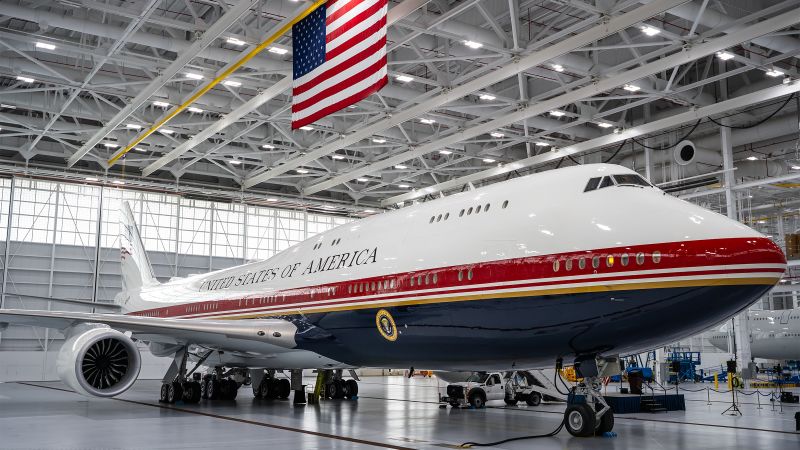
Trump unveils a new presidential airplane – At Joint Base Andrews, President Donald Trump introduced a new presidential aircraft, a luxury jet donated by the government of Qatar. The plane, now painted in red, white, and blue with the words “United States of America” prominently displayed, serves as a temporary solution while the next generation of Air Force One planes undergoes modification. This move addresses growing concerns over the aging Boeing 747-200s, which have been in service as presidential aircraft since 1990. The new jet, set to begin “commissioning flights” soon, aims to fill the gap until Boeing’s updated models are completed in late 2027.
A New Era in Presidential Aviation
The current fleet of presidential planes, two modified Boeing 747s, has long been a symbol of the White House’s travel needs. However, their age and outdated design have sparked debates about their reliability. The Qatar-funded jet, though not as large as the 747s, offers modern amenities and enhanced security features, according to officials. Its introduction marks a shift from the classic light blue color scheme first conceived by First Lady Jacqueline Kennedy, a tradition that has endured for decades. The new aircraft’s navy blue and white fuselage, accented with red stripes, represents a fresh design philosophy while maintaining the iconic national colors.
Secretary of the Air Force Troy Meink emphasized the importance of the transition, stating, “The safety and security of the commander in chief is our highest priority.” He added that the modification process was carefully evaluated to ensure quality without compromising speed. “From the beginning, we meticulously assessed every requirement to accelerate delivery while upholding the high standards expected of the presidential mission. This effort proves the U.S. Air Force can act swiftly without sacrificing excellence, security, or reliability,” Meink said.
The Qatari Contribution
The Qatar Airways jet, donated to the U.S. government, has been a key asset in this endeavor. Officials confirmed that the plane was acquired last year and has been undergoing preparation for service over the past several months. Unlike the Boeing 747s, which required extensive interior upgrades, the Qatar jet’s modification focused primarily on its exterior and essential systems, streamlining the timeline. This approach allowed the Air Force to commission the aircraft earlier than anticipated, despite the challenges of modernizing the presidential fleet.
While the Boeing planes remain in service, their outdated configuration has led to frequent delays. Trump, known for his impatience with bureaucratic processes, has expressed frustration over the extended timeline for the new models. “We cannot afford to wait for years to secure a reliable presidential aircraft,” he remarked during a press briefing. The new Qatar jet, he argued, provides a necessary alternative during this transition period, ensuring continuity in presidential travel and international appearances.
Design and Functionality
Details about the Qatar jet’s design highlight its blend of luxury and utility. The aircraft features a spacious interior with state-of-the-art technology, including advanced communication systems and upgraded cabin comforts. However, its layout is more compact than the Boeing 747s, which have been criticized for their bulk and maintenance costs. Despite this, the plane is expected to meet all operational requirements, including long-haul flights and high-profile events.
Commissioning flights, as described by the Air Force, are a critical phase in testing the aircraft’s readiness. These flights simulate real-world conditions, ensuring that the jet’s systems function seamlessly under various scenarios. The process includes evaluating fuel efficiency, navigation capabilities, and emergency protocols. Meink noted that the new plane’s design incorporates lessons learned from the previous models, aiming to improve both performance and passenger experience.
Historically, presidential aircraft have evolved to reflect changing needs and technological advancements. The transition from the light blue Kennedy-era design to the current navy blue and white scheme underscores this evolution. While the original color scheme was a nod to the nation’s flag, the new design emphasizes modernity and functionality. Critics, however, argue that the shift in aesthetics might detract from the symbolic significance of Air Force One. For Trump, the emphasis on practicality aligns with his vision for a more efficient and cost-effective presidential transport.
Political and Strategic Implications
The donation of the Qatar jet has raised questions about the role of international partnerships in U.S. presidential logistics. Qatar’s involvement, while beneficial in accelerating the project, also serves as a diplomatic gesture. The country has been a key ally in the Middle East, and the jet’s presence may reinforce bilateral ties. Nonetheless, the U.S. government has maintained that the plane’s modifications are independent of political considerations, focusing instead on meeting operational needs.
Experts note that the use of a foreign aircraft for presidential duties is not unprecedented. However, the scale of the Qatar jet’s customization has been significant, with the Air Force adapting it to fit specific requirements. The timeline for its completion—just months after the donation—contrasts sharply with the Boeing 747s, which have been delayed due to complex modifications. This difference highlights the efficiency of leveraging existing assets rather than starting from scratch.
As the Air Force prepares for the next phase of testing, the Qatar jet’s role in Trump’s administration remains pivotal. Its introduction has already sparked discussions about the future of presidential aviation, with some analysts suggesting it may become a permanent addition to the fleet. Meanwhile, the Boeing 747s continue to serve as a testament to the long-standing partnership between the U.S. and Qatar in supporting national priorities. The transition, though temporary, underscores the dynamic nature of presidential transportation and the ongoing efforts to balance tradition with innovation.
Conclusion
The unveiling of the Qatar jet marks a significant milestone in the evolution of presidential air travel. While the Boeing 747s remain a symbol of the past, the new aircraft represents a forward-thinking approach to modernizing the fleet. As the Air Force continues to prepare the jet for service, the political and strategic implications of this move will be closely watched. For Trump, the aircraft is not just a mode of transport but a demonstration of the administration’s ability to overcome delays and deliver results, even in the face of logistical challenges.