Sunken wreck of WWII ‘hell ship’ used to transport POWs discovered after more than 80 years

WWII ‘Hell Ship’ Wreck Found After 80 Years: The Story of the Hōfuku Maru
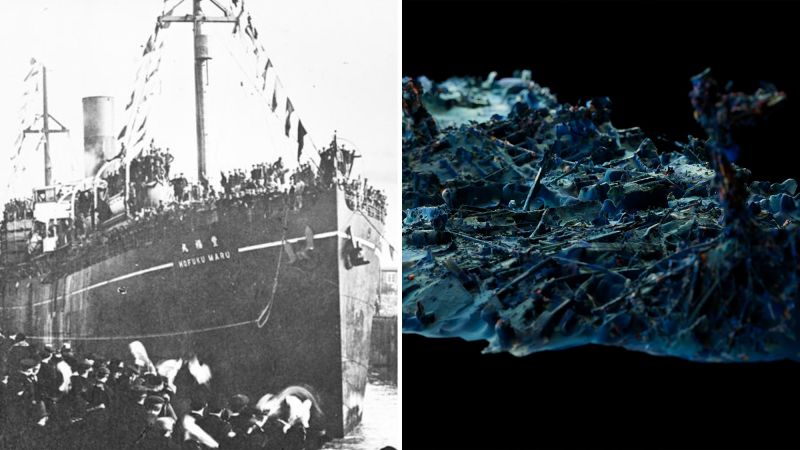
Sunken wreck of WWII hell ship – After a painstaking 80-year search, the wreck of the Hōfuku Maru, a Japanese “hell ship” that once carried British and Dutch prisoners of war during World War II, has been located near Zambales province in the Philippines. The ship, which sank in 1944 after being torpedoed by US warplanes, was rediscovered in early 2026 by a team of researchers who combined archival research, sonar surveys, and underwater exploration to finally uncover the final resting place of nearly 1,200 Allied captives.
A Tragic Voyage in the South China Sea
The Hōfuku Maru was part of a convoy of 56 unmarked Japanese vessels, collectively known as “hell ships,” which were used to transport prisoners of war across the Pacific. These ships, often packed to the brim with soldiers, were infamous for their brutal conditions. In September 1944, the Hōfuku Maru was carrying 1,200 British and Dutch POWs through the South China Sea when it became a target. US warplanes, operating in the region, misidentified the ship as a military cargo vessel and launched four torpedoes.
One torpedo struck the Hōfuku Maru, causing it to split in two and sink within minutes. The catastrophic event left most of the POWs trapped below deck, where the air grew stifling and the environment became a death trap. Of the 1,200 captives, only around 200 survived the ordeal, their fate sealed by the ship’s rapid descent into the ocean depths. For decades, the wreck’s precise location remained a mystery, obscured by the vastness of the sea and the lack of clear records.
Breaking the Silence: A Decades-Long Search
The search for the Hōfuku Maru began with a combination of historical documents and modern technology. Tim Beckensall, a World War II historian and director of the Hellships Memorial Foundation, led the effort, which involved combing through military archives from both Japan and the United States. These archives contained fragmented accounts of the ship’s sinking, with Japanese records offering incomplete details and Allied strike reports providing vague coordinates. The breakthrough came when Beckensall’s colleague, John Duresky, unearthed a digitized Japanese document from the convoy’s lead ship, which included a timeline and a map pinpointing where the attack occurred.
The document revealed that the Hōfuku Maru was the second vessel in the convoy when it was struck. This critical detail allowed researchers to cross-reference the information with an “aircraft action report” from the USS Bunker Hill, an American aircraft carrier that had recorded the sinking of an auxiliary cargo ship in the same area. The report confirmed the Hōfuku Maru’s position in the convoy, narrowing down its possible location. This convergence of evidence finally pointed to the wreck lying approximately 30 miles from where it was previously assumed to have gone down.
Local fishermen in the Philippines, however, had long whispered about a massive structure in the ocean depths, which they believed to be the remnants of a sunken vessel. Their knowledge proved invaluable, as it aligned with the new coordinates derived from the documents. With this confirmation, the Hellships Memorial Foundation, supported by the Cultural Heritage Agency of the Netherlands and the Discovery Channel, mobilized for an expedition to the site.
A Collaborative Effort to Uncover the Past
Beckensall, based in Manila, shared his findings with the British Embassy, which facilitated a meeting with Dutch and Philippine military attachés. This collaboration helped secure the necessary resources for the search, including funding for a sonar survey and an initial dive mission. The Cultural Heritage Agency of the Netherlands, in particular, played a key role in financing the project, highlighting its commitment to preserving wartime history.
The dive, conducted in December and January 2025, revealed the wreckage at a depth of roughly 164 feet (50 meters). Despite the challenging conditions, the team found what they described as a “dark hold” of metal, its interior still marinated in the horrors of the past. The wreck, now partially obscured by volcanic ash from the 1991 eruption of Mount Pinatubo, posed significant obstacles to identification. The ash, which had washed into rivers and eventually into the sea, was slowly encroaching on the site, making it difficult to discern any unique features of the ship.
Despite these challenges, the discovery marked a pivotal moment in the study of WWII history. The Hellships Memorial Foundation, in partnership with the Discovery Channel, documented the findings in a two-part season premiere of “Expedition Unknown,” which aired on June 24, 2026. The episode not only showcased the technical aspects of the search but also highlighted the human stories behind the wreckage.
“We’re talking about a dark hold that’s metal. It stinks, it’s boiling hot. There’s no sanitary conditions. They’re not being fed properly, if at all. Hardly any water,” said Tim Beckensall, the search director for the Hellships Memorial Foundation. “It’s about the worst set of conditions you could design.”
The journey to locate the Hōfuku Maru underscored the importance of preserving the legacy of these “hell ships,” which were instrumental in the Japanese war effort. Of the 56 vessels, 19 were sunk by Allied forces, and five of those wrecks remain undiscovered to this day. Beckensall emphasized that the Japanese document served as the “smoking gun” that connected the fragmented accounts and confirmed the ship’s fate. “It was the Japanese document that started the whole thing, and it was the smoking gun that really led to all the others,” he explained.
The recovery of the Hōfuku Maru’s wreckage has opened new avenues for historical research. Calvin Mires, a maritime archaeologist from Marine Imaging Technologies, joined the effort in early 2026, working alongside underwater imaging specialist Evan Kovacs. Together, they captured hundreds of images of the wreck, using specialized software to analyze and reconstruct its structure. These images provided critical insights into the ship’s condition, helping researchers piece together the events of that fateful day in 1944.
“The most surprising part of this investigation is actually the story itself — the tragic legacy of the Hellships is a chapter of World War II that many people have never heard of,” said explorer Josh Gates, who presented the “Expedition Unknown” episode. “But it’s vital history; the men who died aboard these ships made the ultimate sacrifice and have been waiting 80 years to be found.”
The Hōfuku Maru’s discovery is more than a historical milestone. It serves as a reminder of the suffering endured by POWs during the war and the enduring quest to honor their memory. With the wreck now visible, researchers hope to uncover more about the ship’s final moments and the lives lost within its holds. As Beckensall noted, the journey to find the Hōfuku Maru was driven by a desire to correct the narrative and give these men the recognition they deserve. The next steps will involve further exploration, preservation efforts, and perhaps even the retrieval of artifacts that could illuminate the darkest chapters of WWII history.
While the volcanic ash continues to threaten the site, the team remains optimistic about the potential for future discoveries. The Hōfuku Maru’s story, once lost to the sea, now stands as a testament to the resilience of those who sought to uncover it. As the world reflects on the war’s impact, this wreck offers a haunting glimpse into the human cost of conflict, ensuring that the sacrifices of the past are not forgotten.