Kennedy Center facing financial straits, difficult choices – and a judge who wants it to stay open

Kennedy Center Facing Financial Straits, Difficult Choices – and a Judge Who Wants It to Stay Open
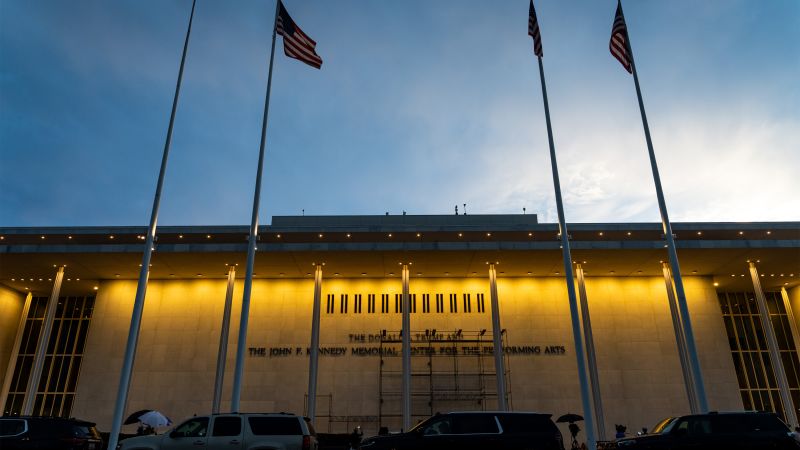
Kennedy Center facing financial straits difficult – The Kennedy Center, a storied cultural landmark in Washington, D.C., has recently stripped President Donald Trump’s name from its exterior, signaling a shift in its public image. However, behind the scenes, the institution is navigating a complex financial crisis that has left its leadership scrambling to balance budget cuts, staff reductions, and the need to maintain operations amid ongoing legal challenges. A federal judge has ordered the center to keep its doors open during renovations, but the combination of declining ticket sales, artist departures, and political turmoil has created a challenging landscape for its survival.
Legal Pressure and Operational Hurdles
Justice Department attorneys representing the Kennedy Center submitted a court filing on Friday, requesting an extension to meet the judge’s deadlines. The filing outlined three potential strategies for the center’s future, but it admitted the need for more time to decide which path to pursue. The first option would involve a full closure of the venue during renovations, as originally planned. The second would allow limited events in unaffected areas, such as the Eisenhower Theater or the concert halls. The third, however, proposes a staggered shutdown—periodic closures to address critical repairs while preserving the center’s usual programming.
Leadership at the center expects to present these options to Trump’s handpicked board of trustees for a vote in mid-July. The filing also noted that the board might delay long-term adjustments to programming and staffing until a final decision is made. This comes after the center was required to submit a report by Friday night detailing steps taken to comply with the judge’s order to ensure “public access and ongoing programming.”
A Financial Quagmire
According to several insiders with knowledge of the center’s operations, CNN has learned that the Kennedy Center is struggling to sustain its usual activities. Ticket sales have dropped significantly, with some revenue streams drying up entirely. Additionally, several prominent artists have left the organization, citing dissatisfaction with its management. The financial strain has also led to a reduction in staff, further complicating efforts to maintain a robust schedule.
“They are really in a major, major crisis,” said one source briefed on the center’s options. “Keeping the lights on – that is by far the number one thing that they’re going to have a major, major issue with.” This sentiment underscores the urgency of the situation, as the center’s ability to fund daily operations is increasingly uncertain. The board’s current plan to close the facility has been indefinitely halted by U.S. District Judge Casey Cooper, who ruled last month that the decision to shut it down was made unlawfully. Cooper emphasized that the center must continue functioning to fulfill its congressionally mandated role in supporting the arts.
Renovation Options and the National Symphony Orchestra
As the center explores its future, one potential solution involves leveraging the National Symphony Orchestra (NSO), which has long been based at the Kennedy Center. A recent internal discussion suggested that the NSO could be engaged for multiple weekly performances, offering a reliable source of income and public engagement. However, the NSO’s contract with the center has yet to be renewed, raising questions about the feasibility of this approach. The organization’s current schedule features only a handful of events, including outdoor movie screenings of “Superman,” “The Princess Diaries,” and “Clue,” a children’s performance by the National Symphony Orchestra’s Summer Music Institute, and a weekend art studio for young participants.
Leadership has faced criticism for its ability to attract major productions. A former staffer noted that reviving Broadway-level programming is unlikely to happen quickly, as touring companies typically book months in advance. Many agents have also been hesitant to commit to the Kennedy Center under its current leadership, citing financial instability as a key concern. This has left the center in a precarious position, where maintaining visibility without substantial revenue is becoming increasingly difficult.
Political Controversies and the Name Change
The Kennedy Center’s financial troubles have been compounded by political controversies. Earlier this year, the board approved a name change that appended Trump’s name to the venue, a move that drew criticism from some stakeholders. However, this decision was recently overturned by Judge Cooper, who ruled that the renaming process was flawed. The court found that the board had acted without proper procedure, and the change was deemed an “act of defiance” by attorneys for Rep. Joyce Beatty, an ex-officio board trustee who led the lawsuit to block the name addition.
While the exterior of the center now lacks Trump’s name, large striped tarps still cover the area where the metal letters were previously installed. This visual reminder of the political battle has sparked debate, with some viewing it as a symbolic gesture rather than a practical solution. The center’s leadership, meanwhile, has been working to comply with the judge’s order while managing its internal challenges. Despite the financial strain, the board remains committed to its renovation goals, though the timeline for completion is now uncertain.
Uncertainty and the Path Forward
The center’s leaders have expressed confidence that the upcoming vote by the board of trustees will resolve the immediate crisis. However, the process is not without its hurdles. The board’s decision to close the venue has been criticized as a rushed move, with some arguing that the financial implications were not adequately considered. Matt Floca, the center’s head, previously testified that funding issues were not a factor in his recommendation to shut down the facility during renovations. “My decision was focused on the needs of the building,” he said. “The center can support itself in a – you know, in an empty.”
Floca’s statement highlights the tension between preserving the building’s structural integrity and maintaining its operational viability. The board’s financial strategy, which includes reducing costs and delaying major projects, may be necessary to keep the center afloat. However, the long-term impact of these decisions remains unclear. The center’s current efforts to meet the judge’s requirements include a mix of temporary solutions and strategic planning, all while trying to restore its reputation as a premier arts institution.
Meanwhile, the White House has not commented on the Kennedy Center’s situation, leaving the responsibility to the center’s leadership. The lawsuit, which has been ongoing, now hinges on the board’s ability to present a viable plan for the future. As the July vote approaches, the Kennedy Center faces the daunting task of proving it can remain open and functional without compromising its artistic mission. The outcome of this decision will not only shape the center’s operations but also serve as a test of its ability to navigate both financial and political challenges in the coming months.
Legacy and the Bigger Picture
The Kennedy Center’s current predicament reflects a broader struggle for cultural institutions in the wake of political realignments. While the removal of Trump’s name from the facade is a symbolic step, the center’s financial health remains a pressing issue. The judge’s mandate to keep the facility open has forced leaders to make difficult trade-offs, balancing immediate needs with long-term sustainability. As the board deliberates, the question looms: Can the Kennedy Center emerge from this crisis stronger, or will it be forced to adopt a diminished role in the nation’s cultural landscape?
With the summer months approaching, the center’s ability to execute its plans will be closely watched. The combination of legal pressure, financial constraints, and political scrutiny has created a perfect storm, but the decisions made in the coming weeks could determine whether the Kennedy Center continues to thrive or faces a period of decline. For now, the spotlight remains on the board of trustees, whose vote will be the deciding factor in the institution’s next chapter.