FAA investigates close call between two aircraft at intersecting runways at Boston Logan International Airport

FAA Investigates Near Miss Between Two Aircraft at Boston Logan International Airport
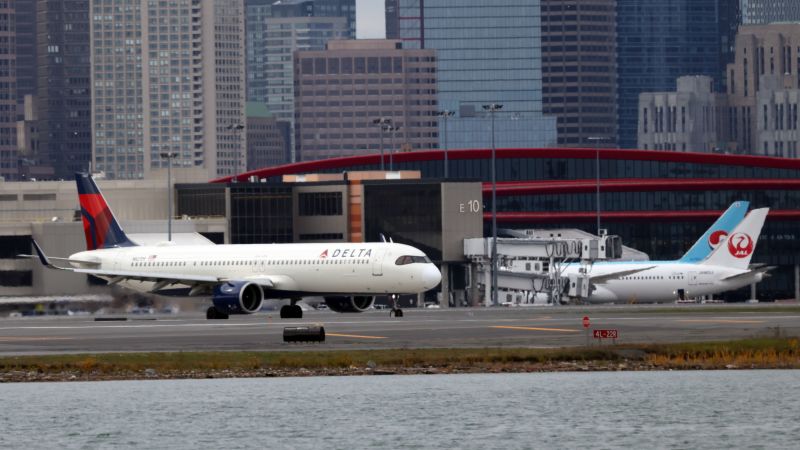
FAA investigates close call between two aircraft – The Federal Aviation Administration has launched an investigation into a near collision involving two commercial aircraft at Boston Logan International Airport on Saturday morning. According to flight tracking data, a Delta Air Lines flight, designated as Delta 2351, reportedly made a last-minute decision to abort its landing attempt at approximately 11:30 a.m. as an American Airlines flight, American 3161, was accelerating for takeoff on a runway that intersected with the one the Delta plane was using. The incident occurred during a busy period at the airport, where multiple aircraft are often operating on adjacent runways simultaneously, creating potential for close calls.
Passengers Safe, Pilots Executed Evasive Maneuver
A Delta spokesperson confirmed that the pilots executed an evasive go-around maneuver before the Airbus A319 landed safely. Passengers disembarked without incident, indicating the aircraft’s systems and the crew’s quick response minimized disruption. However, the proximity of the two planes—getting within several hundred feet of each other—has raised concerns among aviation safety experts. A CNN analysis of tracking data from Flightradar24 revealed the critical distance between the aircraft, highlighting the narrow margin of error during the incident.
Meanwhile, air traffic control audio captured by ATC.com shows the American Airlines pilot was questioned about the flight’s position as it prepared for takeoff. The pilot responded that the tower had cleared the plane for departure, confirming the clearance was issued prior to the Delta flight’s abort. This exchange underscores the importance of communication between pilots and controllers in preventing such close calls, though it also raises questions about the coordination during high-traffic scenarios.
Recent Aviation Incidents Prompt Safety Scrutiny
The incident at Logan Airport adds to a series of aviation-related near misses and accidents in the United States over the past few months. In addition to Saturday’s event, there have been four notable plane crashes, each drawing attention to systemic challenges in air safety. These include issues like turbulence, which has become increasingly frequent and severe, as well as recurring runway incursion incidents that have led to multiple investigations. While the FAA and airlines emphasize that such events are rare, they remain a focal point for regulatory oversight and operational improvements.
Runway incursions—where aircraft, vehicles, or people enter a runway without proper authorization—have been a growing concern. In 2025 alone, the FAA reported a 12% increase in such incidents compared to the previous year. This trend has led to calls for enhanced training, improved signage, and updated procedures at major airports, including Boston Logan. The recent near miss, though isolated, serves as a reminder of the complexities involved in managing high-density air traffic.
Understanding the Go-Around Procedure
A go-around, also known as an aborted landing, is a critical safety maneuver used by pilots to discontinue a landing attempt and initiate an immediate climb. This procedure is standard practice in aviation and is employed to address unexpected hazards, such as sudden wind shifts, visibility issues, or the presence of another aircraft on the runway. In Saturday’s incident, the Delta pilots opted for a go-around to avoid a potential collision, demonstrating how this maneuver can prevent more serious outcomes.
Despite its routine nature, a go-around can be unsettling for passengers who may not be aware of the process. However, aviation experts stress that these maneuvers are a normal part of flight operations. “Passengers aren’t told in advance it’s going to happen, but they’ll recognize it when suddenly they’re coming in to land and the aircraft just starts rising back up again,” said Michael McCormick, a former FAA air traffic manager and associate professor in air traffic management at Embry-Riddle Aeronautical University. McCormick added that such decisions are often made in split seconds, requiring pilots to rely on training and real-time situational awareness.
“This is something that pilots practice in flight simulators on a regular basis,” McCormick noted. “They’re trained to prioritize safety over comfort, even if it means an abrupt change in altitude during a landing approach.”
Broader Implications for Aviation Safety
While the FAA has not yet released the full findings of its investigation, the incident has sparked renewed discussions about the safety of intersecting runways and the efficiency of air traffic control systems. Boston Logan International Airport, one of the busiest in the country, has faced criticism in recent years for its runway configuration, which can lead to complex traffic patterns. The FAA’s recent initiatives to modernize airport infrastructure and implement advanced navigation technologies aim to reduce such risks, but the event highlights the need for continuous improvement.
Experts also point to the role of human factors in aviation safety. Despite the sophistication of modern aircraft, pilots and controllers must navigate a dynamic environment where split-second decisions can determine the outcome of an incident. “The pressure to maintain schedules and efficiency can sometimes lead to close calls, especially when multiple aircraft are operating on intersecting runways,” said a transportation safety analyst. “But the system has proven resilient, as seen in Saturday’s event where the pilot’s quick action prevented a potential disaster.”
As the FAA delves deeper into the details of Saturday’s incident, the focus will likely be on evaluating the air traffic control protocols and the pilots’ adherence to standard operating procedures. The agency has previously cited similar events as contributing factors to runway incursion statistics, and this case may lead to updated guidelines for managing intersecting runway operations. American Airlines has deferred further comments to the FAA, while Delta continues to emphasize the safety of its crews and passengers during such maneuvers.
Conclusion: A Safe Industry with Room for Growth
Although aviation remains one of the safest modes of transportation, the recent incidents underscore the importance of vigilance and adaptability in the face of evolving challenges. The FAA’s investigation into Saturday’s near miss at Boston Logan is part of a broader effort to enhance safety measures and address the root causes of such events. As the agency works to refine its procedures, airlines and pilots will continue to play a pivotal role in maintaining the high standards of air travel. For now, the focus remains on ensuring that these near misses are followed by concrete actions to prevent future occurrences.
“The aviation industry is constantly learning from incidents like this,” McCormick said. “Each event provides an opportunity to improve training, technology, and communication. It’s a cycle of safety that keeps flying not only possible, but also incredibly reliable.”