
He earned a Purple Heart fighting for the US. Swept up in Trump’s immigration crackdown, he now fights to come home
He earned a Purple Heart fighting for the US. Swept up in Trump’s immigration crackdown, he now fights to come home
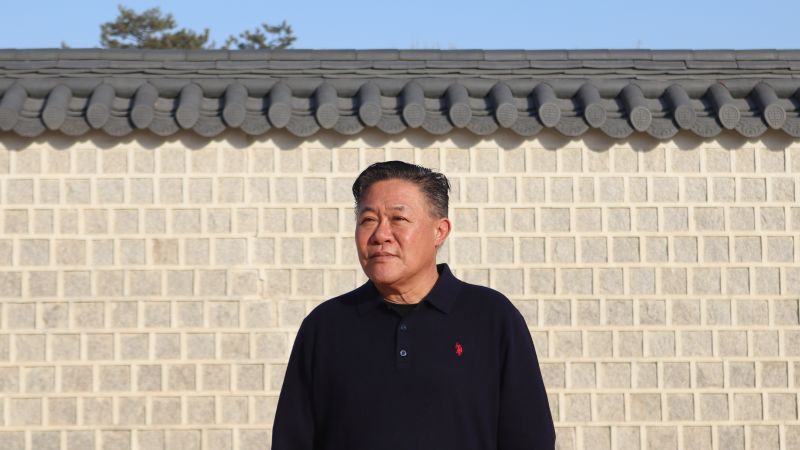
He earned a Purple Heart fighting – In the heart of a bustling Korean military base, Sae Joon Park finds himself caught in a paradox. As he orders pancakes and passes soldiers in uniform, the familiar sound of Korean is a fleeting comfort—a language he hasn’t spoken in years since his voluntary departure from the United States. For now, the 56-year-old Army veteran remains thousands of miles from home, stationed at Camp Humphreys, a sprawling US Army installation south of Seoul. Despite the foreign surroundings, he claims the base offers a rare sense of American familiarity: “When I’m on base, it actually feels like I’m in America,” he says, reflecting on the surreal situation of being in a place that once symbolized freedom, now a temporary refuge while his legal battle unfolds.
A Life Shaped by Migration
Park’s journey to the US began in childhood, when his parents’ divorce forced him to leave South Korea at age seven. He traveled alone to join his mother in Miami, a city that, he recalls, was “tough.” The young boy faced constant bullying as the sole Asian student in his school, often engaging in fights to assert himself. Within a year, the family relocated to Los Angeles, where Park spent the rest of his formative years. He found solace in Koreatown and the San Fernando Valley, surrounded by extended family and cultural roots. His mother, working multiple waitressing jobs, later transitioned to running small businesses selling clothing and records, providing stability for her son.
“Miami was tough,” Park told CNN. “I would always get in fights … I was the only Asian kid in the entire school, so I would get picked on a lot.”
By the time he graduated high school, Park was seeking direction. His uncle, a South Korean Marine colonel, advised him to enlist. “I didn’t have much else to go on,” he said. With his best friend, he joined the military, embarking on a path that would eventually earn him one of the nation’s highest honors.
The Combat Mission That Changed Everything
After basic training, Park was deployed to Fort Clayton in Panama in October 1989. Months later, he found himself at the center of “Operation Just Cause,” the US’s largest and most complex combat operation since Vietnam. The mission targeted Panama’s drug-trafficking leader, Manuel Noriega, and his regime. Park’s platoon was tasked with raiding a house belonging to a Brazilian woman described as Noriega’s “witch,” accused of performing occult rituals for the dictator. The raid unfolded in a chaotic scene, with closets packed with “crates of cocaine” and rooms filled with jars of human body parts, according to Park.
As the operation escalated, a firefight erupted outside the compound. Park was struck twice—once in the spine and once in the lower back—before being dragged from the battlefield, bleeding heavily and struggling to breathe. “I was really messed up,” he admitted to CNN, describing the physical and emotional toll of the incident. His survival led to a bedside ceremony at a San Antonio Army hospital, where he was awarded the Purple Heart, a symbol of combat-related injury.
“I got there just in time for the training and to go into war,” he told CNN. “In a matter of days, Park was involved in a mission that would alter his life – and earn him one of the most esteemed decorations in the US military.”
Returning to civilian life, Park grappled with the aftermath of his trauma. Diagnosed with post-traumatic stress disorder, he described nights of restless sleep and panic attacks triggered by everyday sounds. “I was trying to live my life as a twenty, twenty-one-year-old, but I was really messed up,” he said, highlighting the challenges of readjusting to peace after war.
A Veteran Swept Up in Legal Turmoil
Years after his service, Park’s life took a dramatic turn. In 2026, immigration officials unexpectedly threatened to handcuff and arrest him during a routine check-in, citing a prior criminal conviction. The charges included drug possession, bail jumping, and related offenses, leading to his self-deportation last summer. His case became a focal point during a congressional hearing in December, when lawmakers pressed then-Homeland Security Secretary Kristi Noem about veterans caught in Trump’s immigration policies.
Despite the scrutiny, the Department of Homeland Security continued to emphasize Park’s criminal record as the basis for his removal. Now, he is navigating multiple legal avenues to reclaim his place in the US, including a request for a pardon from the governor of New York. His attorney noted that these processes could span years and do not guarantee success. Yet, Park remains determined, vying for a chance to return to the country he once fought to protect.
Debating the Cost of Hard-Line Policies
While Park’s personal story is compelling, it has sparked a broader debate about the fairness of Trump’s immigration crackdown. Critics argue that the administration’s policies have revived outdated removal orders and limited the discretion of immigration officers to consider individual circumstances. For veterans like Park, who risked their lives for the US, the question lingers: Should they be sent back to a homeland they left as children, simply for past convictions?
“They should be given a chance to come home,” said one immigration attorney, underscoring the dilemma of balancing legal accountability with compassion for those who served. Park’s case exemplifies the human cost of these policies, as he now faces the harsh reality of being a noncitizen in a country that once embraced him. His journey from a war-torn battlefield to a detention center in Korea underscores the irony of a man who fought for freedom being denied it in his own life.
For Park, the fight is both personal and symbolic. “I wanted to come home,” he said, his voice steady but tinged with frustration. “But the system has made it harder than it should be.” As he waits for resolution, his story continues to resonate, challenging the notion that the US can be a land of opportunity for all who seek it—even those who have given their all to defend it.
