
How discarded chewing gum helped convict a serial rapist of two cold case murders
How Discarded Chewing Gum Led to the Conviction of a Serial Rapist in Two Cold Case Murders
How discarded chewing gum helped convict – In a small town in Washington state, a seemingly mundane encounter with a man who was unknowingly offering a sample of his own genetic material would eventually unravel decades of unsolved crime. Susan Logothetti, a police detective, and two colleagues stood outside a yellow house in Everett, clad in casual attire and handing out flyers for a chewing gum brand. Mitchell Gaff, a 68-year-old convicted rapist, opened the door in pajamas, inviting the trio into his home for a taste test of different gum flavors. Logothetti recounted the moment with vivid detail: “I remember watching him spit the first piece of gum into the ramekin and seeing the saliva, and it was very hard for me to contain my excitement.”
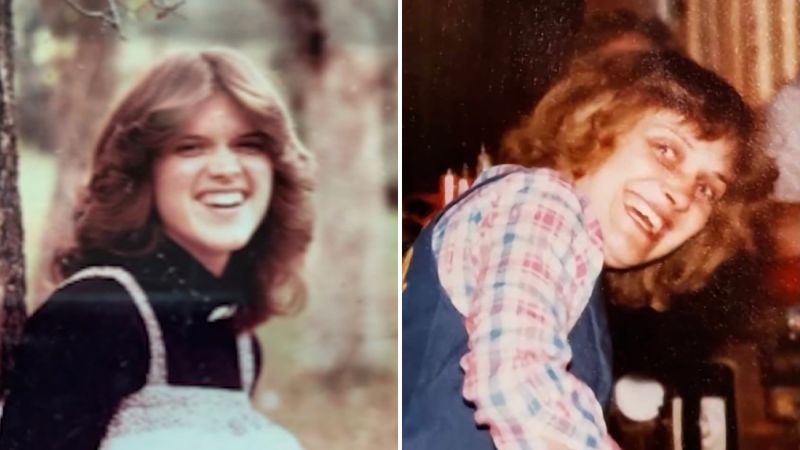
What Logothetti and her team didn’t realize at the time was that this casual interaction would provide the breakthrough needed to connect Gaff to two murders that had haunted the community for years. The affidavit of probable cause, filed in March 2024, described the “gum ruse” as a pivotal piece of evidence. When Gaff tried a new flavor, one of the detectives held out a small dish, allowing the saliva from his spitting to be collected. This sample, later analyzed, matched DNA found on the bodies of Judy Weaver and Susan Vesey, two women killed in 1980 and 1984 respectively.
Gaff’s admission of guilt, submitted on April 16, detailed his actions in both killings. He confessed to attacking Vesey, a 21-year-old mother of two toddlers, by breaking into her home and tying her up before beating, raping, and strangling her. In a later incident, he assaulted Weaver, a 42-year-old mother, in her bedroom, setting fire to the room to erase evidence. “Before leaving I wrapped cords around her neck and lit the corner of the bedspread in an attempt to cover up my crime and with the intention of killing her,” Gaff stated. “Ms. Weaver died because of my actions.”
The Long Shadow of Unanswered Questions
When the murders occurred, forensic tools were far less advanced than they are today. DNA profiling had not yet become a standard investigative method, leaving law enforcement reliant on circumstantial clues and witness statements. The cases of Weaver and Vesey were initially treated as separate, with no clear link between them. Investigators identified persons of interest in each incident but were unable to establish a connection or secure convictions.
For years, the cases lingered in the records, their mysteries unaddressed. Logothetti, who later inherited Weaver’s case file from her predecessors at the Everett Police Department, described the documentation as filled with wild theories, including speculation about money laundering and cocaine use. Weaver’s boyfriend, the primary suspect at the time of her death, died in 1994, leaving the case without a clear lead. It wasn’t until 2020, when new DNA analysis techniques emerged, that the link between the two victims became apparent.
The breakthrough came after forensic scientists re-examined Weaver’s evidence. In the decades following her murder, the case had been revisited multiple times, but without the necessary tools to match the DNA found on her body. The gum sample, however, provided a critical piece of the puzzle. “The two murders just needed science to catch up,” Logothetti reflected. The discovery of Gaff’s DNA in the saliva from the gum not only connected the cases but also confirmed his guilt in both crimes.
A Scientific Leap in Solving Cold Cases
The role of modern DNA technology in this case highlights its transformative power in solving cold cases. Lisa Collins, a forensic scientist at Washington State Patrol, explained how recent advancements like STRmix and genetic genealogy have revolutionized the field. “New software and strides in genetic genealogy are two relatively recent watersheds in DNA technology that have allowed for breakthroughs in cases like these,” Collins told CNN.
Collins took over Weaver’s case in 2003 and noted that even with existing evidence, the analysis was challenging. The binding material on Weaver’s body contained a mix of DNA from her, her boyfriend, and an unknown third person. Using STRmix, a tool that can identify profiles from smaller DNA ratios, Collins and her team were able to isolate the mystery contributor. That profile was then compared to the national database CODIS, where Gaff was identified as a match in November 2023.
The process of matching DNA in cold cases often requires patience and innovation. In Weaver’s case, the delay in submitting the vaginal swabs for analysis meant the evidence sat unexamined for years. “At the time of the murders, DNA profiling had yet to become a useful forensic tool,” the affidavit noted. But the foresight of law enforcement in collecting and preserving the evidence ultimately paid off, providing a link that had been missing for over 30 years.
Justice and Healing for Families
For the families of Weaver and Vesey, the conviction brought a long-awaited sense of closure. The identification of Gaff as the killer allowed them to move beyond the uncertainty that had plagued their lives for decades. “This has given us peace,” Logothetti said. The case also offered relief to a woman Gaff had attacked before the murders, though the details of that encounter were not as extensively documented.
Heather Wolfenbarger, Gaff’s defense attorney, declined to comment on the case. However, the evidence against Gaff was overwhelming, with the gum spitting incident serving as a cornerstone of the prosecution’s argument. The use of saliva samples, once considered insignificant, now stands as a testament to the evolving nature of forensic science and its ability to illuminate the past.
As Gaff prepares for sentencing, the case underscores the importance of persistence in cold case investigations. The discovery of the killer’s DNA in the saliva of a discarded piece of gum illustrates how even the smallest pieces of evidence can hold the key to justice. With technology advancing rapidly, cases that once seemed unsolvable are now being re-examined, offering hope to victims and their families who have waited years for answers.
The journey from a simple taste test to a life sentence is a powerful reminder of how science and intuition can work in tandem. For Logothetti and her team, the moment when Gaff’s DNA matched the evidence was not just a breakthrough for the case—it was a victory for the pursuit of truth in the face of time. As the nation continues to embrace new forensic tools, the story of Judy Weaver and Susan Vesey serves as a case study in the enduring impact of innovation on criminal justice.
