
Pope Leo’s plane was grounded. Then the King of Spain stepped in to help
Pope Leo XIV’s Flight Delay Sparks Surprise in Spain
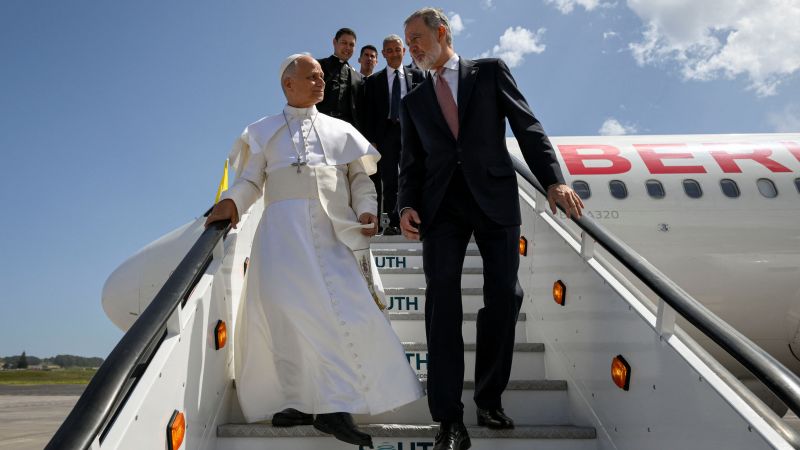
Pope Leo s plane was grounded – During the Pope’s return journey from the Canary Islands to Rome, an unexpected technical issue caused a delay that caught everyone off guard. The incident occurred aboard an Iberia Airways flight, which was carrying Pope Leo XIV and a group of Vatican officials. As the plane prepared for departure from Tenerife, the captain informed passengers of a problem that prevented the aircraft from taking off. Moments later, the Pope and a few members of his entourage exited the cabin, leaving the rest of the travelers—including around 80 journalists—on standby. This marked a sudden shift in the routine of the papal trip, which had otherwise been filled with significant milestones and public engagement.
Traveling with the Pope during his June 6-12 visit to Spain, the journalists experienced firsthand the contrast between the papal travel arrangements and the host country’s hospitality. While the Pope and his senior clergy occupied the front section of the aircraft, the media team was seated in economy class, despite paying business class fares. This arrangement allowed the Pope to hold a press conference on the way back to Rome, while the journalists had the opportunity to meet him during the outbound leg. The papal flights, known for their elaborate details, featured special menus adorned with the Pope’s coat of arms and headrests decorated similarly. However, the incident on the Iberia Airways flight highlighted the unpredictability of such high-profile journeys.
When the captain’s announcement disrupted the flight, it created a ripple of concern among the press corps. The Pope, who often relies on a regular commercial plane for his travels, was known to use an ITA aircraft for departures, with the host country typically providing a plane for the return. This time, though, the situation was different. After the Pope’s plane was grounded, news spread that the King of Spain had offered his private aircraft to ensure a swift departure. As the Pope walked across the tarmac to board the royal plane, the journalists were left waiting for another aircraft to take them back to Rome. The incident underscored the importance of the host nation’s support in such moments, even as it added a touch of unpredictability to the Pope’s schedule.
The Pope’s Historic Visit to Spain
The Pope’s trip to Spain was marked by a series of historic firsts and impactful moments. As the first American pope, Leo XIV brought a unique perspective to his papal duties, particularly in his fluency with the Spanish language. His presence in Madrid drew massive crowds, with an estimated 1.2 million people gathering for a Mass and procession. The event was a testament to the Pope’s ability to connect with diverse audiences, even in a country with a politically divided landscape. During a rare address to Spain’s parliament, he received a seven-minute standing ovation from representatives across the nation’s intensely polarized political spectrum. This moment was not only a highlight of the trip but also a symbol of the Pope’s diplomatic reach.
Amid the grandeur of public events, the Pope also focused on personal interactions that resonated deeply with the local population. One such encounter took place at the Las Raices migrant camp in Santa Cruz, Tenerife. Here, he met with individuals risking their lives on wooden boats to reach Europe from West Africa. The Pope condemned human traffickers, urging them to “stop” and “repent,” and warned that they would face “divine justice.” These words, delivered with conviction, were a clear message on the importance of compassion and accountability in migration issues. The Canary Islands, a major entry point for migrants entering the European Union, became a focal point for the Pope’s advocacy, aligning with his broader priorities as a pontiff.
Another poignant moment came during his private meetings with abuse survivors. The Pope emphasized the need for Spain’s bishops to listen to victims and take meaningful steps to make reparations. These interactions, conducted away from the public eye, showcased his commitment to addressing the Church’s past mistakes and supporting those who had suffered. The blend of high-profile events and intimate engagements painted a picture of a Pope who was both a global leader and a deeply personal figure.
A Memorable Mass in Barcelona
The visit’s most visually stunning moment took place at Barcelona’s Sagrada Familia basilica, a century after the architect Antoni Gaudí’s passing. The Pope celebrated a Mass in the iconic structure, which is celebrated for its intricate design and spiritual significance. As he blessed the tower dedicated to Jesus Christ, the event became the tallest church in the world, a fitting tribute to the enduring legacy of Gaudí’s vision. The ceremony was accompanied by a spectacular light show, choreographed fireworks, and the resonant voices of the basilica’s oldest choir in Europe. Adding to the spectacle, drone lights illuminated Gaudí’s face in the night sky, creating a magical atmosphere that captivated attendees.
The Sagrada Familia Mass was more than a religious event; it was a celebration of cultural heritage and faith. The Pope’s presence there symbolized his recognition of the interplay between art, architecture, and spirituality. This was a showstopper moment that left a lasting impression on both locals and visitors, reinforcing the Pope’s role as a unifying figure in a nation that values its history and creativity. The event also served as a reminder of the Pope’s ability to blend tradition with modernity, using contemporary technology to enhance the spiritual experience.
A Relaxed Pontiff and Unscripted Moments
What stood out during the Pope’s visit was his visible sense of ease and happiness, a marked contrast to his usual reserved demeanor. In rare moments of spontaneity, he shared personal anecdotes and off-the-cuff remarks that warmed the hearts of those around him. One such instance occurred during the flight from Madrid to Barcelona, where he entered the cockpit and engaged with the pilots via the in-flight radio. The Pope waved at the military plane escort, a gesture that added a human touch to the formal proceedings. These unscripted interactions revealed a side of Leo XIV that was both approachable and genuine.
On another occasion, the Pope took to the popemobile, delighting crowds with his charismatic presence. His ability to connect with people, regardless of their background, was evident in the way he spoke to young attendees about marriage and family life. He shared stories of his youth, including his passion for soccer and American football, which brought a sense of relatability to his role as a spiritual leader. Even in the final days of his trip, the Pope maintained an active lifestyle, emphasizing his commitment to physical health and exercise. These moments highlighted not only his dedication to his faith but also his appreciation for the simple joys of life.
The Pope’s grounded plane incident, while a minor setback, became a part of the narrative of his visit. It was a reminder of the challenges that come with such high-profile travel, but it also underscored the support of the host country. The King of Spain’s intervention ensured a smooth continuation of the Pope’s journey, allowing him to return to Rome with his message of hope and unity intact. As the trip came to a close, the Pope’s efforts in Spain were seen as a significant contribution to both the nation’s cultural and spiritual landscape. His relaxed and joyful demeanor, coupled with his deep engagement with the people he met, left an indelible mark on the country and its citizens.
The visit to Spain was a blend of grandeur, personal connection, and historical significance. From the massive crowds at his Masses to the intimate meetings with migrants and abuse survivors, Pope Leo XIV demonstrated his dedication to addressing global and local issues with equal fervor. His brief, behind-closed-doors meeting with Bad Bunny, a Puerto Rican rapper who had performed in Madrid on the night of his arrival, added an unexpected twist to the trip. Though no photos were released of their meeting, the speculation about their interaction highlighted the Pope’s willingness to engage with modern culture and its influencers. Overall, the visit was a testament to the Pope’s ability to adapt, inspire, and connect with people across different walks of life.
