How Spain’s bad habits were exposed in shocking result against Cape Verde – and why it’s a warning sign

Spain’s Bad Habits Exposed in World Cup Shock Against Cape Verde
How Spain s bad habits were – Spain’s recent 0-0 draw against Cape Verde at the World Cup has shed light on recurring issues that could challenge their tournament prospects. The result, a stark departure from their dominant Euro 2024 campaign, reveals how Spain’s bad habits are reemerging. While the underdogs of Cape Verde celebrated a historic upset, Spain’s fans faced a moment of concern, questioning whether the team had reached their peak. This match, played in the early stages of the competition, serves as a critical indicator of Spain’s ability to adapt and maintain consistency under pressure.
Tactical Reliance and Key Player Absences
Spain’s reliance on individual brilliance was again evident as they struggled to convert possession into goals. The absence of key players Lamine Yamal and Nico Williams, who had been instrumental in their Euro 2024 success, left a void in both creativity and pace. Yamal, still recovering from a hamstring injury, and Williams, sidelined by a similar issue, were replaced by Ferrán Torres and Gavi. This tactical shift, while necessary, highlighted how Spain’s bad habits can surface when their core attacking trio is unavailable.
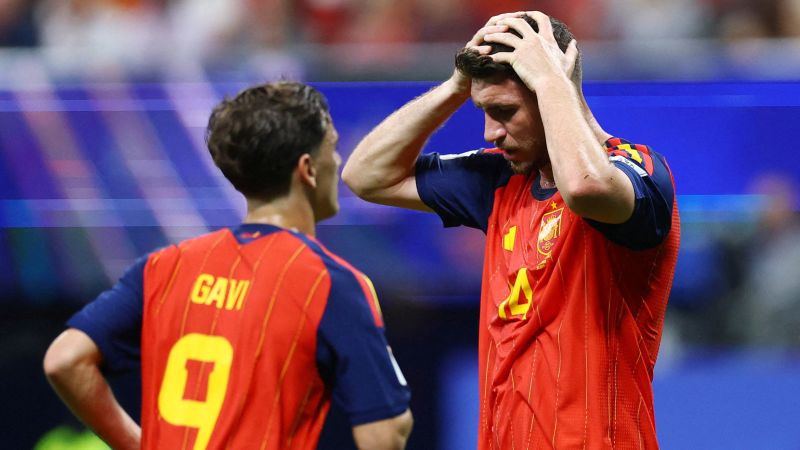
The performance of Gavi, returning from a meniscus tear, underscored these challenges. Though he played a pivotal role for Barcelona, his role in the national team has traditionally been more central. His lack of explosiveness in the final third, particularly post-surgery, was a clear indicator of Spain’s bad habits in maintaining fluidity. Torres, thrust into a wing role, also struggled to adapt, missing crucial chances that could have shifted the match in Spain’s favor. These lapses in execution raised eyebrows, especially on Spanish-speaking social media, where fans began to question the team’s preparedness.
Midfield Inefficiencies and Attacking Stagnation
Spain’s midfield, a key strength in their Euro 2024 campaign, failed to deliver the same energy against Cape Verde. Rodri and Fabián Ruiz, both veterans, seemed hesitant, while Pedri, the young prodigy, was forced into an unfamiliar position. The team’s inability to generate consistent chances pointed to a lack of cohesion in the middle third, a flaw that has become a pattern in recent matches. This midtactically inconsistent play, paired with Spain’s bad habits of over-reliance on set pieces, limited their ability to exploit Cape Verde’s defensive vulnerabilities.
Data from Opta Stats emphasized the midfield’s shortcomings, with Oyarzabal, the lone forward, touching the ball only once in the first half. This statistic reflected a broader issue: Spain’s bad habits in generating attacking momentum. Their tactical adjustments, while strategic, seemed to stifle creativity. The team’s use of long-ball tactics and rigid positional play further hindered their ability to break through, marking a departure from the dynamic, free-flowing style that defined their Euro success.
Historical Context and Future Challenges
Spain’s past has shown resilience in overcoming early setbacks, but this draw raises concerns about their current form. In 2010, they won the World Cup after a narrow loss to Switzerland, and Argentina famously turned around their World Cup campaign after a shocking defeat to Saudi Arabia. Yet, these examples may not fully apply to Spain’s bad habits in the present context. The team’s failure to capitalize on their numerical advantage and lack of attacking cohesion suggest a deeper, more systemic issue that could affect their World Cup journey.
The upcoming matches will be vital in determining whether this setback is a temporary lapse or a sign of growing inconsistency. Spain’s ability to regroup and address their bad habits—such as poor finishing and midfield stiffness—will define their progression. A strong performance in the next games could reinforce their status as contenders, but continued struggles may force them to confront the challenges of maintaining dominance in a competitive group.
Why This Matters for Spain’s Tournament Ambitions
Spain’s bad habits, exposed in the Cape Verde match, threaten their World Cup ambitions. The team’s reliance on star players and tactical rigidity has created vulnerabilities that can be exploited by opponents. While their talent remains world-class, the lack of depth and adaptability has become a noticeable weakness. This performance underscores the need for Spain to refine their strategy, ensuring they can thrive even when key players are absent or their usual rhythm is disrupted.
Referee Adham Makhadmeh’s decision to award the draw confirmed a result that may linger in the minds of fans and analysts alike. Spain’s inability to break down Cape Verde’s defense, despite their usual firepower, highlights a worrying trend. As the tournament progresses, their bad habits will be tested against stronger opposition. The challenge now is whether Spain can evolve their approach and overcome the pitfalls that have surfaced in this early stage of the competition.