A century-old rule shuts my daughter out of her own community. A court case could change that

A Century-Old Rule Shuts My Daughter Out of Her Own Community. A Court Case Could Change That
A Sacred Space and a Strained Legacy
A century old rule shuts my daughter – In a secluded agiary, the air is thick with the scent of burning sandalwood, a ritualistic aroma that fills the space where only a few are permitted to enter. This is the heart of Zoroastrian worship for India’s Parsi community, a tradition that has endured for millennia. Priests in flowing white robes tend to the eternal flame, a symbol of spiritual continuity, while ancient Avestan hymns echo through the chamber. For generations, the community has clung to its customs, but now, those traditions are under scrutiny. The author of this article, a Parsi woman, stands before the sacred fire, her head wrapped in a cloth, yet feels excluded from a heritage she has inherited. Her daughter, born to a Parsi mother and a non-Parsi father, is not recognized as part of the community—a rule that has persisted for over a century.
“We will be like sugar,” the Zoroastrian high priest is said to have declared, stirring a pinch into the milk without spilling a drop. “We will dissolve into your land and sweeten it.”
Origins and Evolution of Parsi Identity
The Parsi community’s identity is rooted in a tale of survival and adaptation. Centuries ago, Zoroastrian refugees fleeing the Muslim conquest of Persia arrived on India’s shores, bringing with them the fire of their faith. A legend recounts their arrival as a Hindu ruler offered a bowl of milk, symbolizing a land already full. The Zoroastrians, however, demonstrated their resilience by adding a spoonful of sugar without spilling a single drop, a metaphor for their assimilation into Indian society while preserving their distinctness. This act, according to tradition, set the foundation for their life in the subcontinent.
Over time, the community’s strict boundaries solidified. The principle of endogamy became central to their identity, ensuring that marriage within the faith would preserve their cultural and religious cohesion. By the early 20th century, the state had officially codified this rule, recognizing only children of Parsi fathers as members of the community. This decision, made in 1908, became a cornerstone of Parsi identity, effectively excluding women who married outside the faith. The result is a legacy of exclusion, where a daughter’s birthright is contingent on her father’s lineage.
A New Generation Challenges Tradition
Today, a landmark Supreme Court case is challenging these long-standing norms. At the center of the dispute is the question of who qualifies as a Parsi—and whether the community’s rules should be redefined. The case, which has gained national attention, represents a growing movement among Parsi women to assert their right to belong. For many, this is not just a legal battle but a cultural reckoning. The demographic decline of the community, with numbers dropping from over 100,000 in 1941 to fewer than 60,000 by 2011, has amplified the urgency of change. If the court rules in favor of inclusivity, it could mark a pivotal shift in the community’s approach to identity.
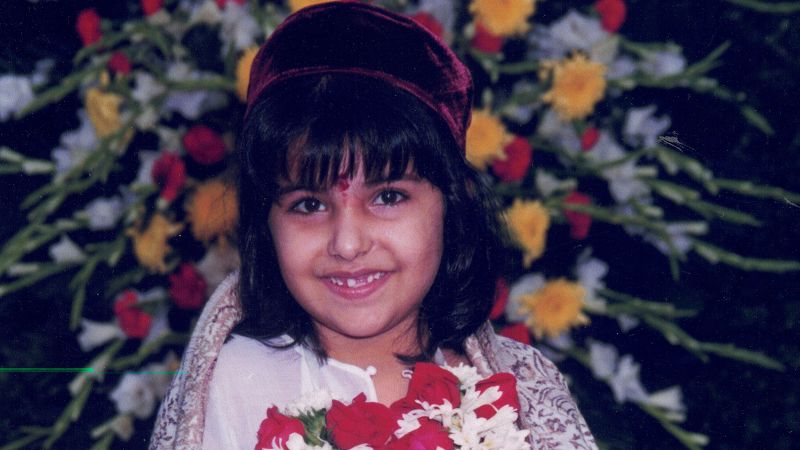
Traditionally, Parsi women have accepted the rules without question, resigning themselves to a life of cultural margins. Yet, as a new generation redefines success and belonging, attitudes are evolving. The author, who grew up in a Parsi household in South Mumbai, recalls her grandmother’s unwavering devotion to the faith. That same woman, however, once advised her to “find a good Parsi boy” when she was young. Now, the author’s decision to marry outside the faith has left her daughter without a place in the community—a situation that feels increasingly unjust.
The Weight of Tradition and the Path Forward
The case is not merely about legal recognition; it’s about the future of a people who once ruled an empire. The Parsi community, though small, has left an indelible mark on India’s history and culture. From the Tata family’s industrial empire to the contributions of figures like field marshal Sam Manekshaw and nuclear physicist Homi J. Bhabha, their influence extends far beyond numbers. Even globally, their legacy is felt through the achievements of Freddie Mercury, whose real name was Farrokh Bulsara. These stories underscore the community’s impact, yet they also highlight the tension between tradition and modernity.
Sanaya Dalal, another Parsi woman who married outside the faith, shares a similar experience. Raised in the Dadar Parsi Colony, a vibrant neighborhood just six miles from the author’s home, Sanaya’s life was steeped in Parsi customs. Her community, a quiet enclave in the heart of Mumbai, thrived on its cultural heritage. Yet, like the author, she found herself on the outside when she chose a partner from a different faith. The community’s resistance to interfaith unions has created a divide, with some Parsi women feeling pressured to conform while others seek to redefine their place within the faith.
The Battle for Inclusion
As the Supreme Court deliberates, the question of whether to uphold or amend the rule becomes a reflection of broader societal shifts. The Parsi community, once a symbol of resilience, now faces its own existential challenge: how to preserve its heritage while embracing inclusivity. The current debate has sparked conversations across generations, with younger members advocating for change while elders cling to tradition. For the author, this is a personal fight—not just for her daughter, but for a future where identity is not dictated by birth but by belonging.
The ruling in this case could set a precedent, allowing children of Parsi mothers to be recognized as part of the community. Such a decision would not only expand the Parsi population but also honor the diversity of their modern lives. As the court weighs the arguments, the community stands at a crossroads. The sacred flame that has burned for centuries may soon be joined by new voices, signaling a transformation in the way Parsi identity is defined and passed down. This moment, steeped in history and hope, could redefine what it means to be part of a community that once thrived on the shores of the Indian Ocean.
With the case gaining momentum, the Parsi community is forced to confront a question that has lingered for over a century: who truly belongs? The answer, once rigidly tied to paternal lineage, may now be open to interpretation. As the author and others like her challenge the status quo, the future of the Parsi identity hangs in the balance, poised to evolve in a world that values diversity and inclusion. The sacred space of the agiary, once a symbol of exclusivity, may soon become a site of renaissance for a community seeking to adapt without losing its essence.