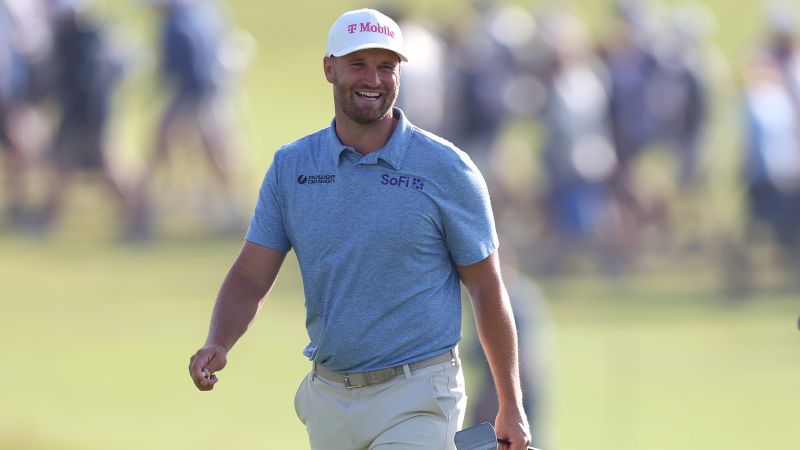
Wyndham Clark wins second US Open title after flirting with record collapse

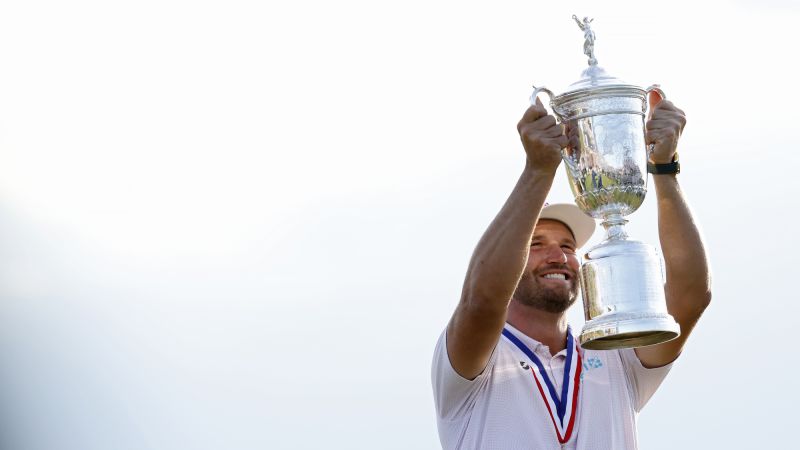
Wyndham Clark Claims Second US Open Title Amid Dramatic Comeback
Wyndham Clark wins second US Open – Wyndham Clark’s journey to victory at the 2026 US Open was anything but straightforward. After a rocky performance the previous year, where he famously smashed a locker at Oakmont and faced sharp criticism, the 32-year-old golfer seemed to be on the brink of another collapse. Yet, on Sunday at Shinnecock Hills, he turned his fortunes around, securing his second major title in just four years. The win wasn’t just a triumph for Clark—it was a personal redemption, a testament to his resilience in the face of adversity.
A Year of Trial and Transformation
The path to this moment was paved with challenges. Last year’s US Open had left Clark in a state of despair, his confidence shaken and his reputation tarnished. The locker incident, a moment of frustration, had become a symbol of his struggles. Fans and analysts alike questioned whether he could bounce back, and the pressure mounted as he entered this year’s tournament. But Clark’s return to Shinnecock Hills was marked by determination, as he sought to erase the memories of his earlier missteps.
Despite the lingering doubt, Clark’s performance this year was nothing short of extraordinary. He maintained a commanding lead throughout the 54-hole championship, the largest margin in US Open history since 2011. However, the final day tested his composure as the New York crowd, initially rooting for Scottie Scheffler’s pursuit of a career Grand Slam, turned their attention to Clark. Their support was conditional, and the pressure was palpable. Yet, Clark’s ability to stay focused and deliver under intense scrutiny proved crucial to his victory.
The Final Stretch: A Test of Nerve
The decisive moments unfolded on the challenging 16th hole, a par-5 that had become a focal point of the tournament. Clark had already made an eagle on Saturday, a rare feat that had signaled his potential for a wire-to-wire win. But on Sunday, his approach was far less graceful. A wayward drive landed him deep in the fescue, forcing a difficult shot out of the rough. The crowd’s jeers grew louder as he narrowly avoided a bunker and left his 8-iron short of the green. Still, Clark’s 30-foot birdie putt secured a two-shot advantage, a moment that would define his triumph.
As the final holes approached, the tension reached a peak. The gallery, which had largely favored Scheffler, continued to challenge Clark with their energy. Even a fan was ejected after shouting, “Don’t choke, Wyndham,” as the crowd’s focus remained on his every move. Clark, however, remained unshaken. “Being in the arena is not for everybody,” he reflected afterward, “and I think it shows a lot about Wyndham, how he handled not only this golf course but I think the crowd today. And he is a well-deserving champion.” His composure during these high-stakes moments was a stark contrast to the turmoil of the previous year.
“The first one was kind of just the breakthrough of knowing I can do it,” Clark said after a two-putt par from 50 feet, finishing with a 3-over 73 to claim a one-shot victory. “And then this one was a lot of redemption. Last year was so tough, a terrible year. I left this place in shambles, and it’s amazing what a year can do. I’m leaving here this Sunday as a champion, and I’m just so blessed.”
Clark’s win also marked a historic milestone. He became the first player to secure a wire-to-wire US Open victory since Martin Kaymer’s triumph at Pinehurst No. 2 in 2014. This achievement underscored his consistency and ability to perform under pressure, qualities that had been tested over the past 15 years. The final round, however, was anything but a cakewalk. Clark’s final score of 4-under 276 was a remarkable feat, especially considering the challenges he faced.
Sam Burns, the closest competitor, had his own moment of near-miss. The 26-year-old golfer had come close to closing the gap on the 17th hole, where he birdied from 10 feet to stay within a single shot of Clark. But a three-putt bogey on the 15th hole had already dented his chances, and his final-round 67 wasn’t enough to overtake the champion. Burns’ performance, though valiant, highlighted the fine line between triumph and heartbreak in major championships.
Even the New York crowd, which had been critical of Clark throughout the day, couldn’t help but acknowledge his success. At the closing ceremony, Clark took the silver trophy and addressed the spectators with a mix of humility and gratitude. “New York didn’t really like me—I love you guys,” he said, his voice steady. “But I get it. Some of it’s self-deserved. I did some unfortunate things last year that I really regret, and I’ve been sorry multiple times and I’m still sorry, so hopefully I can win you guys over eventually.”
Clark’s emotional journey was mirrored by the reactions of the players around him. Tom Kim, who celebrated his 26th birthday on Sunday, had been a contender until a bogey on the 17th hole sent him into third place with a 70. His struggles underscored the unpredictable nature of major tournaments, where even the most seasoned athletes can find themselves on the edge of defeat. Meanwhile, Scheffler, who had been the crowd’s favorite, finished tied for fourth with a 71. His performance, though commendable, had been overshadowed by Clark’s resilience and ability to overcome the odds.
For Clark, the victory wasn’t just about the golf. It was a personal statement, a way to rebuild his confidence and reaffirm his place in the sport’s elite. His father, Randall, had traveled from Denver for the occasion, taking an overnight flight to witness his son’s triumph. The sight of his family celebrating with him added an emotional layer to the win, a moment of joy that contrasted sharply with the frustration of the previous year.
As the tournament concluded, the significance of Clark’s win became clear. It wasn’t just a return to form—it was a complete turnaround. The US Open, known for its brutal tests of both skill and mental fortitude, had once again proven to be a crucible for greatness. Clark’s ability to navigate the pressures of Shinnecock Hills, from the disapproving crowd to the unforgiving course, solidified his status as a champion who could rise above the most daunting challenges.
Looking ahead, Clark’s achievements raise questions about his future potential. With two US Open titles and two wins in the last month, he has positioned himself as a formidable force in the golf world. His success this year also serves as a reminder of the importance of mental resilience in major championships. As he hoisted the trophy, Clark’s journey from near-collapse to redemption offered a compelling narrative of perseverance and triumph, one that will be remembered for years to come.