
Colombia bets on ‘the Tiger,’ a Trump-backed far-right populist leading race to the presidency
Colombia Bets on ‘The Tiger,’ a Trump-Backed Far-Right Populist Leading Race to the Presidency
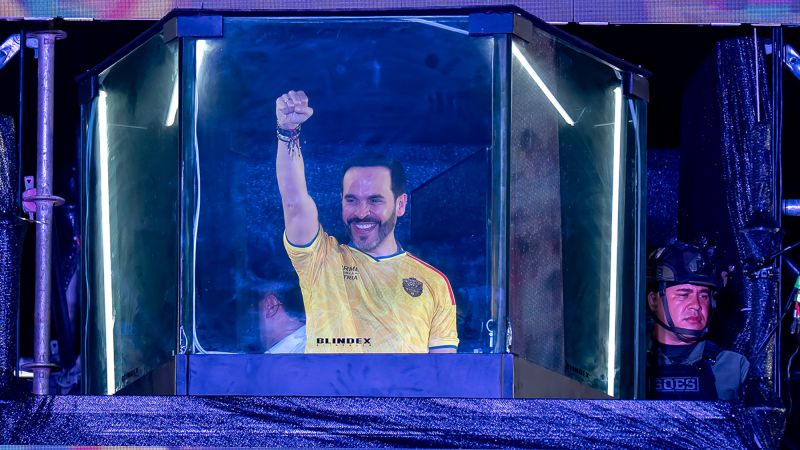
Colombia bets on the Tiger a Trump – Colombia’s presidential election has taken a pivotal turn as a far-right populist candidate, backed by U.S. President Donald Trump, emerged as the leading contender in the final count. Abelardo de la Espriella, who identifies himself as “the Tiger,” has positioned himself as a decisive force against the nation’s entrenched issues of crime and armed conflict. His campaign, which gained momentum during the tight runoff, hinges on the promise of swift action to address the country’s ongoing struggles. With over 99.91% of votes tallied, de la Espriella narrowly edged out his government-affiliated rival, Iván Cepeda, though both candidates have acknowledged the lead and vowed to await the official results from electoral commissions.
A Political Odyssey Rooted in Law
De la Espriella’s path to the presidency began in the legal profession, where he carved a niche as a criminal lawyer before pivoting to politics. His dual citizenship, which includes U.S. and Italian passports alongside his Colombian nationality, has become a talking point in his campaign. While his legal background is a cornerstone of his credibility, his political journey has been marked by a blend of radical promises and pragmatic alliances. Trump’s endorsement, which arrived late Sunday night, amplified his visibility, particularly in regions with strong ties to American influence.
During the campaign, de la Espriella captivated audiences with his bold rhetoric. He positioned himself as a solution to Colombia’s complex challenges, including the fallout from the 2016 peace agreement. This accord, once celebrated as a landmark in ending the country’s decades-long civil war, has since faced setbacks as criminal groups reemerged with renewed vigor. De la Espriella’s appeal lies in his insistence that a vote for him would mean a decisive shift in the nation’s trajectory, promising an end to the persistent violence that has reshaped Colombia’s social and political landscape.
The Rise of Right-Wing Populism in Latin America
De la Espriella’s ascent mirrors the broader trend of right-wing populism sweeping across Latin America. His policies, which emphasize stringent law enforcement and cost-cutting measures, resonate with a electorate weary of prolonged peace efforts and economic stagnation. He has drawn comparisons to leaders like El Salvador’s Nayib Bukele, advocating for the construction of large-scale prisons to house criminal elements. Similarly, his call for reducing public spending echoes Argentina’s President Javier Milei, who has championed austerity as a path to fiscal stability.
While his supporters are galvanized by his assertive stance, critics argue that his campaign lacks concrete details. De la Espriella’s approach has been characterized as loud and reactive, with a focus on immediate solutions rather than long-term strategies. This has left his vision for governance somewhat ambiguous, prompting questions about his ability to implement policies once in office. However, his selection of José Manuel Restrepo as vice president signals an attempt to bridge gaps with the conservative establishment, a move that could be crucial in securing legislative support.
Polarizing Alliances and Unresolved Challenges
De la Espriella’s political movement, “Defenders of the Homeland,” has yet to gain a foothold in Colombia’s Congress or Senate. This absence of institutional backing could complicate his ability to pass laws, as he may need to negotiate with traditional right-wing parties that have historically opposed President Gustavo Petro’s left-leaning agenda. His reliance on international figures, including Italy’s Prime Minister Giorgia Meloni and the Bolsonaro family in Brazil, underscores the global reach of his campaign, but also raises questions about the alignment of his policies with the interests of Colombia’s domestic electorate.
One of the most contentious aspects of his candidacy is his dual citizenship. While he has expressed pride in his U.S. and Italian passports, naturalized American citizens are expected to swear an oath of allegiance. This could create a conflict of interest for de la Espriella, particularly in his role as a foreign head of state. He has argued that his international credentials will provide him with additional protection against threats, a claim that has drawn both support and skepticism from analysts.
“He Won, Big!,” Trump posted on Truth Social late Sunday night, alongside an article detailing Colombia’s election results.
A Legacy of Violence and Peace Disarray
Colombia’s struggle with violence remains a defining issue, even as de la Espriella campaigns on the promise of a breakthrough. The country, once a symbol of peace after the 2016 agreement, has seen a resurgence of conflict. The Revolutionary Armed Forces of Colombia (FARC), which had been the primary rebel group, have disintegrated, leaving a vacuum that has been filled by other armed factions. These groups, including the National Liberation Army (ELN) and criminal gangs, have adopted landmine tactics previously associated with the FARC, contributing to a 20% rise in injuries and deaths from such weapons over recent years.
De la Espriella’s platform addresses these challenges by advocating for a hardline approach to criminal justice. His strategy includes the establishment of mega-prisons and the dismantling of state programs that he views as inefficient. This vision aligns with his legal expertise, which he leverages to argue that the current governance structures are inadequate. Yet, his lack of experience in national politics has been a point of debate, with some observers questioning whether his legal acumen translates to effective leadership.
A Prosecutor’s Past and Political Gambits
Before entering politics, de la Espriella was known for handling high-profile cases, one of which involved a prostitution scandal linked to agents of the U.S. Secret Service during Barack Obama’s visit to Cartagena in 2012. This case highlighted his willingness to challenge powerful figures, a trait that has been embraced by his supporters. He also represented Alex Saab, the alleged financier of Venezuela’s ousted President Nicolás Maduro, who was extradited to the U.S. on money laundering charges. These legal associations have reinforced his image as a fighter against corruption and crime.
De la Espriella’s campaign has been defined by its urgency, often emphasizing short-term fixes over detailed policy frameworks. While this has energized his base, it has also left critics wondering about the sustainability of his approach. His failure to publish a comprehensive government plan has sparked debates about his preparedness for the presidency. Nevertheless, his coalition-building efforts, including the inclusion of former Finance Minister José Manuel Restrepo, suggest a strategy to unify disparate political factions under a common cause.
Looking Ahead: A Nation in Transition
Despite his current lead, de la Espriella faces significant hurdles. The challenge of reconciling Colombia’s fractured political landscape looms large, as his movement struggles to gain legislative traction. Additionally, the issue of his dual citizenship remains a potential flashpoint, particularly in a country where national loyalty is often tied to the government’s ability to protect its citizens. De la Espriella’s success will depend on his capacity to navigate these complexities while addressing the root causes of violence that have persisted since the nation’s independence.
As the election results solidify, the nation awaits the final outcome. With the preliminary count already reflecting a close race, the future of Colombia’s governance will be shaped by the balance of power between de la Espriella’s faction and the established political forces. Whether his pledge to restore order will translate into lasting change remains to be seen, but his campaign has undoubtedly redefined the political discourse in a country grappling with the consequences of a peace agreement that has yet to fully deliver on its promises.
