
Senate walks back rebuke of Trump over Iran war
Senate Reconsiders Iran War Powers Criticism
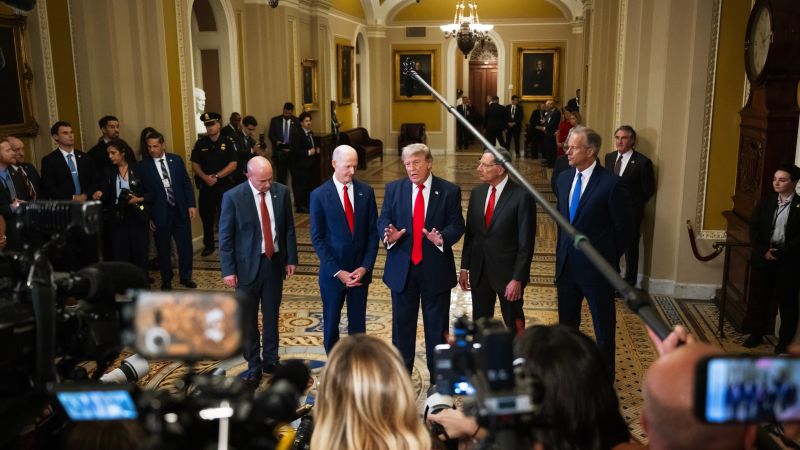
Senate walks back rebuke of Trump – Just one day after passing a resolution to withdraw U.S. military forces from the ongoing conflict with Iran, the Senate scaled back its earlier condemnation of President Donald Trump’s approach to the war. The decision came amid renewed efforts by Republicans to challenge the resolution, which had initially garnered support from a majority of senators. The final vote on Wednesday saw the measure narrowly defeated, with a tally of 47-50-1, marking a significant shift from the previous day’s approval. This move reflects growing internal divisions within the GOP and a recalibration of their stance on congressional oversight of executive decisions in the war.
Trump’s Disappointment and GOP Shifts
President Trump had expressed frustration over the Senate’s earlier resolution, criticizing Republican senators who had supported it and those who missed the vote. In his view, the measure represented a congressional overreach that weakened his position during negotiations with Iran. Two key figures, GOP Sens. Rand Paul and Bill Cassidy, reversed their earlier positions, with Paul abstaining and Cassidy voting against the resolution. This change, however, was not universal; Susan Collins and Lisa Murkowski reaffirmed their support, while Democratic Sen. John Fetterman continued to oppose the measure.
“
I stood and said, ‘You have not told the American people what’s going on. It was supposed to last four weeks, it’s lasted four months. Our original objectives have not been achieved, and I want to know what’s going on,’” Cassidy explained to reporters after a tense GOP meeting with Trump.
The senator’s comments highlighted his belief that transparency was lacking in the administration’s handling of the Iran conflict. Cassidy’s decision to switch sides followed a White House briefing with Vice President JD Vance and special envoy Steve Witkoff, whom he credited with providing the necessary information to reassess the resolution. “I want to thank Vice President Vance and Special Envoy Witkoff for the thorough briefing this afternoon on Iran. I appreciate the quick invitation to the White House to address many of my concerns,” Cassidy posted on X, signaling his alignment with Trump’s strategic goals.
Paul’s Ambiguity and Trump’s Advocacy
Meanwhile, Rand Paul cited his personal stance on war and executive authority as a key factor in his abstention. “My opinion on the debate over war and executive power has not changed and I have voted that way several times,” he stated on X. Paul emphasized that his present vote was a compromise to grant Trump more flexibility in negotiations. “Since hostilities seem to be over and the President asked me to give consideration to his negotiating position, I will do so. My vote of present is a way to give the President more space and leverage to negotiate a lasting peace,” he added, underscoring the tension between legislative oversight and executive authority.
Trump, ever the critic of congressional dissent, took to Truth Social to highlight the shifts in GOP sentiment. “This vote puts Iran on notice!” he declared, framing the resolution’s defeat as a victory for his administration’s diplomatic strategy. The president also directed his ire at other Republicans who had missed Tuesday’s vote, including Dave McCormick and Mitch McConnell. While McConnell was hospitalized, McCormick was en route to Pennsylvania with Trump on Air Force One, leaving him unable to participate in the debate.
Historical Context and Legislative Strategy
This week’s vote marks the 11th time the Senate has considered an Iran war powers measure since the start of the year, underscoring the ongoing debate over the balance of power between the executive and legislative branches. The resolution, which had been discharged from committee in a floor vote last month, faced opposition from Republicans who argued it lacked sufficient support. Democrats, however, sought to delay action, aiming to build a stronger coalition before pushing for a follow-up vote. The strategy paid off on Tuesday, when the measure passed 50-48, but its reversal on Wednesday highlights the political volatility surrounding the issue.
Trump’s campaign against Republicans who supported war powers resolutions has intensified over the past month. Following the House’s adoption of a concurrent resolution earlier this month—with four GOP lawmakers voting alongside Democrats—he called them “GRANDSTANDERS” and their actions “unpatriotic.” The president further criticized the Senate’s Tuesday vote, labeling the four Republican senators who backed it as “losers” and noting that their support had complicated his efforts to secure a favorable outcome.
Democratic Advocacy for Congressional Oversight
Despite the Senate’s reversal, some Democratic senators maintained their support for the resolution, arguing that it remains essential to ensure legislative involvement in decisions about war. Tim Kaine of Virginia, for instance, defended the measure as a necessary check on executive power. “I think it’s a good time to have the vote to say, ‘Hey, if we’re really in a period of maybe some stability here, let’s not just allow it to start up again without Congress being involved in that decision,’” Kaine told reporters last week. His remarks reflect a broader concern among Democrats that the administration’s unilateral actions could escalate tensions with Iran without proper congressional approval.
While the Senate’s latest vote weakened the resolution’s momentum, the House had already passed a similar measure earlier this month. That resolution, adopted 215 to 208, saw bipartisan support from a handful of Republicans, though Trump dismissed their backing as insufficient. The Senate’s decision to revise its stance now adds another layer of complexity to the legislative process, with Republicans attempting to align their actions with the administration’s diplomatic efforts and Democrats pushing for continued oversight.
Implications for U.S.-Iran Relations
The shifting votes among GOP senators raise questions about the stability of congressional support for Trump’s Iran policy. Cassidy’s late decision to oppose the resolution suggests a willingness to adjust positions based on new information, while Paul’s abstention highlights the nuanced approach some lawmakers take to preserve both legislative accountability and executive authority. For Trump, the outcome of Wednesday’s vote serves as a strategic win, reinforcing his narrative that Congress has been a reliable partner in negotiations rather than an obstacle.
However, the resolution’s defeat does not fully resolve the debate over war powers. The Senate’s 11th vote on the issue since January underscores the persistent disagreements over the scope of presidential authority in military conflicts. As the U.S. continues to engage with Iran, the balance between legislative oversight and executive decision-making remains a critical factor in shaping the nation’s foreign policy. The latest developments suggest that while Republicans may be consolidating behind the administration, Democrats are prepared to push back if they perceive a lack of transparency or accountability in future actions.
