
Keir Starmer Fast Facts
Keir Starmer Fast Facts: A Comprehensive Overview of the UK Prime Minister’s Background and Leadership Journey
Early Life and Family Foundations
Keir Starmer Fast Facts – Keir Starmer, the current prime minister of the United Kingdom, was born on September 2, 1962, in London. His full name, Keir Rodney Starmer, symbolizes a lineage deeply connected to public service. His father, Rodney Starmer, was a skilled toolmaker, while his mother, Josephine (Baker) Starmer, was a dedicated nurse. This humble upbringing, juxtaposed with his later political prominence, offers a compelling narrative of personal growth and societal impact. Notably, his name carries a historical weight, inspired by Keir Hardie, the Labour Party’s first parliamentary leader, who broke barriers in 1900. This legacy of perseverance has become a cornerstone of Starmer’s identity as a leader.
Education and Legal Career
Starmer’s academic journey began at the University of Leeds, where he earned a first-class law degree in 1985. His intellectual rigor and passion for justice led him to further his studies at the University of Oxford, obtaining a Bachelor of Civil Law in 1986. These qualifications paved the way for a distinguished career as a barrister, culminating in his appointment as Queen’s Counsel in 2002. The Keir Starmer Fast Facts reveal how his legal expertise transitioned into public service, shaping his approach to governance. His role as Director of Public Prosecutions from 2008 to 2013 solidified his reputation for integrity and reform, with key decisions such as the 2014 knighthood by Prince Charles highlighting his contributions to the legal system.
Political Emergence and Leadership
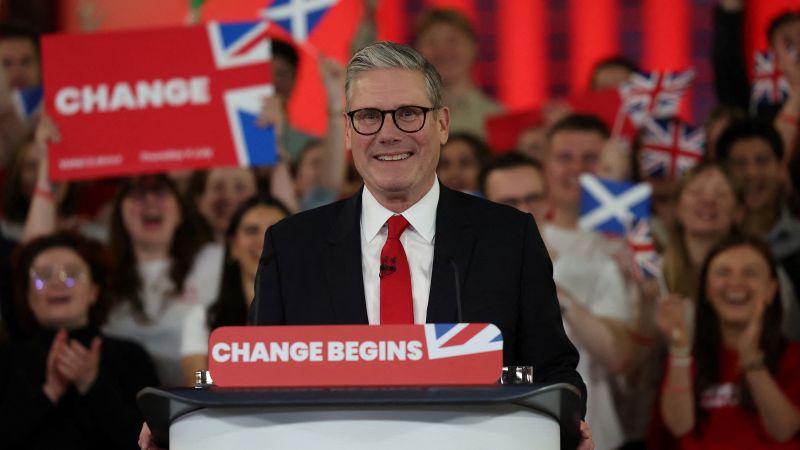
Keir Starmer’s political breakthrough came in 2015 with his election as a Member of Parliament for Holborn and St. Pancras, marking his entry into national politics. By 2020, he had become the leader of the Labour Party, succeeding Jeremy Corbyn, and launched a transformative agenda to restore the party’s relevance. His efforts bore fruit in 2024, when Labour secured a historic general election win, ending over a decade of Conservative rule. This Keir Starmer Fast Facts underscores his ability to unite diverse factions and articulate a vision for social and economic progress. On July 5, 2024, he assumed the role of UK prime minister, becoming a central figure in shaping global and domestic policies.
Policy Priorities and International Engagement
As prime minister, Starmer has prioritized initiatives such as social justice, economic reform, and international diplomacy. A notable early move in 2025 was the formal recognition of a Palestinian state, reflecting his commitment to peacebuilding. His landmark visit to China in January 2026, the first by a British leader in eight years, symbolized Labour’s diplomatic pivot under his leadership. Keir Starmer Fast Facts also highlight his attention to domestic issues, including the 2026 controversy surrounding the appointment of Peter Mandelson as U.S. ambassador. Starmer’s transparency in addressing Mandelson’s ties to Jeffrey Epstein, a sex offender linked to the U.S. Department of Justice, demonstrated his emphasis on ethical governance and accountability.
Challenges and Political Reckoning
Despite early success, Starmer’s tenure as prime minister faced hurdles in 2026. The Labour Party’s local election losses, exceeding 1,400 seats across English councils, raised concerns about the party’s stability. Keir Starmer Fast Facts note the erosion of Labour’s dominance in Wales and the subsequent debate over the effectiveness of the party’s coalition. On June 22, 2026, Starmer announced his resignation, citing the need to realign the party’s strategy. His decision underscored the complexities of balancing national ambitions with regional challenges, a theme central to his political narrative.
Enduring Legacy and Future Directions
Starmer’s political legacy, as detailed in Keir Starmer Fast Facts, is marked by both transformative achievements and pivotal setbacks. His leadership style, emphasizing unity and pragmatic policy-making, has left an indelible mark on the Labour Party and the UK’s political landscape. While his resignation signaled a turning point, his contributions to social justice, economic resilience, and international relations remain critical to the nation’s trajectory. As he steps down, the Keir Starmer Fast Facts continue to reflect a leader whose journey from a modest London upbringing to the helm of a global democracy illustrates the power of perseverance and vision.
