
Trump’s Gulf allies fear his Iran agreement is a ‘disastrous turning point’
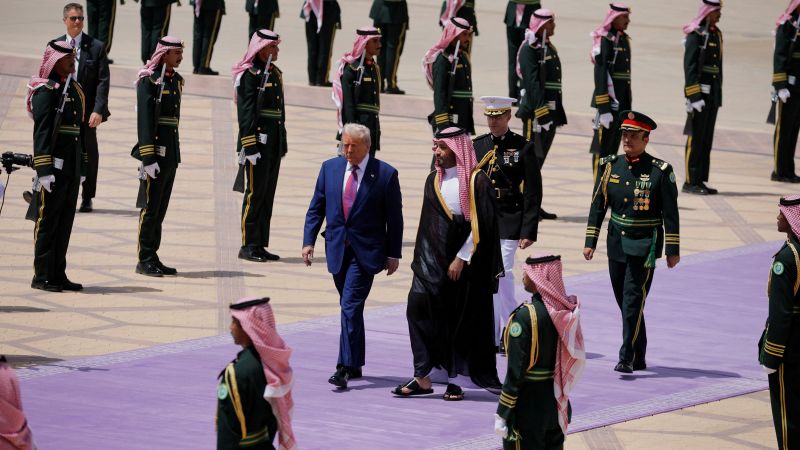
Trump’s Gulf Allies Fear His Iran Agreement Marks a ‘Disastrous Turning Point’
Trump s Gulf allies fear his Iran – Over the years, leaders in the Arab Gulf region have regarded their alliance with the U.S. as a strategic cornerstone. This partnership, rooted in shared interests and mutual security, has long been a priority for Gulf nations. However, President Donald Trump often perceived it through a more transactional lens, emphasizing economic bargains over enduring ties. In 2018, during a public remark on his views of the Saudi monarchy, Trump highlighted the cost of American military support, stating, “King, we’re protecting you. You might not be there for two weeks without us. You have to pay for your military.” This sentiment encapsulated his approach to the relationship, which Gulf leaders had considered vital to their stability.
The 2018 Attack: A Catalyst for Doubt
A year after Trump’s comments, Saudi Arabia faced its most significant security crisis in decades. In 2019, Iranian-backed militants struck key oil facilities, temporarily halving the kingdom’s crude output and causing global oil prices to spike. While Washington swiftly blamed Iran and condemned the assault, Gulf states were left questioning the U.S.’s commitment to their defense. The attack exposed tensions between American rhetoric and the tangible support Gulf nations expected. By the time Trump’s second term began, the regional leaders had grown increasingly wary of U.S. reliability, even as they continued to invest heavily in American infrastructure and markets.
Rubio’s Mission: Reassuring the Gulf
Despite this unease, Trump chose the Gulf for his first official foreign trip in 2023, signaling a renewed focus on the region. In Doha, he pledged, “We are going to protect this country,” aiming to reinforce his administration’s security promises. However, the agreement between the U.S. and Iran, announced earlier that year, tested this commitment. The U.S., alongside Israel, launched a military campaign against Iran, leading to intense retaliation across the Gulf. Regional governments were forced to confront the reality of American protection, now intertwined with a broader shift in strategic priorities.
On Tuesday, U.S. Secretary of State Marco Rubio embarked on a tour of the United Arab Emirates, Bahrain, and Kuwait, the nations most affected by Iranian strikes. His mission was to reassure Gulf leaders that the U.S. remains invested in their security. Yet, many in the region are now more focused on whether the new deal with Iran will ultimately benefit them. “From the Arab Gulf states’ perspective, the Iran war is a disastrous turning point for the regional security order,” said Hasan Alhasan, a senior fellow at the International Institute for Strategic Studies (IISS). He argued that the agreement reflects a broader U.S. retreat, with financial and economic resources flowing toward Iran rather than bolstering Gulf defenses.
“US disengagement from the Gulf and the flow of financial and economic resources to Iran are likely to embolden Tehran further,” Alhasan added to CNN.
While Gulf states supported the 2015 Iran nuclear pact under President Barack Obama, they criticized it for not addressing their concerns about Iranian aggression. Trump’s decision to withdraw from the agreement in 2018 was initially welcomed, as it aligned with Gulf interests. However, the new peace plan, a 14-point accord, has raised fresh anxieties. The deal includes provisions that may weaken Gulf security, such as granting Iran a formal role in overseeing maritime traffic through the Strait of Hormuz, alongside Oman. This means that a substantial portion of Gulf nations’ energy exports—crucial to their economies—could now be subject to Iranian influence.
The Agreement’s Weaknesses: Missiles and Proxies
The pact also fails to resolve Iran’s missile program and its network of proxy militant groups, issues Gulf leaders view as immediate threats. During his visit to Abu Dhabi, Rubio acknowledged these concerns, stating that Iran’s missile capabilities would be “most certainly come up in these conversations.” However, Trump had previously downplayed the matter, suggesting it was fair for Iran to possess missiles if Saudi Arabia did. This contrast between administration officials has fueled skepticism among Gulf allies.
One of the agreement’s most contentious aspects is the $300 billion reconstruction fund for Iran, which requires Gulf nations to provide financial backing. While Trump secured commitments from these countries, the long-term implications remain unclear. Some Gulf diplomats argue that the deal is a step backward, given the conflict’s impact on their security and the loss of confidence in U.S. leadership.
“The conflict showed that Iran had a well-developed plan to target” Gulf states, a senior diplomat told CNN, emphasizing the risks of the new accord.
As the U.S. and Iran move closer, Gulf nations are grappling with the trade-offs. On one hand, the agreement avoids the chaos of war, which they feared would destabilize the region. On the other, it grants Iran leverage in key areas, from energy trade to military influence. The question now is whether the deal will secure long-term stability or expose the U.S. as a less reliable partner. For many in the Gulf, the answer may hinge on the future of their security and the strength of their alliance with Washington.
Rubio’s visit underscores the urgency of addressing these concerns. By engaging with Gulf leaders directly, the U.S. hopes to align its strategic shifts with regional interests. Yet, the effectiveness of this outreach remains uncertain. As the new agreement takes shape, the Arab Gulf states continue to weigh its benefits against the risks, navigating a delicate balance between diplomacy and defense in a rapidly changing geopolitical landscape.
