
‘What ceasefire?’: In northern Israel, locals doubt an agreement can end the war with Hezbollah
‘What ceasefire?’: In northern Israel, locals doubt an agreement can end the war with Hezbollah
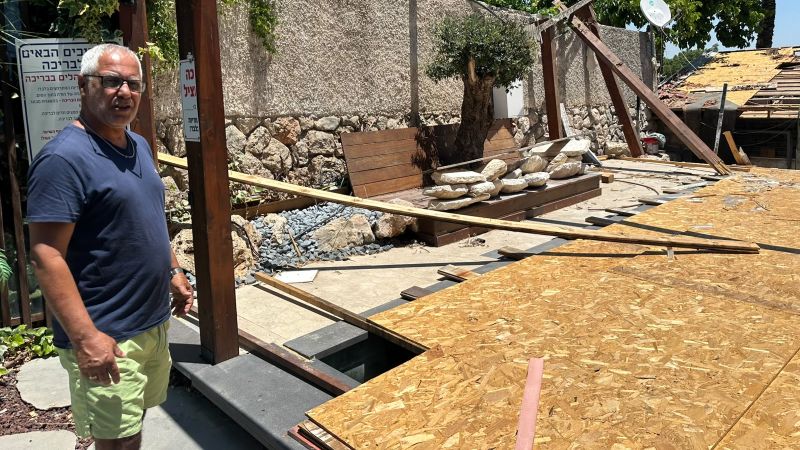
What ceasefire – Metula, Israel’s northernmost town, has become a stark symbol of the ongoing conflict with Hezbollah. Daniel Dorfman, the owner of a pizzeria that once thrived on weekend crowds, now watches as his establishment remains eerily quiet throughout the day. Only a handful of customers occupy two tables near the corner, while the rest of the shop and the town itself are nearly empty. This desolation contrasts sharply with the bustling atmosphere that once defined Metula, a place historically known for its European charm and tourist appeal. Perched on a narrow strip of land bordering Lebanon, the town has long been a crossroads of cultural exchange, but its current state reflects the relentless toll of war.
A Town Rewritten by Conflict
Metula’s story is one of transformation. Established over 130 years ago, it was once dubbed “Europe” for its vibrant array of hotels and restaurants that lined HaRishonim Street, a name honoring the pioneers who settled the area. Today, the town’s main street is a quiet reminder of its past, with the scars of conflict etched into its foundations. For weeks, cross-border attacks have turned the town into a frontline zone, and residents like Dorfman have grown accustomed to the chaos. “What ceasefire?” he quipped, echoing the cynicism of many in the community. “Until yesterday, there wasn’t a single day without fire. Interceptions overhead, explosions, drones, artillery—these are the normal sounds now. I’ve lost count of how many times we’ve been told there’s a ceasefire. It never really is.”
“What ceasefire?” said Dorfman. “Until yesterday there wasn’t a single day without fire. All day, interceptions overhead, explosions, drones, artillery. I’ve lost count of how many times we’ve been told there’s a ceasefire. It never really is.”
The town’s struggles mirror the broader challenges of the Israel-Hezbollah conflict. With a pre-war population of around 2,000, Metula has suffered disproportionately, as more than 60% of its homes have been damaged. Between a third and a half of its residents remain displaced, unable to return to their shattered lives. This persistent hardship has led locals to question the effectiveness of any ceasefire. The recent announcement of a new US-brokered agreement in Lebanon on Friday sparked little optimism, as it follows a series of similar pledges since November 2024. For many, the idea of a lasting peace feels like a distant dream.
Military Actions and Casualties
In October 2023, the conflict escalated as Iran-backed Hezbollah intensified its rocket attacks on northern Israel, supporting its allies in Gaza. This marked a turning point, with Metula becoming one of the hardest-hit communities. Israeli forces, in response, advanced into southern Lebanon, securing what they describe as a security buffer zone. The operation pushed troops roughly 10 kilometers into the country, accompanied by heavy aerial strikes. The toll has been severe: Lebanon’s health ministry reports over 4,000 fatalities and more than a million displaced persons. Meanwhile, the Israeli military claims 36 soldiers and four civilians have been killed in the fighting.
The latest ceasefire talks, held in Washington, have further complicated the situation. Israeli and Lebanese ambassadors are set to meet for the fifth time in an effort to end the war, yet Hezbollah is conspicuously absent from these discussions. The group has dismissed the talks as a “farce,” expressing frustration with the lack of inclusion. An Israeli official revealed that the country might offer a limited withdrawal as a symbolic gesture to Lebanon’s government, but this does little to reassure those in Metula. “The Americans don’t understand who they are dealing with,” said Moti Aharon, a 58-year-old resident. “They think they can talk to Iran with silk gloves. It won’t work.”
“We don’t feel any ceasefires,” said Aharon. “The Americans don’t understand who they are dealing with. They think they can talk to Iran with silk gloves. It won’t work.”
Aharon’s perspective underscores the deepening divide between diplomatic efforts and on-the-ground reality. For decades, the town has lived with the threat of war, but the current situation feels more precarious. The first ceasefire brokered by the Trump administration in April 2025 brought a brief lull, lasting about 15 months. However, it collapsed on March 2 when Hezbollah launched rockets at Israel in retaliation for U.S.-Israeli strikes that killed Iran’s supreme leader, reigniting tensions and drawing the country into a regional war. The cycle of violence has repeated itself, with Israeli forces returning to a familiar southern Lebanon terrain, reminiscent of their 1985-2000 security buffer zone. That period ended after years of mounting casualties, a pattern now repeating in Metula.
A Fractured Peace
Netanyahu’s claim that Hezbollah was “pushed years back” by Israel’s campaign has been challenged by the resumption of hostilities. The latest fighting has demonstrated the group’s resilience, keeping Lebanon entangled in the conflict. Even as Washington celebrated diplomatic progress, the war continued, with Hezbollah’s attacks and Israel’s military responses maintaining a precarious balance. Over the weekend, five soldiers fell victim to shelling within 24 hours, a grim reminder of the conflict’s unrelenting nature.
The role of Iran in shaping the war’s trajectory has also been pivotal. The group made ending the conflict in Lebanon a central condition in its negotiations with Washington, creating friction with Netanyahu, who has resisted broader peace agreements. This tension has led to public disagreements, such as the recent rift between President Donald Trump and Prime Minister Benjamin Netanyahu. While Trump emphasized diplomacy, Netanyahu insisted on maintaining military presence to ensure security. Despite U.S. pressure, Israeli troops remain in southern Lebanon, a decision that reflects the complexities of the situation.
As the war drags on, the residents of Metula continue to live with the uncertainty of a ceasefire. For them, the idea of peace feels like a mirage, with the same cycle of violence repeating every few months. Aharon, who has endured decades of conflict, lamented the lack of progress. “For fifty years it’s been the same game. They shoot, we shoot,” he said. “Netanyahu can say we’ve won, that Hezbollah is deterred—it’s nonsense. This requires root-level change.” His words capture the frustration of a community that has seen its life upended by the war, with no end in sight. The question remains: can a ceasefire ever truly bring stability to a region where trust has been eroded, and the cycle of retaliation continues? For now, the answer seems to be no. Metula’s empty streets and quiet diners are a testament to the reality of life under constant threat. As the conflict persists, the town’s fate becomes a microcosm of the broader struggle, highlighting the limits of diplomacy in a war that has defined the lives of thousands.
