
New images show what’s behind the tarp at the Kennedy Center
Kennedy Center’s Trump Name Removal Revealed in New Photographs
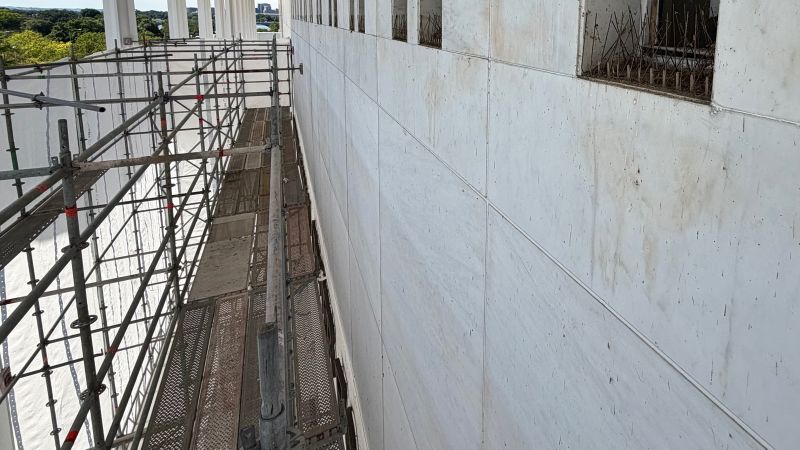
New images show what s behind – Recent images shared by CNN have exposed the state of the Kennedy Center following the removal of President Donald Trump’s name from its prominent signage, validating a statement made by the arts center’s executive director, Matt Floca, in a sworn court declaration. The visuals, first disclosed by the Washington Post, were made available to CNN through the activist organization “Hands Off the Arts,” which has been advocating for the center’s separation from political branding. These photographs offer the first tangible confirmation of the name’s removal, as a large tarp continues to obscure the exterior of the building ten days after the action was taken.
Confirming the Legal Decision
The decision to strip Trump’s name from the Kennedy Center’s exterior was part of a broader legal effort to redefine the space as a living memorial dedicated to John F. Kennedy. A federal judge had previously ruled that the institution could no longer bear the president’s name, citing the need to align its identity with its founding purpose. Workers executed the removal overnight on June 13, adhering to the court’s directive. The tarp, which has since remained in place, now serves as a temporary shield over the newly exposed marble surfaces, symbolizing both the physical and symbolic transformation of the venue.
“Hands Off the Arts was able to acquire these photos through our network of community members,” said Mallory Miller, co-founder of the group, who previously managed dance programming at the Kennedy Center. “Tonight, there is a tarp covering the bare marble that these images reveal to the world. The president doesn’t want you to see them, and that’s precisely why these photos are significant!”
The activist group’s efforts underscore a growing movement to distance cultural institutions from political figures, particularly in the wake of controversies surrounding public funding and symbolic representation. Miller, whose tenure at the Kennedy Center gave her unique insight into its operations, emphasized the importance of visual clarity in conveying the center’s commitment to its original mission. The tarp, she argued, acts as a deliberate barrier to obscure the political legacy of Trump, who has long been associated with the venue’s prominence in the nation’s cultural landscape.
The Ripple Effect of the Name Change
While the exterior transformation has been completed, the internal challenges at the Kennedy Center persist. The removal of Trump’s name has sparked a reevaluation of the center’s resources, with a deteriorating financial outlook forcing difficult decisions. Multiple sources within the organization reported that declining ticket sales, artist departures, and heightened political tensions have created a precarious environment for maintaining its full programming schedule. Additionally, the center’s staff has been reduced, compounding the strain on daily operations.
The ongoing renovations have also placed pressure on the center’s leadership to balance the costs of infrastructure updates with the need to sustain its artistic initiatives. A federal judge has mandated that the Kennedy Center continue functioning during the restructuring process, ensuring that public access to its facilities remains uninterrupted. This requirement, however, has intensified the struggle to maintain financial stability, as the institution faces the dual challenge of preserving its legacy while adapting to new circumstances.
Historic Significance and Future Uncertainty
Established in 1971, the Kennedy Center has long been a cornerstone of American performing arts, hosting events that celebrate both national and international cultural achievements. The decision to remove Trump’s name from its exterior marks a pivotal moment in its history, reflecting a shift in public sentiment and political priorities. For decades, the center’s name was a source of pride, but the recent legal action signals a broader reexamination of how public spaces are used to commemorate political figures.
Despite the successful removal of the name, the center’s financial situation remains uncertain. The tarp-covered exterior is just one of many visible changes, with the interior now grappling with the consequences of a complex overhaul. The board of directors has explored various renovation strategies, but the timing and scope of the project remain under scrutiny. As the Kennedy Center seeks to comply with its legal obligations, it must also navigate the delicate task of restoring its cultural relevance without compromising its financial health.
The images released by “Hands Off the Arts” have sparked renewed debate about the role of public institutions in political discourse. Critics argue that the name removal represents a symbolic victory for independence from partisan influence, while supporters highlight the importance of maintaining neutrality in spaces dedicated to the arts. The tarp, now a focal point of discussion, has become a metaphor for the tensions between legacy and progress, between symbolism and substance.
As the Kennedy Center moves forward, its leadership faces the daunting task of not only completing the physical changes but also addressing the broader implications of the name’s removal. The organization has requested additional time from the federal judge to meet the requirements of an ongoing lawsuit, which has been a point of contention throughout the process. With the outside now free of Trump’s name, the focus is shifting inward, where the challenges of financial sustainability and operational continuity will determine the center’s ability to fulfill its mission in the years to come.
Contributors to the Report
CNN’s coverage of the Kennedy Center’s transformation has been supported by a team of dedicated reporters, including Sunlen Serfaty, Devan Cole, and Aleena Fayaz. These journalists have provided detailed accounts of the legal proceedings, the logistical aspects of the name removal, and the internal dynamics affecting the center’s ability to operate smoothly. Their contributions have helped shape a comprehensive narrative of the event, highlighting the interplay between legal mandates, public perception, and the practical realities of managing a major cultural institution.
