
Tucker Carlson says he will no longer support the Republican Party
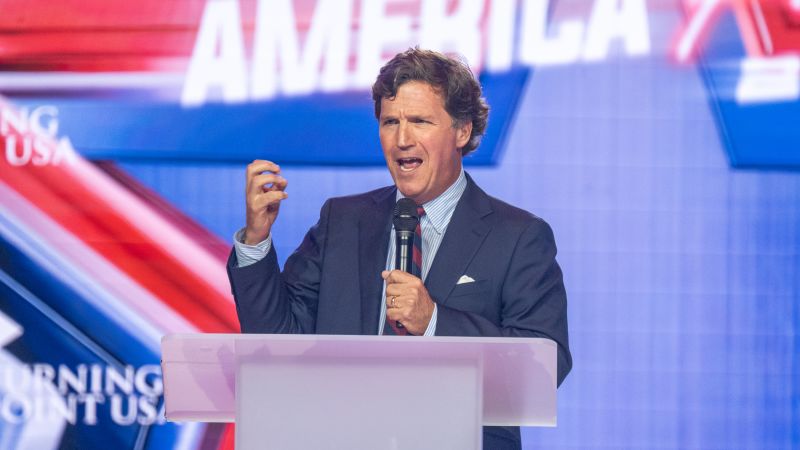
Tucker Carlson Declares He Will No Longer Back the Republican Party
Tucker Carlson says he will no longer – Tucker Carlson, a prominent figure in conservative media, has made a bold statement regarding his political allegiance. During a recent episode of his podcast, he expressed his decision to abandon support for the Republican Party in the lead-up to the November midterms. This marks a significant shift for a commentator who has long been a staunch defender of the party’s values, including his tenure as a top host on Fox News Channel. Carlson’s remarks, delivered late last week on the show “Can’t Be Censored,” underscore a growing rift between his personal convictions and the platform he once called home.
A Long-Standing Defender of Conservative Ideals
For over three decades, Tucker Carlson has been a defining voice in American conservatism. His career began as a political commentator, where he consistently championed Republican principles and cultivated a loyal following. As one of the most recognizable faces on Fox News, he became a household name, blending incisive analysis with a distinctive rhetorical style. His ideological alignment with the Republican Party was once unshakable, but recent events have prompted a reevaluation of his loyalty. The firing from Fox News in 2023, which followed a period of internal tensions and shifting editorial directions, seems to have accelerated this transformation.
“There’s no chance I would support the Republican Party,” Carlson declared, emphasizing his discontent with the party’s current trajectory. He swiftly ruled out endorsing the Democratic Party, stating, “Not gonna support the Democratic Party.” This dual declaration highlights his frustration with both major political entities, though he remains committed to the core principles of his original platform.
The decision to no longer back the Republican Party comes after a series of criticisms directed at the party’s leadership and policy decisions. Carlson’s recent divergence from the party has been fueled by his belief that the GOP has strayed from its foundational values, prioritizing corporate interests and foreign alliances over the needs of its constituents. His remarks on the Iran war, which erupted in February 2024, serve as a pivotal moment in this ideological shift. While he had previously supported Donald Trump’s 2024 presidential campaign, the war’s initiation led him to reexamine his stance.
From Trump Support to Dismayed Critic
Carlson’s initial backing of Donald Trump in 2024 was rooted in his alignment with the former president’s conservative vision. However, after Trump launched the war with Iran, Carlson publicly distanced himself from the decision, acknowledging that it had caused a rift within the party. “I’ve been a consistent defender for 35 years of the Republican Party, I mean very consistent defender, but there’s no defending this,” he said, capturing the essence of his disillusionment. This statement reflects a deeper critique of the party’s priorities, which he now views as detached from the American public’s interests.
“They are making decisions on the basis of other criteria, what’s best for this company, what’s best for Israel, what’s best for our donors,” Carlson argued, condemning the party’s approach as self-serving. He described the current direction as “unacceptable, that’s treasonous, it’s immoral, it can’t continue.” This sharp language signals a turning point in his relationship with the Republican Party, which he once celebrated as a bulwark against liberal policies.
The war with Iran, which began in February 2024, has become a catalyst for Carlson’s political realignment. He initially defended the move, citing its strategic benefits for national security, but later expressed regret over his support. “I apologize for supporting the then-presidential candidate and misleading people,” he stated, clarifying that his intentions were not malicious. This acknowledgment has added complexity to his position, as he now navigates between his past advocacy and present skepticism.
The Rise of a Solo Platform and Political Realignment
Carlson’s departure from Fox News in 2023 marked the beginning of a new chapter in his career. His independent podcast, which quickly gained traction, has allowed him to cultivate a broader audience and articulate his views without the constraints of traditional media. This newfound independence has enabled him to challenge the Republican Party more openly, a move that has resonated with both critics and supporters within the conservative movement.
The political landscape in 2024 has seen a notable split among conservative figures, with Carlson’s exit serving as a symbol of this divide. His criticism of the party’s alignment with Israel has intensified, particularly as he believes the decision to wage war in Iran has come at the expense of American interests. “They are making decisions on the basis of other criteria, what’s best for this company, what’s best for Israel, what’s best for our donors,” he reiterated, framing the party’s actions as a betrayal of its core mission.
“That’s not just, like, they are off in the wrong direction, like, that is unacceptable, that’s treasonous, it’s immoral, it can’t continue,” Carlson said, underscoring his belief that the party’s current path is unsustainable. His words have sparked debate among Republican voters, many of whom question whether the party can retain its base without key figures like him.
Carlson’s decision to leave the Republican Party is not merely a personal choice but a reflection of broader frustrations within the conservative community. He has accused the party of failing to represent its voters, citizens, and the nation as a whole. “They are making decisions on the basis of other criteria,” he stated, highlighting a perceived disconnect between the party’s leadership and its grassroots supporters. This critique has gained traction as some Republicans feel their voices are marginalized in favor of corporate or foreign interests.
While Carlson’s departure may signal a loss of influence for the Republican Party, it also represents a bold assertion of individual political agency. His comments suggest that the party’s inability to reconcile its ideological roots with contemporary decisions has led to a crisis of faith among its traditional allies. “So no, I’m out. And if I’m out, then I think a lot of other people are out,” he concluded, implying that his stance could inspire a wave of departures from the party.
As the midterms approach, the question remains: how will Carlson’s split impact the Republican Party’s messaging and voter appeal? His independent platform, which has grown significantly since 2023, offers a new avenue for promoting alternative viewpoints. This shift may challenge the party to address its internal contradictions and reassert its commitment to American priorities. For Carlson, the move represents a culmination of years of frustration, culminating in a definitive break with the political entity he once championed.
His journey from a Fox News icon to a Republican dissenter illustrates the evolving nature of political loyalty in the modern era. As debates over the party’s direction intensify, Carlson’s voice remains a critical force in shaping the discourse. Whether his departure will lead to a broader realignment or remain an isolated incident depends on the party’s ability to adapt and address the concerns that have driven him away. For now, his decision stands as a testament to the changing tides in American conservatism.
