
The new power broker: How Zohran Mamdani muscled NYC’s Democratic establishment
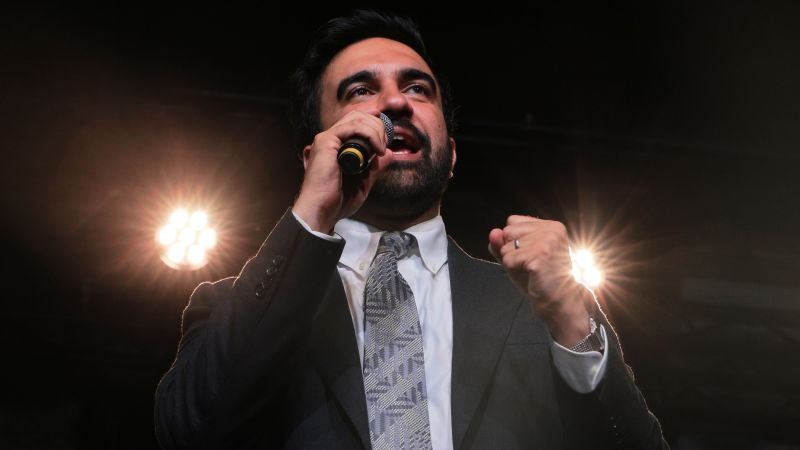
A Shift in Power: Zohran Mamdani’s Reshaping of New York’s Democratic Landscape
The new power broker – On the evening of June 24, 2026, a bustling scene unfolded outside the venue where Rep. Adriano Espaillat was celebrating his primary night. A group of four men, clad in eye-catching neon sequins, animatedly huddled near the sidewalk, eager to stir up excitement. Inside, the bar had just begun serving drinks, and Espaillat, who had spent two decades navigating the path to Congress and an additional ten years in Washington, delivered a brief concession speech before exiting in under ten minutes. The real momentum, however, was elsewhere—three miles away, where Zohran Mamdani was celebrating a series of victories, cementing his role as a rising force in New York politics.
The Battle for Control in the City Council
As the city council buzzed with renewed energy, Mamdani’s influence became unmistakable. His recent triumph in the Democratic mayoral primary against Andrew Cuomo had already shaken the political establishment, and now, the results of the primaries revealed his growing sway over the party’s direction. Candidates who had once seemed unlikely to win congressional seats now found themselves in positions of power, thanks to Mamdani’s strategic endorsements. The shift signaled a transformation in New York’s political landscape, where traditional power structures were being challenged by a new generation of leaders.
Mamdani’s ascent has not gone unnoticed. Established figures within the Democratic Party, including those who once considered themselves trailblazers, are expressing frustration. They argue that the recent elections have left them sidelined, with the party’s leadership now favoring a more radical agenda. “This is a betrayal,” said one anonymous city council member, who described how allies once close to Mamdani are now engaging in quiet discussions about how to counter his growing dominance. The phrase “on his terms” has become a rallying point for critics, who claim Mamdani’s approach to allyship is transactional and self-serving.
From Primary Triumph to Political Reckoning
Just a year after surprising the political world with his mayoral primary victory, Mamdani’s influence continues to expand. The support he has garnered for candidates like Darializa Avila Chevalier—a former campaign volunteer with a history of fiery social media posts—has raised eyebrows. Avila Chevalier’s campaign, which included participation in a rally following Hamas’ October 7, 2023, attacks, was seen as a bold move by Mamdani to align his allies with a progressive agenda. This decision, made after a discreet City Hall meeting with democratic socialists and other backers, marked a clear break from traditional Democratic norms.
“The mayor is modeling a different kind of politics—rooted in the struggles of everyday people rather than the interests of billionaires or consultants,” Anna Bahr, Mamdani’s communications director, told CNN. “This is what New Yorkers want, and it’s why these candidates succeeded tonight.” Bahr’s words underscored the ideological shift Mamdani is driving, as he positions himself as a champion of working-class interests. Yet, his choices have also sparked debates about loyalty and consensus within the party.
A Revolution in Rhetoric and Reality
For Mamdani, the recent elections are not just a sign of political success but a confirmation of his vision for the future. He framed the outcomes as a rejection of old-guard politics, highlighting a city-wide hunger for change. “These results show that people are tired of the same old strategies,” he said, citing the approval of a Harlem voter who praised Avila Chevalier’s focus on baby products over military rhetoric. “That’s exactly what this district needs,” the man added, reflecting the broader sentiment among New Yorkers.
The mayor’s emphasis on affordability and grassroots organizing has become a central theme in his political messaging. During the primaries, he linked his support for candidates to a broader critique of Israel, framing the issue as a matter of economic justice. “When you prioritize the needs of working families, you’re not just talking about policy—you’re talking about values,” Mamdani explained in a press briefing, drawing parallels between affordable housing and the Palestinian cause.
Rebuilding Alliances and Navigating Challenges
Despite the tension, Mamdani remains open to collaboration. On Wednesday morning, after the primary results were finalized, he met with Hakeem Jeffries, the House Democratic leader based in Brooklyn, to discuss potential alliances. Jeffries, who has long been a key figure in New York politics, acknowledged the evolving dynamics but cautioned that Mamdani’s strategy requires refinement. “We agree to disagree on some of his choices,” Jeffries said, noting that the mayor’s focus on progressive candidates may create friction with Congress as it moves forward.
The relationship between Mamdani and Jeffries is emblematic of a larger trend: the Democratic Party is now divided between traditionalists and reformers. While Jeffries represents the established wing, Mamdani’s supporters see him as a necessary force for change. This divide has intensified in recent months, with debates over funding priorities, legislative tactics, and the role of endorsements in shaping outcomes. “It’s not about who wins the most seats,” said a city council member, “it’s about who controls the agenda.”
Implications for the Future of New York Politics
Mamdani’s victories have already begun to reshape the political landscape. His endorsement of Avila Chevalier over the chairman of the Congressional Hispanic Caucus demonstrated a willingness to prioritize ideological alignment over institutional loyalty. This move, which came after Espaillat’s endorsement of Mamdani in 2025, has been interpreted as a strategic realignment. “It’s about taking the party back to its core principles,” Mamdani’s allies argued, pointing to the growing support for candidates who emphasize economic equity and social justice.
However, the challenges ahead are significant. The mayor’s critics warn that his approach may alienate moderate Democrats, making it harder to pass legislation that requires bipartisan support. “We need to build bridges, not burn them,” said one former party official, who now works behind the scenes to temper Mamdani’s influence. Yet, Mamdani’s supporters counter that the party’s past failures have made compromise necessary. “The people have spoken,” Bahr said, echoing the sentiment that the new era of politics is defined by accountability and bold action.
In a symbolic gesture, Mamdani shared a clip of Jalen Brunson, the Knicks’ star guard, speaking at the team’s recent championship celebration. Brunson’s words resonated with the mayor’s message: “When you prove them wrong, you don’t have to say shit to them.” This quote, which became a favorite among his campaign staff, encapsulates Mamdani’s belief in direct action and unapologetic rhetoric. It also hints at his broader strategy of using public figures to reinforce his political vision.
As the dust settles, the question remains: will Mamdani’s leadership foster lasting change or create new divides? For now, the city council is abuzz with speculation, and the Democratic Party stands at a crossroads. The mayor’s ability to balance his revolutionary ideals with pragmatic governance will determine his legacy. But one thing is clear—New York’s political power has shifted, and Mamdani is at the center of this transformation. “This is what a revolution looks like,” Bahr concluded, as the city prepares for the next chapter in its political story.
