
Russia is still inching forward in eastern Ukraine, but experts say claims of progress are exaggerated
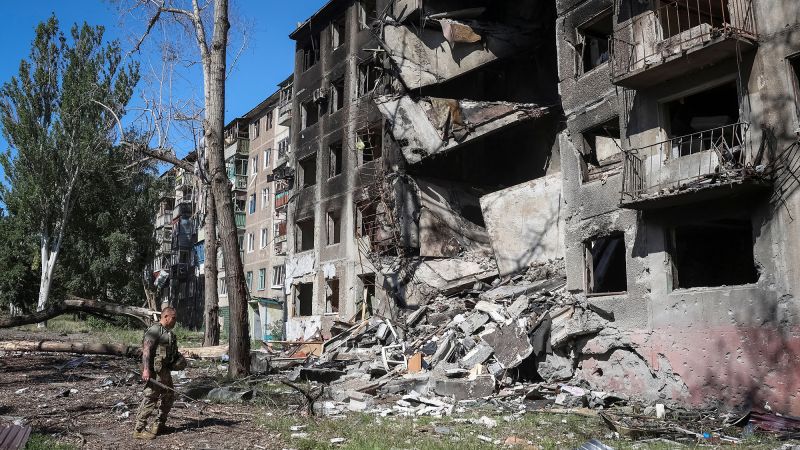
Russia Inches Forward in Eastern Ukraine, But Claims of Progress are Overstated
Russia is still inching forward in eastern Ukraine, but experts say the pace of territorial gains is slower than reported. Despite the Kremlin’s ongoing efforts in the Donetsk region, where most of its forces are concentrated, analysts suggest that the progress claimed by Russian officials is more about tactical maneuvering than significant advancement. The strategic city of Kostyantynivka and surrounding areas remain focal points of this campaign, with both sides vying for control over key supply lines and industrial infrastructure. However, frontline troops and military observers indicate that these movements are not as substantial as the headlines suggest.
Gray Zones and Tactical Movements
Recent assessments reveal that Kostyantynivka has become a gray zone, with Russian forces and Ukrainian defenders locked in a stalemate. While Russian state media, such as TASS, reported full control of the city’s eastern districts, the situation on the ground is more complex. According to the Institute for the Study of War (ISW), Russia’s strategy involves infiltrating small groups into contested positions rather than securing entire territories. This method allows for gradual pressure without immediate, large-scale breakthroughs.
“Russia’s advances are incremental, relying on stealth and resource allocation to maintain pressure. These movements are not full-scale conquests but calculated steps to weaken Ukrainian defenses over time,” said Kateryna Stepanenko, lead Russia analyst at ISW.
The think tank notes that while Russian troops are making slow but steady progress, their ability to consolidate these gains is limited. This reflects a broader challenge in the Donbas region, where Ukrainian forces are actively countering Russian offensives. The terrain, combined with Ukrainian resilience, creates a difficult environment for sustained advances.
Ukrainian Resistance and Countermeasures
Ukrainian commanders in the area have voiced concerns about the pace of Russian progress, highlighting the effectiveness of their countermeasures. Kostyantyn Melnykov, a press officer for the 24th Mechanized Brigade near Chasiv Yar, stated that the enemy’s intensified airstrikes and forward operations are causing strain but not a collapse. “Our units continue to hold critical positions, even as we face persistent threats,” he added. This resilience is a key factor in slowing Russia’s inching forward.
Yuriy Madyar, deputy commander of the 19th Army Corps, noted that Ukrainian forces are detecting individual Russian soldiers advancing through the region. These isolated incursions, he explained, are part of a broader plan to test Ukrainian defenses and exploit vulnerabilities. “The enemy is using stealth to avoid large-scale confrontations, focusing instead on gradual gains,” Madyar said. This tactic underscores the strategic patience in Moscow’s approach.
Logistical and Strategic Challenges
Russia’s continued inching forward in eastern Ukraine is influenced by both logistical constraints and the need for controlled progress. Analysts point to the region’s rugged terrain and limited resources as factors that slow large-scale offensives. Meanwhile, the Kremlin’s stated goal of capturing Donbas by September has been met with skepticism, as experts question the feasibility of such a timeline. The Donbas corridor, a network of industrial hubs and transportation routes, remains crucial to Ukraine’s defense, but its capture requires more than just slow advances.
Despite these challenges, Russian forces are leveraging technology to support their movements. Increased drone activity in recent weeks has been noted by ISW, which attributes this to the summer’s favorable weather conditions. While drones aid in reconnaissance and targeted strikes, Ukraine has adapted by using them to disrupt Russian operations. This technological arms race is a key element of the ongoing conflict, even as Russia continues its slow, methodical push.
Examining the Evidence
Reports of Russian progress in Kostyantynivka and Lyman are often accompanied by imagery and footage that emphasize territorial control. However, some analysts argue that these visuals may not fully capture the reality of the situation. For instance, a recent Russian commander on Telegram suggested that dense vegetation in the region helped mask troop movements, making infiltration easier. While this is true, the extent of these gains is still debated by military experts.
ISW has warned that the narrative of Russia inching forward in eastern Ukraine may be shaped by selective reporting. The think tank highlights the importance of verifying claims with on-the-ground evidence, as the conflict’s complexity can lead to misinterpretations. This scrutiny is vital for understanding whether the progress is real or a strategic illusion designed to mislead.
As the war continues, the balance between Russian advances and Ukrainian resistance remains uncertain. While Russia is still inching forward in eastern Ukraine, its ability to sustain momentum will depend on overcoming logistical hurdles and adapting to Ukrainian countermeasures. The situation in Kostyantynivka and Lyman serves as a microcosm of the broader Donbas struggle, where every step forward is met with determined opposition.
