
Trump is racing to finish his border wall. Here’s how he is planning to do it
Accelerating the Completion of Trump’s Border Wall: A Strategic Approach
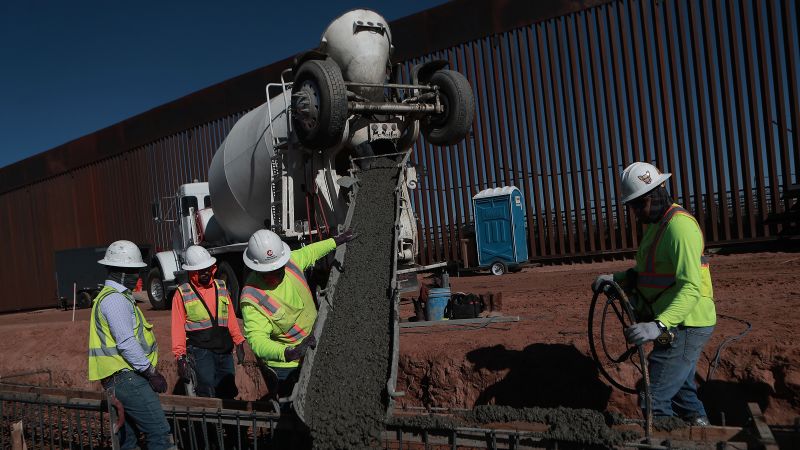
Trump is racing to finish his border – President Donald Trump has intensified his push to finalize the construction of his border wall, aiming to complete the project before his term concludes in 2025. To achieve this, federal authorities are prioritizing the acquisition of private land adjacent to the U.S.-Mexico border, a process that relies heavily on the legal principle of eminent domain. This method allows the government to seize property for public infrastructure projects, even if landowners disagree. The administration’s reliance on this tactic reflects the growing challenge of securing enough land along the southern border, where much of the terrain is not owned by the federal government.
The Legal Framework and Land Challenges
Under eminent domain, the government can claim private property for public use, provided it compensates the owner. While previous border wall projects often focused on federally controlled areas, Trump’s plan demands expanding the barrier into privately owned territories, particularly in regions like Texas where land availability is limited. This has prompted the Department of Justice to hire specialized attorneys dedicated to expedited land seizures. A former Homeland Security official, speaking to CNN, noted that the pace of land purchases has lagged behind the construction timeline, creating a critical need for swift legal action.
“It’s taken too long to buy land at the pace they’re building. They’re running out of land faster than they can get land,” the official remarked, highlighting the urgency of the situation.
The U.S.-Mexico border stretches over 1,954 miles, with the current administration targeting approximately 1,400 miles of barriers by the end of 2025. To meet this goal, officials plan to build around 775 miles of new primary wall by 2027 and add several hundred miles of secondary and waterborne barriers by 2028. This expansion requires overcoming logistical hurdles, including the acquisition of land from private owners. The U.S. Customs and Border Protection (CBP) has confirmed its progress, stating that it is on track to fulfill the target, though the exact figures may shift as contracts are finalized.
Progress and Projected Milestones
As of now, the CBP has already constructed roughly 80 miles of primary border wall and 24 miles of secondary barriers since Trump took office. These figures underscore the administration’s commitment to meeting its ambitious timeline. According to a federal document reviewed by CNN, the agency expects all necessary land to be secured by June 2027, after which construction will proceed on a rolling basis. CBP Commissioner Rodney Scott recently emphasized that the project is both ahead of schedule and under budget, citing the $46.5 billion allocated in the “big beautiful bill” as a key factor in this efficiency.
Scott also outlined the scope of the wall, stating that the primary barrier—defined as new infrastructure in previously unsecured areas—will span from San Diego to the Gulf of Mexico, with some gaps. This approach prioritizes high-traffic zones and areas deemed critical for national security. However, the administration has decided against extending the wall in certain remote regions, such as Big Bend National Park, Big Bend Ranch State Park, and the Black Gap Wildlife Management Area, where terrain makes construction challenging.
Speeding Up the Process
Despite the complexities of land acquisition, the CBP is targeting a construction rate of about 10 miles per week in August, with plans to increase this pace in the coming months. This accelerated timeline suggests that the administration is preparing for a sustained effort to close the gap between planned and completed infrastructure. A former Homeland Security official explained that the goal is not just to finish the wall but to present it as a completed legacy project by the end of Trump’s term.
The Department of Homeland Security has taken steps to streamline the process, including waiving certain regulations to expedite construction. This has allowed the agency to focus on delivering results without being bogged down by bureaucratic delays. For instance, the Southern District of Texas’s U.S. Attorney’s Office has been central to filing 39 land condemnation cases so far in Trump’s second term. These cases are part of a broader strategy to secure property rights quickly, ensuring that the wall can be completed within the projected timeframe.
Challenges and Controversies
While the administration emphasizes efficiency, the use of eminent domain has sparked debate. Critics argue that the process can be contentious, with landowners often resisting the seizure of their property. However, officials maintain that the legal framework is necessary to achieve the project’s scale. The CBP’s spokesperson noted that approximately 535 miles of the border will be reinforced with advanced technology, such as surveillance systems and sensors, to enhance security without requiring additional land.
Trump’s team is also leveraging existing federal funding to meet its targets. By utilizing previous appropriations, the administration has managed to maintain budget control while expanding the wall’s reach. This financial strategy, combined with the legal tools at its disposal, positions the project as a feasible endeavor. Yet, the success of the initiative hinges on maintaining this momentum, as delays in land acquisition could jeopardize the entire timeline.
With the U.S. southern border remaining a focal point of national security discussions, the Trump administration’s plan represents a significant effort to solidify its presence along the frontier. The combination of legal authority, financial resources, and a clear timeline underscores the strategic importance of the wall to the administration’s broader policy goals. As the project advances, the balance between rapid construction and landowner rights will continue to be a central issue in the ongoing debate over border security.
Experts suggest that the administration’s ability to secure land and maintain its construction pace will determine whether the wall is completed as envisioned. The CBP’s projections, while optimistic, require consistent progress and collaboration with local stakeholders. In the face of these challenges, the use of eminent domain remains a critical tool for ensuring the wall’s finalization, even as it raises questions about the long-term implications of such a large-scale land acquisition effort.
