
Deadly twin quakes are a gut punch to a Venezuelan economy already on its knees
Deadly Twin Quakes Deliver a Major Setback to Venezuela’s Struggling Economy
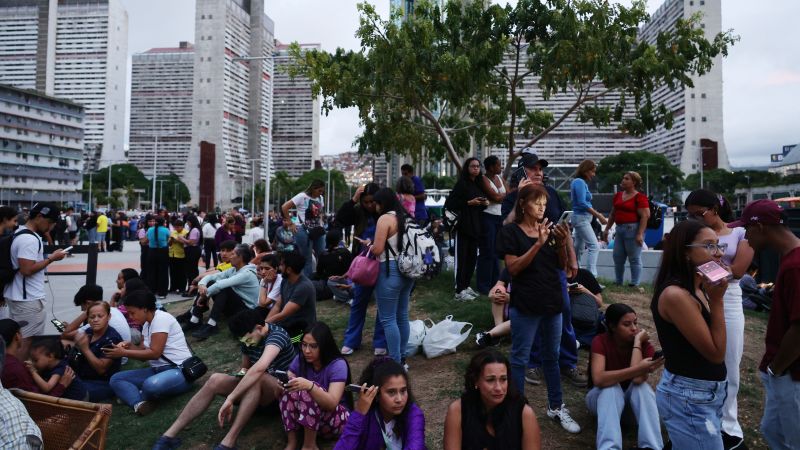
Deadly twin quakes are a gut punch – In the wake of a devastating seismic event that shook Venezuela, the nation’s already fragile economic foundation faces an even steeper decline. Two powerful earthquakes, the most severe to strike the country in over a century, have compounded the hardships endured by its people. The tremors, which occurred on a Wednesday, not only caused immediate loss of life and property but also threatened to disrupt the nation’s struggling economy further, adding pressure to a system already in crisis.
The Economy’s Long Decline
Venezuela’s economic turmoil has been building for years, rooted in a combination of factors that have left the country reeling. Despite its vast oil reserves, the nation has seen its GDP plummet by roughly 80% since 2013, a period marked by prolonged U.S.-led sanctions, rampant hyperinflation, and the mismanagement of its oil sector. Government corruption and the erosion of public trust have exacerbated the situation, with daily life for ordinary citizens becoming increasingly difficult. In 2025, nearly 8 million Venezuelans—about a third of the population—were in need of humanitarian aid, according to the United Nations.
Basic necessities, from fuel to generic medicines, are scarce and costly. The country’s infrastructure, including hospitals and electricity grids, is underfunded and outdated, struggling to meet the demands of its people. For years, the government under former President Nicolás Maduro had implemented policies that stifled economic growth, favoring state control over private enterprise. However, in January, Maduro was ousted and arrested by U.S. forces, marking a pivotal shift in the country’s political landscape.
Acting Leadership and Economic Reforms
In his absence, acting President Delcy Rodríguez has taken a more measured approach to economic recovery. She has sought to ease restrictions, inviting foreign oil companies to invest and gradually restoring some semblance of stability to the oil industry. This strategy has been framed as pragmatic, aiming to secure relief from the crushing sanctions that have crippled trade and investment. Yet, despite these efforts, inflation remains stubbornly high, and wages have not kept pace with the rising cost of living.
Rodríguez’s administration has also activated emergency protocols to address the humanitarian crisis triggered by the earthquakes. During a televised address, she emphasized the country’s response: “We have mobilized all public and private health resources, especially in the most impacted regions, to care for the injured during this critical period.” Her remarks highlighted the urgency of the situation, as the seismic activity left at least 32 people dead and 700 injured, with casualties expected to rise.
Seismic Impact and Economic Consequences
The quakes, measured at a magnitude of 7.0 and 6.5, caused widespread destruction. Early estimates from the U.S. Geological Survey suggest economic losses could range between $10 billion and $100 billion—a figure that underscores the severity of the disaster. The upper end of this projection is nearly equivalent to Venezuela’s entire economy, a stark reminder of the country’s vulnerability. Dr. Lucy Jones, a seismologist at Caltech, warned that the tremors could trigger secondary disasters, such as fires, by damaging gas lines or electrical systems. “These cascading effects can magnify the damage, sometimes doubling the economic toll of a major quake,” she explained.
While the immediate effects of the quakes are devastating, their long-term implications could be even more dire. The oil industry, a cornerstone of Venezuela’s economy, requires billions in investment to restore its former glory. Yet, with the nation’s resources stretched thin, the ability to fund such efforts is limited. The quakes have further strained the supply chain, which is already struggling to deliver essential goods and services to a population that has endured years of shortages.
Political Ripples and International Support
The earthquakes have also reignited political discourse. Former President Maduro, currently incarcerated in New York, has used his official Telegram channel to express solidarity with the Venezuelan people. “Today, the message is unity, solidarity, and action,” his post read, as he and his wife, Cilia Flores de Maduro, faced charges related to drug trafficking and weapons offenses. Meanwhile, opposition leader María Corina Machado, who has been in exile since 2023 and recently won the Nobel Peace Prize, shared her grief on X: “My heart, my infinite embrace, and my prayers are with every Venezuelan home in these hours of anguish.” Her words reflect the deepening divide between the government and its critics.
The quakes now serve as a test of the U.S. commitment to Venezuela’s recovery. President Donald Trump, who once declared his intent to “run” the country by removing Maduro through military action, has since positioned himself as a key ally to Rodríguez. However, the extent of U.S. support remains uncertain. Just one day before the earthquakes, Trump had praised Venezuela’s progress at a Pennsylvania rally, claiming it was “doing great.” Yet, the reality on the ground tells a different story.
Challenges Ahead
As the nation grapples with the aftermath, the government faces mounting challenges. Rebuilding infrastructure, providing medical care, and addressing the economic fallout will require significant resources and international cooperation. The dual crises—natural disaster and political instability—have left Venezuela in a precarious position, with its people bearing the brunt of the suffering. For a country already on the brink, the twin quakes have delivered a defining moment that will shape its future for years to come.
The road to recovery is uncertain, but one thing is clear: the seismic event has exposed the fragility of Venezuela’s economic and social systems. With the government under pressure to act swiftly, the nation’s resilience will be tested. As the search and rescue efforts continue, the world watches to see whether Venezuela can emerge from this disaster with renewed hope—or if the crisis will deepen into an irreversible collapse.
