
Is Trump celebrating the country, or himself, on America’s 250th?
Trump’s 250th Anniversary Address: A Reflection of Self or National Pride?
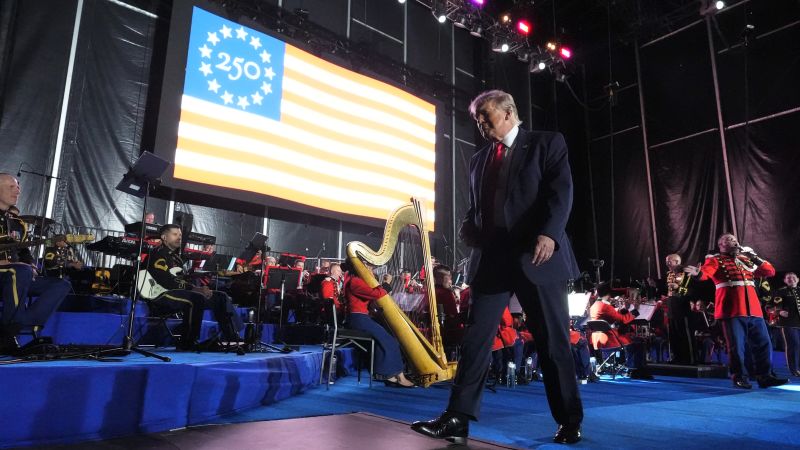
Is Trump celebrating the country or himself – On Wednesday night, as the United States marked its semi-quincentennial, President Donald Trump took center stage in a celebration that felt more like a personal showcase than a collective tribute. The event, held on the National Mall, was steeped in symbolism: military jets streaked across the sky, and the Marine band, described as “the President’s own,” performed patriotic anthems. Trump’s presence, flanked by Lee Greenwood’s rendition of his campaign hit “God Bless the USA,” underscored a narrative that placed him at the heart of America’s resurgence. Yet, as the nation looked back on 250 years of history, questions arose about whether the president was honoring the country’s legacy or leveraging its milestones to elevate his own.
A Speech Focused on Personal Triumph
Trump’s address seemed to skip over the nation’s complex journey, emphasizing instead his role in restoring American greatness. He bypassed traditional reflections on the founding principles of the Declaration of Independence, instead pivoting to the present. “America is back,” he proclaimed, positioning himself as the savior of a “dead country” in under two years. The speech highlighted a curated list of achievements—some real, others exaggerated—contrasted sharply with the “total disaster” of the Biden administration. “We are in the golden age,” he declared, a claim that resonated with his base but left others questioning its alignment with historical context.
His tone, however, was anything but balanced. While other leaders might have used such an occasion to acknowledge the nation’s struggles and progress, Trump framed the event as a platform for self-promotion. This approach drew sharp criticism, particularly from opponents who argued he was using the anniversary to solidify his place in history rather than celebrate the country’s collective story. The stark contrast between his vision and the broader American experience became a focal point of debate, especially as his approval rating dipped to 36% in the latest CNN Poll of Polls—a majority of citizens now oppose him.
Politicized Celebrations and Public Backlash
Trump’s decision to stage the event sparked controversy even before he stepped onto the podium. A string of performing artists had withdrawn from the festivities, citing concerns about its politicization. In response, the president doubled down, hosting a campaign rally to reinforce his message. This act of defiance highlighted his tendency to prioritize personal branding over national unity. Critics, including Ken Martin, the Democratic National Committee chair, seized on the moment to accuse Trump of transforming the nation’s 250th birthday into a “celebration of himself.”
“As Americans come together to celebrate the 250th anniversary of the nation’s founding, Donald Trump is doing what he does best: blowing money on flashy, Trump-themed events while forcing Americans to foot the bill,” Martin stated in a press release.
These words encapsulated a broader sentiment: that the event was less about commemorating shared history and more about showcasing Trump’s political influence. His speeches, while energizing for his supporters, left many feeling alienated. For instance, his remarks about the “power back from the far-off political class” and the “reclamation of our sovereignty” drew parallels to the revolution of 1776, yet they also framed the nation’s founding as a distant chapter in a story dominated by his leadership.
A Mixed Audience and Divided Perspectives
Despite the criticism, Trump’s speech was met with warm applause from a crowd largely composed of his loyal supporters. These attendees, many of whom felt marginalized by the political system, embraced his rhetoric about economic growth, border security, and a “cleaner” society. His policies, such as the southern border strategy and the tax-cutting law, were praised by his base, even if they sparked debate about their long-term impact.
Yet, the event’s inclusivity was put to the test. While some Washington, D.C. residents—many of whom live in a city known for its progressive leanings—approved of his efforts to enhance public safety, others bristled at his sweeping critique of diversity initiatives and his portrayal of immigration enforcement as a symbol of American strength. Even his “triumphal arch” proposal, which aimed to commemorate the nation’s history, was met with mixed reactions, particularly among those who saw it as a vanity project rather than a meaningful tribute.
The Unfinished Narrative
Trump’s celebration was just the beginning. He hinted at further plans, including a July Fourth speech by “your favorite president” on the Mall, suggesting a desire to maintain momentum. However, the success of his kickoff event hinged on whether non-partisans would feel included. His emphasis on policies like the Iran war, the rollback of diversity programs, and the militarization of immigration—while appealing to his core supporters—risked deepening divisions among those who view the nation’s progress as a collective endeavor.
Many Americans, even those who disagree with Trump’s approach, still admire the military and recognize the importance of national unity. But his rhetoric, which often framed his actions as the nation’s salvation, clashed with the idea of shared responsibility. The phrase “we have taken power back from the far-off political class” resonated with his followers, yet it also alienated those who saw the presidency as a role for leadership rather than personal glory. This duality—celebrating the country while positioning oneself as its central figure—left a lingering question: Is Trump’s speech a testament to American resilience, or a reflection of his self-centered vision?
Historical Context and the Path Forward
The nation’s 250th anniversary offered a unique opportunity for reflection. Presidents in the past have used such moments to honor the values that shaped the country, from the Declaration of Independence to the Civil Rights Movement. Trump, however, chose a different path, one that prioritized his political narrative over the broader historical arc. His speeches, while powerful in their own right, seemed to overlook the complexities of America’s journey—its triumphs, its mistakes, and the ongoing quest for progress.
For Trump’s supporters, the event was a victory lap, celebrating a leader who has reshaped the political landscape. But for others, it was a reminder of the president’s tendency to frame national events as personal achievements. The controversy surrounding the Reflecting Pool renovation and his proposed triumphal arch underscored this theme. While the event’s scale and symbolism were impressive, they also raised concerns about whether it was a genuine celebration or a calculated move to reinforce his legacy.
As America’s 250th anniversary unfolds, the nation will continue to grapple with the tension between individual ambition and collective memory. Trump’s speech, with its blend of nostalgia and triumphalism, highlighted this dynamic. While his supporters see the moment as a testament to his leadership, critics argue it reveals a leader more interested in his own narrative than the country’s. The true measure of his address may lie not in the applause it received, but in its ability to bridge the divides that define the current political climate.
Ultimately, the event served as a microcosm of Trump’s broader approach to governance. Whether it was a celebration of the nation or a personal showcase, the message was clear: America’s history is being rewritten, and the president is its central figure. As the country moves forward, the question remains—will this celebration of self foster unity, or deepen the rifts that have defined this era of American history?
