
Israel’s military and tech industry race to counter Hezbollah’s latest threat
Israel’s military and tech industry race to counter Hezbollah’s latest threat
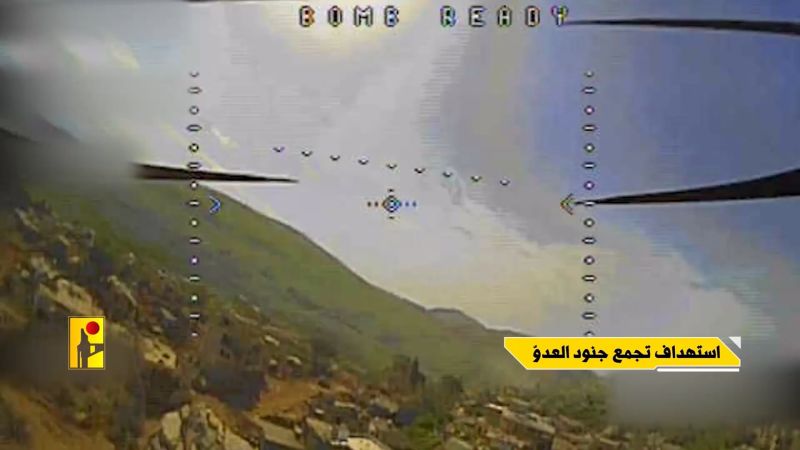
Israel s military and tech industry – Small, agile drones are now a formidable tool in Hezbollah’s arsenal, slipping unnoticed through the skies of southern Lebanon and northern Israel to strike critical targets. These devices, equipped with explosives, have been documented capturing footage of their missions—showing them methodically identifying and attacking vulnerable points on Israeli Merkava tanks, Iron Dome batteries, and groups of soldiers. The shift to fiber-optic, first-person view (FPV) drones marks a significant evolution in Lebanon’s militant group’s tactics, leveraging an asymmetric warfare strategy that gained prominence during the Russia-Ukraine conflict. Since the renewed fighting began in March, at least 12 Israeli troops have been killed by Hezbollah’s drone attacks, accounting for a third of the country’s casualties in the region. The Israeli military is now urgently deploying new measures to neutralize this evolving danger.
The Lethality of Silent Drones
Unlike earlier models, these FPV drones are nearly invisible to traditional detection systems. Their stealth is achieved through a unique design: a spool of thin fiber-optic cable connects them to their human operators, eliminating the need for radio signals. This innovation makes them resistant to electronic jamming and difficult to spot using conventional radar or optical sensors. “The drone threat is a challenge, but we will overcome it,” said Eyal Zamir, Israel’s military chief of staff, last month. He emphasized the development of “operational and technological solutions” to counter the drones’ growing impact on Israeli military operations.
The drones’ ability to operate without emitting detectable signals has forced the IDF to rethink its defense strategies. While mesh netting has been deployed to intercept drones before they reach their targets, the system’s effectiveness depends on early detection. Soldiers are now trained to use shotguns and specialized rounds designed to disable approaching drones at close range, but these tools require timely warnings. “Most of the warnings that the soldiers have— it’s when they hear the drone coming and they have about three, four seconds,” explained Shai Kurianski, co-founder of Airwayz, a tech firm working on drone defense systems. “If you give them 20 or 30 seconds, the results will be completely different.”
Innovation from the Tech Sector
In response to the growing threat, Israel’s tech industry has mobilized to provide cutting-edge solutions. Companies are now developing non-radio frequency sensors capable of tracking FPV drones and intercepting them before they can detonate. Airwayz, for instance, has created a system that integrates data from multiple sensor types—including optical, acoustic, and laser-based tools—to quickly distinguish between friendly and hostile drones. This technology was recently tested in Miami, where it helped safeguard a FIFA World Cup stadium from potential drone attacks. Kurianski noted that such systems could provide critical time for soldiers to react, potentially saving lives in high-risk zones.
However, the complexity of the problem means no single technology can solve it. Experts stress that detecting these silent drones requires a layered approach, combining different sensor technologies to cover blind spots. “You need multiple systems working together to identify incoming threats accurately,” said one analyst. “It’s not just about one method—it’s about redundancy and speed.” The IDF has yet to publicly share details on how it has improved its tracking capabilities, but the collaboration with private firms signals a shift toward integrating advanced tech into frontline defenses.
A Growing Sense of Urgency
For many Israelis, the drone threat has sparked both alarm and frustration. While the military has taken steps to address the issue, some feel the response has been too slow. “It’s our children out there in Lebanon that are getting those FPV explosives,” Kurianski said, highlighting the personal stakes for the country. “We will not wait with that.” This sentiment reflects a broader concern within the tech community, which has long predicted the rise of drone warfare. In fact, Ukrainian officials have pointed out that they first identified the danger of these inexpensive drones two years ago and even offered to assist Israel in preparing for their use. “We don’t see much interest or appetite from the Israeli leadership in this area,” said Ukraine’s ambassador, who declined to specify the exact warning given.
The drones’ affordability—ranging from $300 to $400 each—has made them a versatile weapon for Hezbollah. Their ability to bypass Israel’s advanced air defenses has forced the military to adapt rapidly. As the conflict continues, the IDF faces the dual challenge of protecting its troops and infrastructure while addressing gaps in its early warning systems. Kurianski and others in the tech sector are pushing for more robust solutions, including AI-driven tracking systems and drone swarms designed to intercept the enemy’s craft. “We’re not just reacting to the threat—we’re building a framework to stay ahead of it,” he said.
Global Lessons and Local Challenges
The rise of FPV drones in the Israel-Hezbollah conflict underscores how technology once seen as a niche tool in Ukraine has now become a global battlefield asset. The drones’ adaptability—ranging from military targets to civilian areas—has raised questions about their potential for widespread use. “The threat is not just about killing soldiers,” said a defense analyst. “It’s about disrupting operations and creating uncertainty in the field.” This uncertainty is compounded by the fact that Hezbollah’s drones can strike from unexpected angles, often evading detection until the last moment.
Despite the challenges, Israel’s tech industry remains a key ally in this fight. Companies are racing to develop solutions that can predict drone movements, detect them in real time, and neutralize them with precision. The collaboration between military officials and private firms, as seen in recent meetings, highlights the urgency of the situation. “This isn’t just a military issue—it’s a technological one,” said one participant in the discussions. “We need to think creatively and act quickly.”
As the conflict intensifies, the success of Israel’s countermeasures will hinge on how effectively it can harness the power of innovation. While the IDF has deployed physical barriers and close-range weapons, the next phase of the battle may depend on digital tools that can outmaneuver Hezbollah’s drones. With the stakes growing higher, the Israeli military and tech sector are working in tandem to ensure that the nation is not caught unprepared in the next round of aerial confrontations.
The question remains: will these efforts be enough? For now, the drones continue their silent assault, testing the limits of Israel’s defenses and pushing its tech industry to the front lines of a new kind of warfare. As Kurianski put it, “We’re not just defending our borders—we’re defending our future.”
