
The World Cup game that no one wants to win
The World Cup game that no one wants to win
The World Cup game that no one – In an unexpected turn of events, the World Cup has unveiled its most surprising underdog story yet. Cape Verde, a nation often overlooked in the global soccer landscape, has managed to defy the odds by securing a place in the knockout rounds. The African team, which drew with Spain in its opening match, achieved another historic draw against Saudi Arabia in Houston, setting the stage for a dramatic clash with Argentina. This is no ordinary encounter—Cape Verde, a small island nation with limited resources, now faces the reigning world champions, who are led by the legendary Lionel Messi. The matchup has ignited discussions about the unpredictable nature of the tournament and the role of fate in soccer’s grandest stage.
A Unique Path to the Knockouts
Cape Verde’s journey to the Round of 32 is a testament to the chaos that can define the World Cup. With a population of just over 550,000, the team has been the subject of countless jokes and underestimations throughout the tournament. Yet, their performances have been nothing short of extraordinary. The first-round draw with Spain, a team that had been tipped as a favorite to dominate the group, was a stunning upset. Then, their second draw with Saudi Arabia, a nation that had yet to prove its mettle in international soccer, further solidified their status as a giant-killer.
This has created an intriguing scenario where the underdogs will take on Argentina, a team that has long been the benchmark for excellence in the sport. The clash promises to be a test of resilience, creativity, and tactical discipline. For Cape Verde, the goal is simple: avoid defeat and keep the dream alive. For Argentina, the challenge is to maintain their dominance while facing a team that has shown no fear of the big stage. The tension is palpable, and fans around the world are eagerly anticipating the outcome.
The Dilemma of Group J
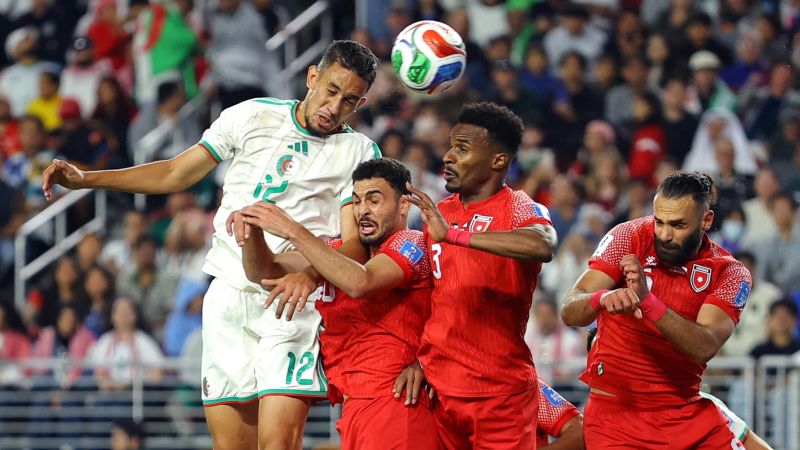
Meanwhile, in Group J, the situation is equally complex. Austria and Algeria are locked in a battle where the outcome of their match could have profound implications for both teams. The rules of the World Cup have created a peculiar dynamic: the winner of the group will advance, but the second-place finisher also gets a direct path to the knockout rounds. However, the third-placed team might have a chance to qualify as a “lucky loser,” depending on the results of other matches.
For Austria, a win would mean a second-place finish and a meeting with Switzerland in the Round of 32. That, however, might not be the ideal scenario. If Austria loses, they could finish third but still qualify, avoiding a tough clash with Spain. On the other hand, Algeria stands to gain significantly from a draw. A tie would see them finish third and escape the potential showdown with Spain, which is currently on a roll. Yet, a win for Algeria would bring them to the second-place spot, forcing them to face Spain in a high-stakes encounter. The dilemma is clear: both teams are likely to prioritize a draw over a win, creating a scenario where neither side wants to secure victory.
This phenomenon is not new to soccer, but it has become more pronounced with the recent changes to FIFA’s tournament structure. In previous World Cups, the knockout rounds often featured teams with clear momentum. However, this year’s format has introduced a twist where group permutations can reshape the path to the next phase. The result is a game that may not be played with the full intensity of a typical match, as both teams try to secure the best possible draw.
The Role of Momentum and National Pride
Momentum is a powerful force in tournament soccer, and players are often trained to chase wins at every opportunity. Yet, in this case, the teams might be forced to act against their instincts. Algeria, for instance, cannot afford to lose too much ground in the group. A loss would not only jeopardize their position but also potentially eliminate them from the tournament. Meanwhile, Austria is in a position where a win could lead to a difficult matchup, while a loss would free them to face a more manageable opponent.
There’s also the question of national pride. Representing one’s country is a responsibility that goes beyond individual ambition. Players are expected to fight for their team, and a loss in this critical stage could be seen as a failure. However, the strategic implications of a draw or a loss might outweigh the emotional weight of victory. This is a unique situation where the players’ personal desires might be at odds with the team’s collective goals.
Such scenarios have occurred in other tournaments, but the World Cup’s high stakes make this one particularly notable. Fans might hope for a draw, as it could create more excitement and uncertainty. In some cases, teams have even been known to play for a loss if it benefits their rivals. The psychological aspects of the game add another layer of complexity, as players must balance the need to win with the desire to avoid a potentially tougher draw.
Other Groups and the Road Ahead
While Group J and Cape Verde’s story dominate headlines, other matches are also shaping the tournament’s narrative. For example, in the group stage, Panama has already been eliminated after two consecutive losses, leaving England in a position where a win or even a draw could solidify their top spot. England’s upcoming match against Croatia and Ghana will determine their group standing, with a win guaranteeing a favorable position for the next round. However, the team may also aim for a draw if Croatia and Ghana tie their match, ensuring they finish first without the risk of a costly loss.
This strategy reflects the broader reality of the World Cup: teams often adjust their approach based on the circumstances. England, which thrashed Panama 6-1 in the 2018 tournament, is expected to repeat their dominance. Yet, the team is also looking to rest key players who are dealing with minor injuries, which could lead to lineup changes. The Three Lions are a confident group, but the pressure to maintain their position remains high. Their match will take place at Lincoln Financial Field in Philadelphia, Pennsylvania, at 5 p.m. ET.
Meanwhile, in the same group, Croatia and Ghana are locked in their own battle. A win for either team will ensure their advancement, but a draw might also be a viable option. The African side, Ghana, has already demonstrated their ability to compete at the highest level, and their performance in this match could determine their path forward. The Vatreni, as they are known, are aware that a loss might not be the end of their World Cup journey, as they still have a chance to qualify as a lucky loser. This adds an element of suspense, as teams must navigate the delicate balance between risk and reward.
As the World Cup progresses, the unpredictability of the tournament continues to captivate fans. The draw between Austria and Algeria is a prime example of how the rules can create scenarios that defy conventional wisdom. This game may not have the same intensity as others, but it is a crucial moment that could shape the rest of the competition. The stakes are high, and the outcome will be a testament to the strategic thinking and adaptability required in soccer’s most prestigious event.
“The World Cup has always been a stage where the unexpected happens. This year, it’s not just about talent—it’s about the way the rules can turn a game into a chess match for survival,” says Kyle Feldscher of CNN.
With the clock ticking down to the next phase of the tournament, the focus remains on these pivotal matches. Whether it’s Cape Verde’s challenge against Argentina or the strategic draw in Group J, the World Cup continues to surprise and inspire. The game that no one wants to win is now a reality, and the world will be watching to see who emerges victorious from this unique setup.
