
After 40 years in Congress, Nancy Pelosi to help create institute to train leaders of the future
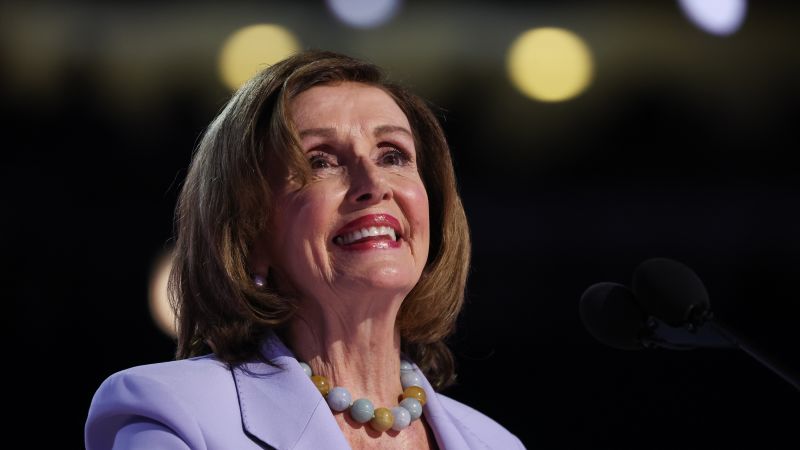
After 40 Years in Congress, Nancy Pelosi to Help Create Institute to Train Leaders of the Future
After 40 years in Congress Nancy – California’s Democratic representative, Nancy Pelosi, is leaving the political arena after four decades of service in Congress. For the first time since her 1985 election, she will not return to the House of Representatives in January 2027. Instead, Pelosi has chosen to channel her extensive experience into a new endeavor: the Nancy Pelosi Institute at the University of California, Berkeley. The institute, which aims to foster research, education, and civic engagement, is set to launch in January 2027, marking a significant shift in her public service journey.
The Vision Behind the Institute
When asked about her decision to step away from Congress, Pelosi emphasized her commitment to shaping the next generation of leaders. “The opportunity to mentor and educate emerging voices in public service is a calling I can’t ignore,” she said in a recent phone interview. “This institute is about preserving the values our founders embedded in the Constitution and preparing people to address the challenges of our time.” Her focus lies on issues that have defined her career, including human rights, democratic resilience, climate change, and economic inequality.
While the institute will not be a traditional physical structure, Pelosi described it as a “programmatic” entity, centered on creating dynamic learning opportunities. “It’s not about bricks and mortar, but about ideas and impact,” she explained. The initiative will serve as a hub for academic collaboration and public discourse, with a mission to bridge the gap between policy and education. She expressed excitement about its potential, noting that it would allow her to engage with students and scholars in a way that transcends partisan divides.
A Legacy in Motion
Earlier this year, a group of Berkeley administrators and eight professors approached Pelosi with the idea of establishing an institute in her honor. The proposal, which she initially found “dazzling,” came as a surprise. “They had a vision that resonated deeply with me,” she said. “It was clear they wanted to create a space where both parties could come together to explore solutions to pressing national and global issues.”
Despite the initial astonishment, Pelosi quickly embraced the idea. She has already raised $25 million for the project, a feat she described as “quite easily” given her reputation as a formidable fundraiser. The university confirmed the total campaign goal is $50 million, with the institute serving as a flagship initiative. “This isn’t just about funding—it’s about creating a legacy that endures,” she said. The institute’s founding is seen as a testament to her enduring influence on American politics and her ability to inspire action beyond the legislative chamber.
One of the institute’s most distinctive features is its bipartisan ethos. Pelosi highlighted that Berkeley, known for its progressive reputation, has become a “epitome of public education” in this effort. “The idea of a center that unites different perspectives is revolutionary,” she noted. “It’s about training leaders who understand the complexities of governance and the importance of collaboration.” This approach reflects her own political evolution, as she transitioned from a lifelong advocate for progressive causes to a champion of cross-party dialogue.
Creating a Space for Dialogue
While the institute’s physical presence will be minimal, its intellectual reach is vast. Pelosi envisioned a space where students and academics can explore contemporary issues through a multidisciplinary lens. “Technology will be central to how we communicate these ideas,” she said. “But the real power lies in the stories we tell and the debates we spark.”
She also outlined plans for an exhibit within the institute, showcasing some of her notable achievements. “The display will highlight the legislation I helped pass, the awards I’ve received, and even a few personal items to make it engaging,” she said. The exhibit, set to open in spring 2027, will serve as both a tribute to her career and a tool for public education. “People want to understand how these issues evolved, not just what the final outcomes looked like,” Pelosi added, underscoring the institute’s educational purpose.
Part of the institute’s mission will involve bringing together prominent figures from both political parties. Pelosi mentioned her intention to co-teach a course with Eric Schickler, a renowned scholar of Congress. “This partnership will allow us to blend academic rigor with real-world experience,” she said. The institute will also host public lectures, workshops, and policy discussions, aiming to cultivate a new generation of leaders who are prepared to navigate the challenges of the 21st century.
Retirement as a New Beginning
Despite stepping away from Congress, Pelosi remains deeply engaged in political matters. She expressed confidence in the upcoming November elections, stating, “We’re going to win the House. I’m so proud of what I leave behind and how they go on to what’s next.” Her transition to academia is framed as a continuation of her activism, not a departure from it.
“Partisanship is a part of politics, but it doesn’t have to define everything,” she said. “This institute is about the spirit of the Constitution—ideas that can unite people, even in a divided time.” Her remarks reflect a broader philosophy: that leadership should be rooted in shared principles and the ability to adapt to new challenges.
When asked whether the institute’s name would appear on any physical buildings, Pelosi laughed and replied, “I hope not. They have classrooms, auditoriums, and theaters, but the real focus is on what happens within those spaces.” This sentiment highlights her belief in the institute’s transformative potential. “The goal isn’t to create monuments to the past, but to build a foundation for the future,” she said. Her vision for the institute aligns with her long-standing advocacy for public service and civic responsibility.
Preparing for the Next Chapter
Pelosi’s decision to retire from Congress underscores a strategic shift in her career. While she has spent four decades shaping policy, she now aims to focus on nurturing future leaders. “I want to ensure that the next generation has the tools and knowledge to address the issues we’ve all faced,” she said. The institute will serve as a platform for this purpose, offering programs that blend historical context with modern challenges.
Her involvement in the institute is expected to span various initiatives, from curriculum development to networking opportunities for students. “Leadership isn’t just about making decisions—it’s about listening and learning,” Pelosi said. “This is about giving young people the chance to grow, not just follow.”
As the institute prepares to launch, there is a sense of anticipation about its role in American education. Pelosi’s influence will extend beyond the classroom, as her presence is likely to inspire both students and faculty. “I’m not done with public service, just changing the way I contribute,” she said. Her retirement marks not an end, but a new beginning—a bridge between the past and the future of leadership in the United States.
In a time of political polarization, the Nancy Pelosi Institute stands as a beacon of unity and progress. By leveraging her decades of experience, she aims to foster a deeper understanding of the issues that shape our nation. “The Constitution was designed to be adaptable,” she noted. “So too must our approach to leadership.” This philosophy will guide the institute’s work, ensuring it remains relevant and impactful in the years to come.
