
Delcy Rodríguez’s Venezuela is in such dire straits she can’t afford to reject aid from either friends or foes
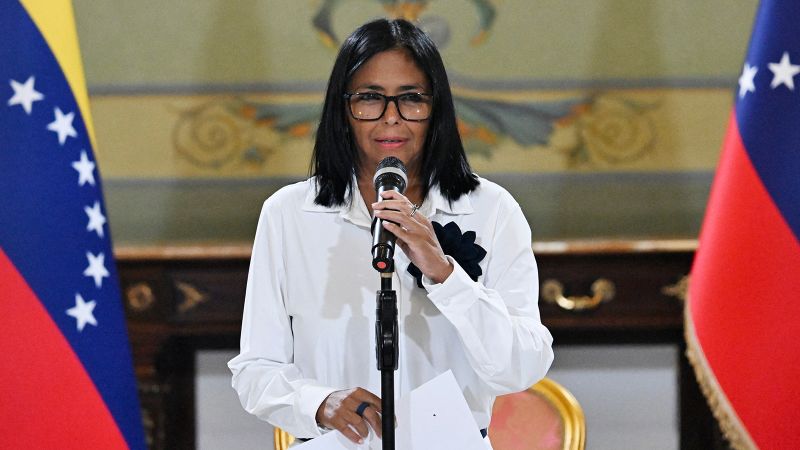
Venezuela’s Dire Situation Forces Delcy Rodríguez to Accept Aid from Both Allies and Adversaries
Delcy Rodríguez s Venezuela is in such – In the wake of devastating earthquakes that struck Venezuela’s northern coast and Caracas, Delcy Rodríguez’s Venezuela has reached a critical juncture where rejecting assistance from any source becomes a luxury it can no longer afford. Just four hours after the tremors, El Salvador’s President Nayib Bukele extended an offer of help on X, and Rodríguez swiftly endorsed the gesture, signaling a shift in Venezuela’s approach to international aid. This decision underscores the nation’s growing need for flexibility as it grapples with economic collapse and natural disasters, forcing its leadership to embrace support from both traditional allies and political rivals.
The Earthquake Crisis
The earthquakes, measuring 7.2 and 7.5 on the Richter scale, caused widespread destruction across Venezuela, further intensifying the country’s already dire conditions. The disaster exposed the vulnerabilities of Venezuela’s healthcare system, which has been in decline for years due to resource shortages. Reports indicate at least 1,450 lives were lost, highlighting the urgent demand for aid that has now compelled Delcy Rodríguez’s Venezuela to prioritize immediate relief over ideological stances.
“This crisis has shown that solidarity between nations is essential,” said Rodríguez, acknowledging Bukele’s offer as a symbol of Venezuela’s evolving foreign relations. Her remarks reflect a broader recognition that Delcy Rodríguez’s Venezuela can no longer afford to maintain rigid political posturing in the face of mounting challenges.
The Economic Backdrop
Venezuela’s economic turmoil has left it in a state of severe hardship, with Delcy Rodríguez’s Venezuela struggling to meet basic needs. Between 2013 and 2021, the country’s GDP fell by 75%, deepening public frustration. The U.S. sanctions on the Central Bank of Venezuela and PDVSA have further restricted access to global capital, compounding the crisis. Delcy Rodríguez’s Venezuela now faces a staggering external debt of around $161.3 billion, a figure that underscores its financial dependence on international partners.
Despite these challenges, Delcy Rodríguez’s Venezuela has maintained a defiant stance in the past. However, the recent earthquakes have forced a reevaluation of this approach, as the nation’s leadership now recognizes the necessity of pragmatic cooperation. The crisis has also reignited discussions about the role of foreign influence in Venezuela’s economic fate, with some viewing the aid as a lifeline and others as a compromise of national sovereignty.
A Historical Echo
The current situation echoes past crises that tested Venezuela’s political resolve. In 1999, a catastrophic landslide in La Guaira state devastated Carmen de Uria, killing hundreds and reshaping the nation’s trajectory. At the time, Hugo Chávez’s government rejected U.S.-sponsored aid, framing it as a challenge to sovereignty. This historical precedent highlights how Delcy Rodríguez’s Venezuela has long navigated the tension between self-reliance and international support.
Major General Raúl Salazar, a former military official, noted that Chávez’s rejection of aid ships was not just an act of defiance but also a strategic move to align with Cuba. The 1999 disaster became a turning point in Venezuela’s political identity, reinforcing its position as a leader in Latin America’s left-wing movement. Today, Delcy Rodríguez’s Venezuela stands at a similar crossroads, where the need for survival overshadows ideological divisions.
The Shifting Political Landscape
Delcy Rodríguez’s Venezuela now finds itself in a different geopolitical climate. The U.S. has shifted its focus from confrontation to collaboration, with the Trump administration fostering an unexpected alliance with Venezuela’s leadership. This change has prompted a reexamination of past policies, as Delcy Rodríguez’s Venezuela seeks to rebuild its international standing. The earthquakes have served as a catalyst, pushing the nation to embrace aid from unexpected sources, including leaders like Bukele.
The willingness of Delcy Rodríguez’s Venezuela to accept help from both friends and foes reflects a broader trend of pragmatism in the face of crisis. While the Chavista movement has historically viewed El Salvador as a rival, the current circumstances have erased those divisions, creating an opportunity for renewed cooperation. This shift signals a more adaptive approach to leadership, one that balances ideological principles with the realities of survival.
