
Police must obtain a warrant when seeking sweep of cellphone location data, Supreme Court rules
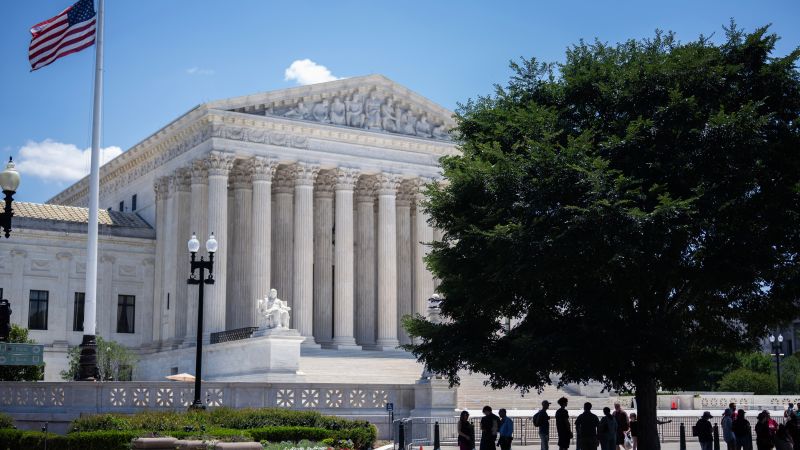
Supreme Court Rules Police Must Obtain Warrant for Cellphone Location Data
Police must obtain a warrant when – In a landmark ruling, the U.S. Supreme Court has decided that police must obtain a warrant before accessing cellphone location data, reinforcing Fourth Amendment protections in the digital age. The decision, delivered on June 29, 2026, clarified that a “geofence warrant” used to gather location information from tech companies like Google during an investigation qualifies as a search. This means law enforcement cannot bypass judicial oversight to collect data that reveals personal movements, even when targeting a specific suspect. The ruling underscores the growing importance of privacy rights in the face of modern surveillance technologies.
The Legal Case: Okello Chatrie and the Geofence Warrant
The case revolved around Okello Chatrie, a Virginia man accused of participating in a 2019 bank robbery. After initial evidence stalled, police applied for a geofence warrant to obtain location data from Google, focusing on individuals near the crime scene. While Chatrie had already pleaded guilty, his legal team argued the warrant was overly broad, potentially allowing authorities to monitor millions of users without sufficient justification. The Supreme Court’s decision, though not resolving Chatrie’s case directly, established a key precedent: that a warrant is essential for accessing location data from geolocation databases.
Fourth Amendment and the Scope of Warrants
Justice Elena Kagan’s majority opinion highlighted the necessity of the Fourth Amendment in safeguarding digital privacy. “The Fourth Amendment must, as ever, protect against unjustified governmental intrusion on the privacy of the individual,” she wrote, emphasizing that warrants ensure searches are targeted and not arbitrary. The ruling contrasts with the dissenting views of three conservative justices, who claimed the decision expands judicial power beyond its intended limits. Their argument centered on the idea that location data, when shared with companies, might not require the same level of scrutiny as traditional records.
Chatrie’s attorneys stressed that the geofence warrant lacked specificity, as it compelled Google to scan the location histories of millions of users to identify those near the bank during the robbery. “The government can now draw a geofence around any location and access all users’ data,” they argued, warning of the risk of surveillance overreach. This critique reflects a broader debate about how law enforcement uses digital tools to track suspects, often without clear boundaries on data collection.
“Although today’s decision will send seismic waves through our Fourth Amendment doctrine, not one iota of the majority opinion will affect the outcome of this case,” Justice Samuel Alito wrote in his dissent. Alito criticized the court for prioritizing privacy concerns over the practical needs of modern investigations, noting that the warrant in Chatrie’s case had already been issued. He questioned whether the ruling truly addresses the core issue of whether the search was constitutional, or if it merely creates a new standard for future cases.
The Justice Department defended the geofence warrant as a vital tool for law enforcement. US Solicitor General D. John Sauer argued that Chatrie “voluntarily shared his location data” by enabling Google’s tracking features, making it reasonable for police to access this information with a warrant. This perspective highlights the tension between individual privacy and the efficiency of digital surveillance, particularly when data is stored by third-party companies. The decision strikes a balance, requiring warrants for access while acknowledging the role of corporate data in criminal investigations.
With millions of Americans relying on smartphones for daily activities, the ruling has far-reaching implications for digital privacy. By mandating that police must obtain a warrant before accessing location data, the Supreme Court has set a new benchmark for how technology shapes legal protections. The decision also raises questions about the future of geofence warrants and their potential to expand surveillance capabilities, ensuring that privacy rights remain a central consideration in modern policing practices.
