
L.A. Unified enacts reasonable rules for screens in schools but your kid’s school hasn’t. Now what?
L.A. Unified enacts reasonable rules for screens in schools but your kid’s school hasn’t. Now what?
L A Unified enacts reasonable rules – As the school year approaches, many families are preparing to send their children back to classrooms where screen time has become an everyday norm. While Los Angeles Unified School District has taken a bold step by implementing strict guidelines to limit device use, countless other schools across the country still allow unrestricted access to digital tools. Experts argue that these rules could offer significant benefits, but parents and educators need to advocate for similar changes in their local districts. Kara Alaimo, a communication professor at Fairleigh Dickinson University, has long been a voice for mindful screen management. Her 2024 book, Over the Influence: Why Social Media Is Toxic for Women and Girls — And How We Can Take It Back, highlights the growing concern over technology’s impact on young minds.
A Shift in School Policies
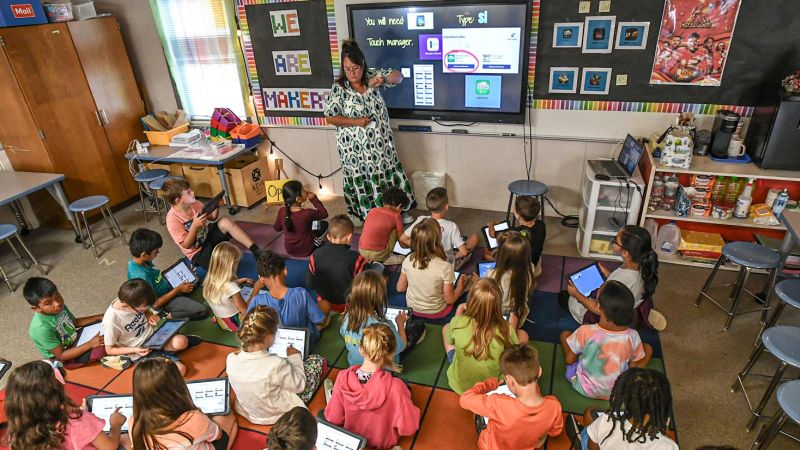
The Los Angeles Unified Board of Education recently passed a landmark policy, setting new limits on screen exposure for students. Under the updated rules, preschool and first-grade classrooms will no longer use instructional screens during school hours. Second- and third-grade students will have a maximum of 20 minutes of screen time daily, encompassing both in-class activities and homework. This cap will gradually increase, reaching 1.5 hours per day by high school — a weekly total of no more than 10 hours. The policy also bans YouTube and social media during the school day and eliminates the issuance of individual devices to students, a change that could reduce distractions and encourage hands-on learning.
Alaimo emphasizes that the policy reflects a growing awareness of the risks associated with excessive screen use. She points to research showing that children absorb more when they engage with physical materials, such as paper and pencils. “Writing with a pencil or reading a printed book fosters deeper cognitive connections,” she explains. However, exceptions are made for students with disabilities, like dysgraphia, who may rely on typing to overcome challenges in writing. These accommodations are typically outlined in individualized education programs (IEPs), ensuring flexibility for diverse learning needs.
The Evidence of Harm
Dr. Yair Lev, a physician from Lower Merion, Pennsylvania, has been a vocal advocate for reducing screen exposure in schools. He argues that the current system is causing measurable harm. “Children are distracted, exposed to inappropriate content, and even subjected to cyberbullying,” Lev states. He also highlights the growing mental health issues linked to prolonged screen time, such as anxiety and attention difficulties. “There’s no evidence that screens improve learning outcomes,” he adds, “but plenty of data shows they’re undermining focus and social interaction.”
“Some of what happens during youth can’t be reversed. It’s another reason to rethink kids’ screen time.”
Lev’s concerns are echoed by other educators and researchers. While LA Unified’s approach is seen as a model, many schools still issue personal devices to students. According to recent surveys, 88% of public schools across the U.S. provide individual tablets or laptops, often without clear guidelines on their use. In some districts, such as one in New Jersey, parents have raised alarms about assignments like watching a 45-minute video as homework. “School officials questioned whether we had explored non-digital alternatives,” one parent recalls. This highlights a common issue: the lack of proactive measures to balance technology with traditional methods.
How to Advocate for Change
For families in districts without similar policies, the path to reform begins with clear communication. Jill Anderson, a third-grade teacher in New York’s Westchester County, recommends starting the conversation during the summer. “Write a letter to the district outlining your concerns,” she advises. “This gives the teacher context when you bring up the issue later.” The letter can serve as a tool to ensure school staff understands the need for limits without feeling personally attacked.
Anderson also suggests asking about analog alternatives. “If your child is assigned a digital task, request a paper-based version or a different activity,” she says. This strategy can help reduce reliance on screens while still meeting educational goals. In Lower Merion, a parent successfully advocated for their child not to receive a tablet in kindergarten after the district introduced individual devices. “They listened when we presented our case,” Lev notes. “The school agreed to remove the tablets for his class, recognizing the value of balancing technology with tactile learning.”
Collaboration is key. Parents should unite with others who share similar concerns to amplify their voices. “If a concern is widespread, school board members are more likely to act,” Lev explains. He helped launch the Pencils Over Pixels movement, a grassroots effort to promote screen-free learning. Last month, he hosted a webinar for the group, sharing strategies for influencing policy. “We’re not alone,” he says. “Many others are ready to fight for better practices.”
Local organizations like PTAs can also be allies. “Engage with your PTA if they support the initiative,” Anderson suggests. In some towns, parents have organized sign campaigns to visually demonstrate their stance. For example, in a recent school board meeting, attendees wore white shirts to draw attention to their cause. “It was a powerful way to show solidarity,” one parent shares. These efforts not only raise awareness but also create a sense of urgency for administrators to reconsider current practices.
A Call for Uniform Standards
Lev believes that LA Unified’s model could be replicated nationwide. “Children shouldn’t need to reside in Los Angeles to experience such beneficial screen limitations,” he argues. The district’s approach could serve as a blueprint for other schools, especially those in rural or underserved areas where technology is often seen as a necessity rather than a luxury. By limiting screen time, schools might foster better focus, reduce cyberbullying, and improve overall student well-being.
While the policy is a positive step, its success depends on consistent implementation. “Schools must enforce these limits with discipline,” Alaimo stresses. She urges parents to remain persistent, even if progress is slow. “Start by requesting alternatives for your child. If that doesn’t work, escalate the issue to district leadership.” This proactive approach ensures that students are not left in the lurch while schools adjust to new standards.
As the debate over screen time in education continues, the focus remains on creating a healthier learning environment. The Los Angeles model demonstrates that change is possible, but it requires collective effort. Parents, educators, and policymakers must work together to ensure that technology complements — rather than replaces — the essential skills children develop through hands-on activities. The future of education, Lev says, lies in striking that balance. “We’re not asking for a complete ban on screens,” he adds. “We’re asking for smarter use.”
With growing awareness and coordinated action, the hope is that more schools will adopt similar policies. Until then, parents can take the lead by pushing for change, ensuring their children’s well-being is prioritized. As Alaimo puts it, “Every screen time decision matters. Let’s make sure they’re the right ones.”
