
As Venezuelan morgues fill and the death toll slowly rises, questions remain about how many are truly gone
As Venezuelan Morgues Overflow, Doubts Linger Over the True Death Toll
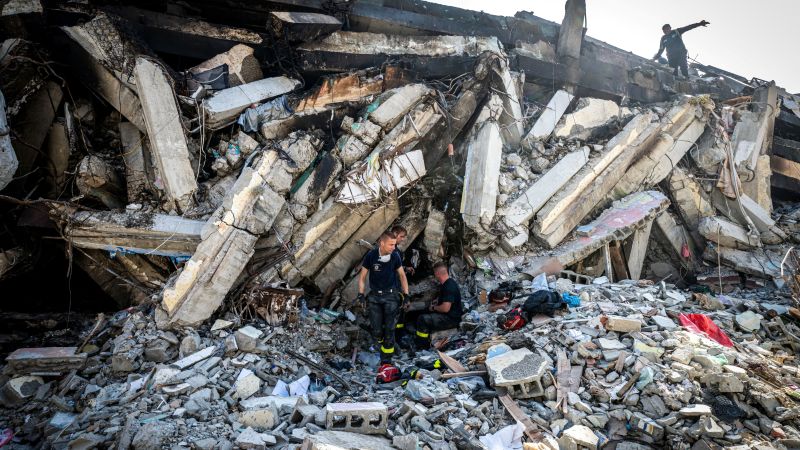
As Venezuelan morgues fill and the death – Weeks after a devastating series of earthquakes struck Venezuela, the official death toll continues to fuel debate among locals and international analysts. While the government announced at least 2,295 fatalities on Wednesday, the figure has raised eyebrows for its apparent underestimation. The numbers, which increased by approximately 300 from the prior day, remain at odds with the grim reality on the ground, particularly in the port city of La Guaira, a region heavily impacted by the quakes.
The Forensic Perspective
One forensic pathologist, who chose to remain anonymous out of concern for retaliation, told CNN that the government’s tally likely reflects “not even a third of the actual toll.” Working in a temporary morgue, she described a relentless pace of operations, with around 400 bodies processed daily. Many of these were in advanced states of decomposition or unrecognizable due to severe damage, highlighting the challenges of accurately accounting for the dead.
“La Guaira is indescribable. There are so many cases, so many families. The earthquakes hit the lower-income communities the hardest—they are the most affected,” she said.
The morgue’s refrigerated trucks are already overwhelmed, forcing workers to store body bags in the open under the scorching sun. This has led to rapid deterioration of remains, complicating efforts to preserve evidence. The pathologist emphasized that the process of identifying victims is far from complete, with many bodies still hidden beneath collapsed high-rise buildings.
Political Skepticism and Unofficial Reporting
The skepticism surrounding the government’s figures is not limited to medical professionals. Opposition figures, such as María Corina Machado, have accused officials of downplaying the extent of destruction. In an Instagram video from abroad, Machado criticized authorities for obstructing communication and stifling transparency. Meanwhile, Venezuelans overseas have taken to creating informal channels to report missing persons, as the government has yet to release a definitive count of those unaccounted for.
Amid the chaos, questions persist about the methodology behind the official count. The government provides daily updates, but it has not yet released a comprehensive estimate of the total deceased. Gianluca Rampolla del Tindaro, the United Nations’ Venezuela coordinator, remarked during a press conference that the numbers are “definitely higher than what’s already been reported,” underscoring the need for more thorough assessments.
Historical Precedents and International Concerns
Accusations of manipulated casualty data are not new for Venezuela. In 1999, after catastrophic landslides and flooding in La Guaira, the government under late President Hugo Chávez failed to publish an official death toll, sparking widespread skepticism. This history adds weight to current doubts, with critics arguing that the current undercount may be part of a deliberate strategy to control narrative.
Provea, a human rights organization, echoed these concerns in a Sunday statement, calling the “official earthquake figures” ambiguous. “We need zero opacity in the response to this national tragedy,” the group warned, stressing the importance of transparency in the wake of the disaster. However, David Smilde, a Venezuela expert at Tulane University, offered a more tempered view.
“We’re going to need more studies and actual research to really know before speculating that the government is withholding deaths,” Smilde told CNN. “I’m not entirely sure the government has a huge motivation to reduce the number of dead when they can also use that figure to secure more foreign aid.”
Discrepancies Between Past and Present
Smilde highlighted key differences between the 1999 floods and the current earthquake crisis. In the earlier incident, intense flooding caused bodies to be carried out to sea, with some discovered as far away as Curaçao. Others were simply covered over, never recovered, leaving no clear record of missing persons. In contrast, the current situation presents a more immediate and visible challenge, with families actively bringing corpses from the rubble to morgues.
“They themselves bring their own dead, because civil protection, the firefighters, even emergency services cannot keep up with rescuing those bodies,” the pathologist explained. This grassroots effort, however, is not without its hurdles. With limited resources, teams struggle to verify identities and document each case. The lack of systematic tracking has led to uncertainty about the total number of victims, with some families still searching for relatives.
The Road Ahead
As the situation evolves, experts caution against rushing to conclusions. The initial US Geological Survey estimates suggest that tens of thousands could have perished in the back-to-back 7.2 and 7.5 magnitude quakes. Yet, the government’s report of 2,295 deaths has not been contested, despite the visible toll on the ground. Smilde noted that the current context is unique, with international aid pouring in and political dynamics shifting.
“With Venezuela, there’s such a premium on politicizing everything. Every event is seen as a tool for local power struggles,” he said. This sentiment aligns with Machado’s claims that authorities are deliberately obscuring the scale of destruction to serve their agenda. While the death toll remains a focal point, the broader implications of the disaster—economic strain, infrastructure damage, and public trust—continue to unfold.
As the days pass, the morgue in La Guaira stands as a stark symbol of the crisis. Its walls, lined with body bags and makeshift identification tools, reflect a nation grappling with the aftermath of a natural calamity. Whether the final numbers will align with the initial undercount or reveal a more accurate picture remains to be seen, but the pathologist’s words serve as a reminder that the tragedy’s true depth may still be hidden beneath the surface.
Global Attention and Local Struggles
Amid the international scrutiny, the Venezuelan government faces pressure to provide clearer data. CNN has sought comment on the counting process and estimates of missing persons, but as of now, no official response has been given. The ongoing challenge of documenting the dead underscores the complexity of the crisis, where natural disasters intersect with political and social vulnerabilities.
For families in La Guaira, the struggle is personal. Many have lost loved ones and now rely on makeshift morgues to piece together their grief. The city, once a bustling hub, now serves as a grim testament to the earthquakes’ impact. As the sun sets over the rubble, the question lingers: how many truly remain unseen? The answer, perhaps, will emerge only with time and a more systematic approach to recovery.
