
Punishing heat wave peaks as East Coast readies for sweltering July 4 weekend
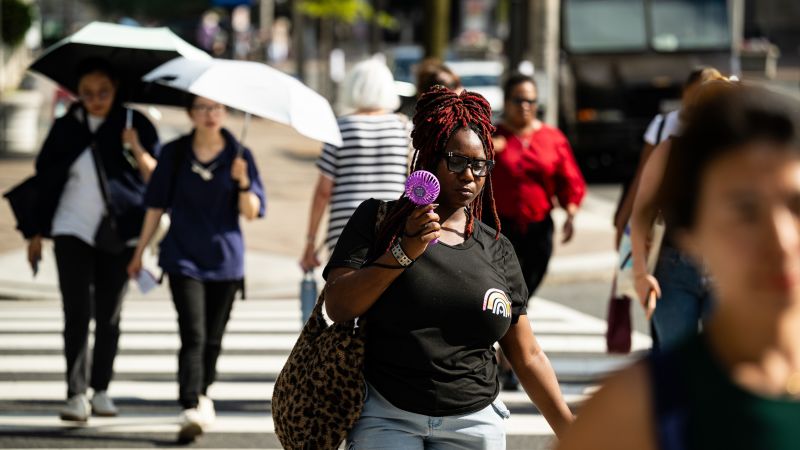
Punishing Heat Wave Peaks as East Coast Readies for Sweltering July 4 Weekend
Punishing heat wave peaks as East – A record-breaking heatwave is intensifying across the East Coast, with its most severe conditions coinciding with the peak of America’s 250th birthday festivities. Millions of Americans are preparing to celebrate Independence Day outdoors, but they now face an unusually harsh challenge: temperatures expected to soar into the upper 90s and low 100s, accompanied by oppressive humidity that could push “feels like” readings beyond 110 degrees. The National Weather Service has issued warnings that the situation will escalate, threatening communities from Washington, DC, to Boston with a combination of extreme heat and prolonged discomfort.
Heatwave Targets Major Cities
The heat dome—a persistent high-pressure system—has anchored the heatwave in place, creating a situation that experts say is amplified by global warming. This phenomenon has already set dozens of long-standing temperature records, with New York City and Washington, DC, at the forefront. In the nation’s capital, the upcoming July 4 weekend is projected to be the hottest on record, surpassing the previous benchmark of 100 degrees set in 1919. By Thursday, the heat index could reach 110 degrees, a rare occurrence that would mark only the third time since 1943 such conditions have been recorded in the city.
“This three-day stretch could be the warmest in DC since 1930, with highs consistently above 100 degrees each day,” noted the National Weather Service. “The risk of heat-related illnesses is particularly high, especially during extended periods of little overnight relief.”
Meanwhile, in New York City, forecasts suggest a potentially record-breaking day as the heat index climbs to consecutive triple-digit levels for the first time since 2011. Boston, Philadelphia, and Raleigh, North Carolina, are also bracing for similarly extreme conditions, with the former two expected to exceed 100 degrees and 105 degrees, respectively. The heatwave’s timing has raised alarms, as it coincides with one of the busiest travel seasons of the year. Cities are scrambling to adapt, implementing measures to mitigate the impact on public health and safety.
Emergency Measures in Motion
Philadelphia has declared a Heat Health Emergency through Saturday evening, prompting officials to shorten its July 4 parade route and move a planned Pope ceremony indoors. Similarly, Washington, DC, has activated an Extreme Heat Alert through July 5, expanding cooling centers, hydration stations, and emergency medical resources to accommodate the influx of visitors. Organizers of National Mall events are adding water stations, cooling tents, and air-conditioned buses to ensure attendees can withstand the heat.
New York City is taking proactive steps by opening hundreds of cooling centers and deploying mobile medical units equipped with water, sunscreen, and wellness checks. The city’s LinkNYC kiosks will also serve as guides, displaying directions to the nearest relief stations. These efforts are part of a broader federal response, with the Department of Energy issuing emergency orders to bolster electricity generation within the PJM Interconnection grid, which covers much of the Mid-Atlantic region. The goal is to prevent power outages that could compound the crisis.
Health Risks and Urban Challenges
While the daytime heat is a primary concern, the lack of nighttime cooling poses a significant threat. In many locations, temperatures are expected to drop only into the 70s, struggling to fall below 80 degrees in densely populated urban areas. Without cooler nights, the body has limited time to recover, increasing the risk of heat exhaustion, dehydration, and even heatstroke. High humidity further exacerbates the problem by hindering sweat evaporation, which is crucial for thermoregulation.
Experts warn that the combination of heat and humidity creates a “double whammy” for public health. The National Weather Service’s Level 3 and Level 4 heat risk classifications—indicating “major” and “extreme” conditions—highlight the urgency of the situation. Over 160 million people across the region are under these risk tiers, with the most severe impacts concentrated in the Mid-Atlantic states. In eastern Virginia, the current heatwave is anticipated to be the most intense since 2012, when it led to over a dozen fatalities, including a dozen in the state.
Authorities are emphasizing the need for preparedness, especially for vulnerable populations such as the elderly, children, and those with chronic health conditions. Cooling centers are being prioritized in neighborhoods with limited access to air conditioning, and public awareness campaigns are urging residents to stay hydrated, avoid peak sun exposure, and check on neighbors during the heatwave.
Historical Context and Climate Trends
The current heatwave is not an isolated event but part of a broader pattern influenced by climate change. Scientists point to the increasing frequency and intensity of heat domes, which trap hot air and create prolonged periods of sweltering. These conditions are expected to become more common as global temperatures rise, making the East Coast’s experience a harbinger of future weather trends.
Historical data reveals that the 2012 Virginia heatwave, which reached similar levels of severity, had devastating consequences. It caused widespread power outages and led to a spike in heat-related deaths, underscoring the importance of proactive measures. The current heatwave, however, is occurring in a different context, with more robust infrastructure and awareness programs in place. That said, the potential for harm remains high, especially in areas where air quality and heat exposure intersect.
Residents are advised to take advantage of indoor spaces and utilize fans, air conditioning, and shaded areas to stay cool. While some relief may arrive later in the week, the intensity of the heatwave suggests that the most dangerous conditions will persist through the weekend. The National Weather Service continues to monitor the situation closely, issuing updates as temperatures and humidity levels fluctuate.
As the East Coast grapples with this heatwave, the focus remains on minimizing its impact while ensuring that celebrations can proceed safely. The interconnected nature of the region’s climate and infrastructure means that every measure—from expanding cooling centers to adjusting event schedules—is critical. With millions under threat, the challenge is to balance the joy of the Fourth of July with the realities of a warming planet. The upcoming days will test the resilience of communities and the effectiveness of emergency planning, setting the stage for a historic heat event that could reshape how we approach summer festivities in the years to come.
