
US Postal Service cannot carry out Trump order on mail ballot delivery, judge rules
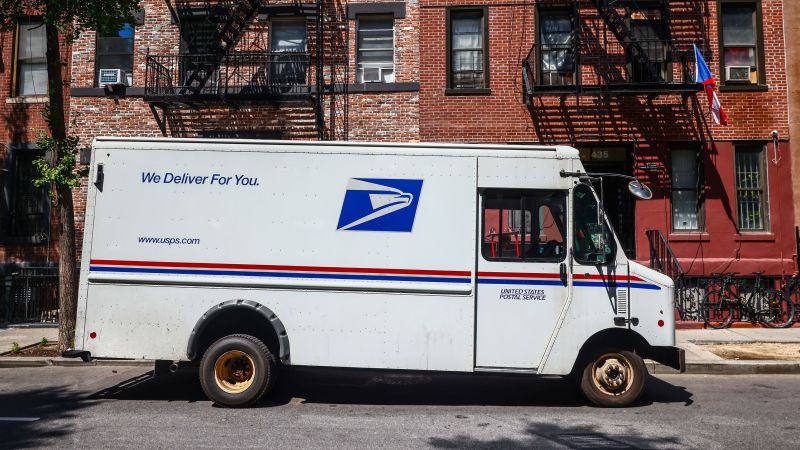
Judge Blocks US Postal Service from Implementing Trump’s Mail Ballot Order
US Postal Service cannot carry out Trump – A federal judge has ruled that the US Postal Service (USPS) cannot carry out President Donald Trump’s executive order mandating changes to mail ballot delivery, effectively halting the agency’s plan to prioritize ballots in states that comply with specific requirements. The decision, issued by US District Judge Emmet Sullivan in Washington, D.C., comes after a lawsuit by the NAACP challenged the USPS’s policies, arguing they could undermine election integrity by slowing mail-in voting processes. The ruling emphasizes that Trump’s directive conflicts with a 2021 settlement agreement, which outlined guidelines for the timely delivery of Election Mail during the pandemic.
Trump’s Order and the Legal Challenge
Under Trump’s order, the USPS was directed to only transmit mail ballots for states that provide approved lists of voters and meet certain criteria for their mail voting programs. The policy aimed to ensure ballots were delivered efficiently, but critics warned it could create barriers for voters in states that did not align with the executive order. A previous court decision had already paused the implementation of the order in 22 states, but Sullivan’s nationwide injunction marks a significant escalation in the legal battle. The ruling prevents the USPS from carrying out the directive unless states hand over their voter lists, which could limit ballot access for some citizens.
The Settlement Agreement and Its Violation
The 2021 settlement, reached in response to the NAACP’s lawsuit, required the USPS to publish detailed guidance on how it would prioritize Election Mail. This agreement granted the court authority to monitor the agency’s compliance with the policy, ensuring timely delivery of ballots during critical voting periods. Judge Sullivan’s opinion highlights that the proposed regulations for Trump’s order violate the settlement’s terms, as they prevent the USPS from delivering mail ballots to voters in states that do not submit compliant lists. “The Proposed Rule violates paragraph 2 of the Agreement because the Postal Service cannot carry out its policy if it will not deliver mail-in ballots to some voters,” Sullivan stated, underscoring the legal conflict between the agency’s actions and the court’s oversight.
Trump’s directive also introduced requirements for individualized barcodes on mail ballot envelopes to enable automated tracking. While this measure is considered a best practice for election transparency, it raises concerns about the cost and logistical challenges for local jurisdictions. Critics argue that the policy could be leveraged to identify and remove voters from the rolls, fueling fears of voter suppression. The Department of Homeland Security is tasked with compiling voter lists from federal databases, further intensifying debates over data privacy and electoral fairness.
“This ruling in favor of the NAACP’s case marks another major blow to Donald Trump’s attempt to rig the election,” said NAACP President Derrick Johnson. “The President is failing, and the people are winning.”
With the legal obstacle now in place, the USPS must revise its approach to mail ballot delivery or face nationwide restrictions. The decision has sparked discussions about the balance between election security and voter access, as well as the role of federal oversight in state-level voting processes. As the November elections approach, the ruling may influence how mail ballots are handled, ensuring compliance with the settlement’s requirements while preserving the integrity of the postal system’s role in democracy. CNN has reached out to the USPS for further comment on the implications of the ruling.
