
Why America is obsessed with a grandpa in high-waisted pants who is building sidewalks
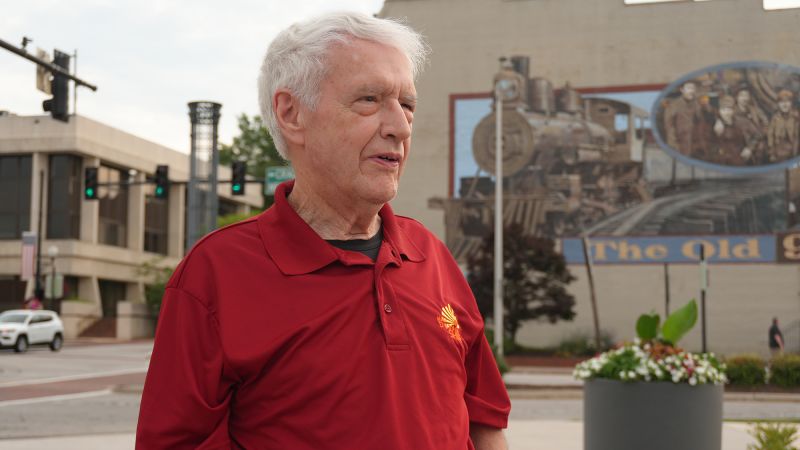
Why America is Obsessed with a Grandpa in High-Waisted Pants Who is Building Sidewalks
A Viral Movement Sparked by a Singular Concern
Why America is obsessed with a grandpa – When Gary Miller, a 78-year-old city councilman in Danville, Virginia, decided to fight for sidewalks, few anticipated the storm of attention his efforts would generate. His campaign, which has taken four years to materialize, began with a simple yet persistent worry: the safety of pedestrians in a neighborhood where roads were designed for cars, not people. The cardiologist and longtime community leader, who has served on the city’s board for decades, was driven by a personal fear. “I go that way and go after dark,” he explained. “I was honestly afraid I was going to hurt somebody.”
Miller’s concerns were not unfounded. His re-election campaign video, which highlights the completion of a 1,600-foot sidewalk project along Kemper Road, has become a sensation online. The footage, which captures him in a gray slacks suit with high-waisted pants, a turquoise Under Armour polo, and slip-on leather moccasins, went viral on TikTok, X, and Instagram. The video has amassed over four million views, sparking a wave of admiration and critique from across the nation. “This man has achieved an incredible form,” one viewer remarked on X. “Is he hiding the sidewalk in his pants?” another joked on Instagram.
What makes Miller’s story so resonant is its simplicity. In a world where political messaging often feels convoluted, his focus on a tangible issue—sidewalks—has struck a chord. The video’s success underscores a growing public frustration with government inaction. As one user on X put it, “The American voter cries out for an old man with hiked-up pants who has never once opened ‘The InstaFace’ and just wants to solve something tangible.” This sentiment reflects a broader desire for leaders who prioritize practical solutions over flashy rhetoric.
From Potholes to Political Power
Miller’s project, which addressed a longstanding issue in Danville’s Kemper Road neighborhood, has become a symbol of effective local governance. The area, which has historically received less investment, is now home to new crosswalks and sidewalks, transforming the way residents navigate their daily routines. “A street with a sidewalk is a safer street and a healthier neighborhood,” Miller told the camera in the campaign video, emphasizing the transformative impact of infrastructure. His words, delivered with a mix of earnestness and charm, have become a rallying cry for those tired of bureaucratic delays.
The Danville Metropolitan Planning Organization’s 2025 safe streets plan reveals how systemic neglect has affected the city’s most vulnerable communities. According to the report, 81% of roads responsible for fatalities and serious injuries are located in socioeconomically disadvantaged areas. These neighborhoods, often overlooked in urban planning, face a disproportionate risk. Car ownership rates are lower among residents here, making sidewalks not just a convenience but a necessity for mobility and safety.
Miller’s initiative has tapped into a national conversation about infrastructure. In an era where projects like highways and transit systems are debated for years without progress, his focus on a single, concrete goal has provided a much-needed sense of clarity. National leaders from the “Yes in My Backyard” housing movement and transit advocates have even praised his approach, comparing him to Zohran Mamdani, the telegenic New York City mayor who is young enough to be Miller’s grandson. This unexpected admiration highlights how relatable Miller’s message has become in a political climate often defined by complexity.
The Power of Style and Substance
While the sidewalk project itself is a triumph of public service, Miller’s personal style has also played a role in his rising fame. His high-waisted slacks and casual moccasins have made him an unlikely icon, blending the traditional image of a local politician with a modern, accessible vibe. “Biblically accurate waistline,” one comment on X quipped, underscoring the visual appeal of his appearance. Yet, the humor in these remarks points to a deeper cultural shift: Americans are drawn to leaders who appear authentic, unpretentious, and focused on real-world problems.
Michael Pollack, a professor at the Cardozo School of Law, has emerged as one of Miller’s strongest supporters. His upcoming book, Sidewalk Nation: The Life and Law of America’s Most Overlooked Resource, argues that sidewalks are more than just walkways—they are vital components of civic life. “The humble sidewalk serves many functions,” Pollack said. “It’s a place of commerce, speech, community gathering, and even policing.” He credits Miller’s video with making these points accessible to a wide audience. “It was some of the best political media I’ve seen,” Pollack added. “The video made it easy to understand the importance of sidewalks in everyday life.”
Miller’s success is a reminder of how local efforts can have national resonance. His campaign video, which first gained traction during his re-election season, has now become a case study in grassroots activism. “What happened here?” Miller asks in the video, arms spread wide as he steps off a newly installed sidewalk into a previously impassable lot. The imagery captures the contrast between progress and neglect, a theme that has struck a nerve in a country increasingly divided over infrastructure priorities. For many, the video is not just about sidewalks—it’s about hope in a system that seems to have stalled.
As the video’s popularity continues to grow, it has also sparked discussions about the role of social media in modern politics. Platforms like TikTok and Instagram have transformed how public figures are perceived, allowing stories like Miller’s to spread rapidly. Yet, the focus on style—his appearance, the setting, and the viral nature of the clip—has also raised questions about what Americans value in leadership. Is it the substance of the work, the appearance of dedication, or the ability to make complex issues feel personal?
For Miller, the answer is clear. He is not just building sidewalks; he is restoring dignity to a community that has long been underserved. “When you think about public safety, the first thing to come to your mind may not be sidewalks,” he says in the video. “But without them, the streets are dangerous.” His message has resonated because it aligns with a growing demand for leaders who can deliver results. In an age of political gridlock, his project stands as a testament to what can be achieved when someone is both committed and visible.
Meanwhile, Danville’s struggle with road safety mirrors broader challenges across the United States. The city, which has a population of about 42,000, reported 12 fatalities and 95 serious injuries in traffic crashes annually, making it one of Virginia’s most dangerous metro areas for pedestrians. These statistics highlight how infrastructure gaps disproportionately affect marginalized communities. Miller’s efforts to address this issue in Kemper Road have provided a blueprint for similar initiatives elsewhere, proving that even small actions can have significant impacts.
As the story of Gary Miller gains momentum, it serves as a microcosm of a larger trend. Americans are increasingly seeking leaders who embody the values of simplicity, reliability, and results-driven action. In a time when national policies seem to take years to materialize, the power of a local figure who brings attention to an overlooked need is both refreshing and essential. The sidewalk, once a mundane part of city planning, has become a symbol of this yearning—a tangible representation of progress that people can see, walk on, and celebrate.
