
Iran sends a defiant message to Trump with colossal funeral for slain Supreme Leader Ali Khamenei
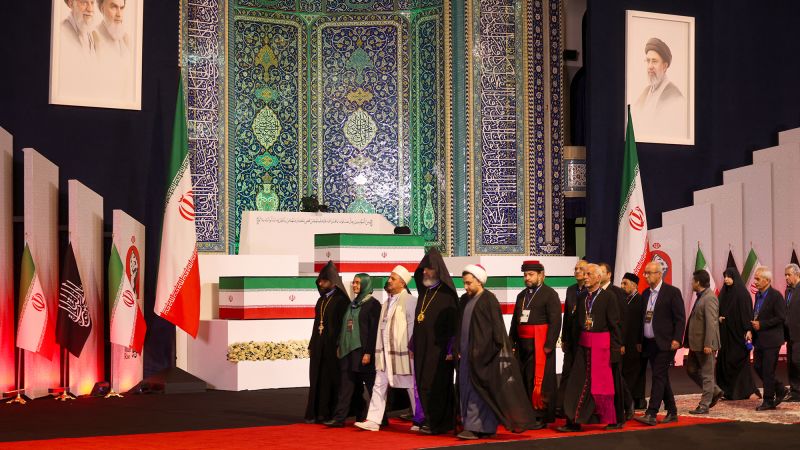
Iran Defiantly Honors Khamenei in Massive Funeral Amid Global Tensions
A Monumental Display of National Resolve
Iran sends a defiant message to Trump – Four months after the assassination of Supreme Leader Ali Khamenei during the US-Israeli conflict, Iran is hosting an unprecedented week-long tribute across five cities in two countries. This massive event, expected to draw millions of participants, serves as a powerful demonstration of the nation’s unity and determination. While the funeral is a celebration of Khamenei’s life, it also conveys a clear message: Iran will not be subdued by external pressures. The ceremony’s scale, from logistical coordination to emotional intensity, underscores the significance of the occasion in the Islamic Republic’s political and cultural identity.
Officials emphasize that the event represents one of the most ambitious undertakings in Iran’s modern history. Government workers, academics, labor leaders, and religious groups have collaborated to ensure the mourning process unfolds smoothly. Despite the challenges of economic strain and international sanctions, the funeral’s organization highlights Iran’s ability to mobilize resources and maintain resolve. The ceremony’s timing, during the 250th anniversary of American independence, is seen as a strategic choice to contrast Iran’s enduring spirit with the celebration of a nation that has long been a target of its adversaries.
Symbolism and Strategic Timing
The dates chosen for the funeral are laden with symbolic meaning. Khamenei’s body will be displayed on the same day as American Independence Day, a moment intended to juxtapose the nation’s revolutionary roots with the mourning of a leader whose death is viewed as a triumph over Western influence. Additionally, the event aligns with a key Shiite observance, reinforcing Khamenei’s status as a spiritual icon. This timing is particularly resonant during the Islamic month of Muharram, a period dedicated to commemorating sacrifice and historical tragedies, including the martyrdom of Imam Hussein.
By linking Khamenei’s death to these religious and historical milestones, Iran’s leadership is crafting a narrative of martyrdom and resilience. The funeral aims to solidify his legacy as a unifying figure, inspiring both domestic and international audiences. The regime’s emphasis on his symbolic power in death reflects a broader strategy to maintain ideological momentum, even as the country faces economic hardship and military threats. This grand gesture is not only a tribute but also a reminder of Iran’s defiance against perceived oppression.
Leadership Transition and Public Sentiment
As the new Supreme Leader, Mojtaba Khamenei, makes his first public appearance, the funeral becomes a platform to showcase his leadership. His father and family members were among those targeted in the attack, and his emergence from the shadows marks a pivotal moment for the regime. The event’s meticulous planning, involving thousands of participants, highlights the importance of this transition in Iran’s political landscape. Public reactions suggest widespread support for the ceremony, with many viewing it as a reaffirmation of national pride.
State media has amplified the event’s significance, portraying it as a demonstration of Iran’s collective strength. The words of officials, such as Sina Toossi, emphasize the symbolic weight of Khamenei’s death. “The assassination has made Khamenei far more powerful symbolically in death than he was in life,” Toossi remarked. This sentiment reflects a broader belief that the funeral will galvanize Iranians and send a message to the world: Iran’s resolve remains unbroken, even in the face of global challenges.
A Legacy of Resilience
Historically, Iran has used large-scale funerals to reinforce its ideological and national identity. The most notable precedents include the 1989 mourning of Ayatollah Khomeini and the 2020 tribute to Qassem Soleimani. Both events featured intense emotional displays and logistical feats, though they also revealed the risks of crowdsourced chaos. Khomeini’s funeral, for instance, saw his remains displayed in a location that mirrored his successor’s current lay-in-state, leading to moments of frenzy and disorder.
The current funeral, however, is being managed with greater precision. Authorities have implemented measures to control the flow of millions of attendees, aiming to balance tradition with organization. While the potential for unrest remains, the event’s structure reflects lessons learned from past experiences. This careful approach underscores the regime’s commitment to leveraging Khamenei’s legacy as a tool for both domestic cohesion and international influence, ensuring that the defiant message resonates across borders.
International Reactions and Strategic Messaging
The funeral has drawn attention beyond Iran’s borders, with global leaders and analysts interpreting its significance. Some view it as a calculated move to challenge US dominance, while others see it as a reaffirmation of Iran’s revolutionary ethos. The event’s timing, coinciding with the US’s 250th anniversary, is likely intended to highlight the contrast between Iran’s historical sacrifices and the US’s current posture. This strategic framing aims to position Iran as a key player in the region’s geopolitical dynamics.
Analysts note that the funeral’s scale and symbolism are designed to resonate with both domestic and international audiences. By honoring Khamenei as a martyr, Iran reinforces its narrative of resistance against Western powers. The ceremony’s emphasis on unity and defiance aligns with the nation’s broader goals of maintaining influence in the Middle East and asserting its role as a leader of the Islamic world. This message is clear: no matter the circumstances, Iran will continue to stand firm.
